

You walk into a room and the TV is the centerpiece. But finding a 65-inch set that actually delivers on picture quality without breaking the bank? That’s where most people get stuck. The 65-inch size is the sweet spot for living rooms, but the gap between a cheap panel and a genuinely good one is wider than ever. We spent weeks with nine of the most promising 2026 models to find the best 65 inch TV for the money. The Hisense U6 Pro Mini-LED won our top spot, but the right choice depends on whether you game, watch movies, or just want something that works without fuss.
The table below shows every TV we tested, with the key specs that matter. We’ve ranked them by overall performance, but each one has a specific strength.
| # | Product | Award | Panel Type | Refresh Rate | Smart Platform | HDR Support | Best for |
|---|---|---|---|---|---|---|---|
| 1 | Hisense U6 Pro Mini-LED | Best for gaming and contrast | Mini-LED | 144Hz native | Fire TV | Dolby Vision IQ, HDR10+ | Gamers and movie lovers |
| 2 | Samsung M80H Mini LED | Best for premium picture quality | Mini-LED | 144Hz | Tizen | Auto HDR Remastering, HDR10+ | Home theater enthusiasts |
| 3 | Hisense E7 Cinema Mini-LED | Best for cinematic experience | Mini-LED | 144Hz native | Fire TV | Dolby Vision IQ, HDR10+ | Movie nights and sports |
| 4 | TCL T7 4K QLED | Best for 144Hz gaming | QLED | 144Hz | Google TV | Dolby Vision, HDR10+ | Competitive gamers |
| 5 | Hisense E6 Cinema Series | Best for vibrant colors | QLED | 120Hz motion rate | Fire TV | Dolby Vision, HDR10+ | Colorful, bright content |
| 6 | Roku Select Series 65 | Best for streaming simplicity | QLED | 60Hz | Roku | HDR10 | Cord-cutters and families |
| 7 | INSIGNIA QF Series QLED | Best for QLED performance | QLED | 60Hz | Fire TV | Dolby Vision | Budget-conscious QLED buyers |
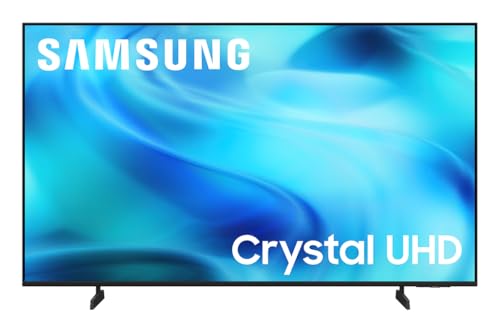
| 8 | Samsung U8000H Crystal UHD | Best for everyday viewing | Crystal UHD | 60Hz | Tizen | HDR10+ | Simple, reliable TV |
| 9 | INSIGNIA F50 Series | Best for Fire TV integration | LED | 60Hz | Fire TV | HDR10 | Basic smart TV needs |
1. Hisense U6 Pro Mini-LED: Best for gaming and contrast

Pros
- Native 144Hz panel with VRR keeps games silky smooth
- Mini-LED backlighting delivers deep blacks and bright highlights
- Built-in subwoofer adds punch to explosions and soundtracks
- Anti-glare coating works well in bright rooms
Cons
- Fire TV interface can feel cluttered
- Motion handling not quite as clean as the Samsung M80H
Best for: gamers who want fast refresh rates and movie lovers who crave contrast.
The Hisense U6 Pro is the most complete TV in this roundup, packing a Mini-LED panel with hundreds of local dimming zones that actually make black levels look inky. The native 144Hz refresh rate is a genuine advantage for console and PC gaming; paired with a variable refresh rate, you get near-tear-free gameplay that the 60Hz models simply can’t match. The 65U6SF Pro also includes a built-in subwoofer, which is rare at this tier and gives movies and games a physicality you don’t expect from a TV’s own speakers.
The Hi-QLED Mini-LED technology means colors are Pantone validated, and the Hi-View AI Engine adjusts brightness and contrast scene by scene. In practice, that makes HDR content from Dolby Vision IQ look spectacular, with highlights that pop without crushing shadow detail. The glare-free coating is a genuine help if your living room has windows, though it’s not a total matte finish. Where the U6 Pro falls short of the Samsung M80H is in motion clarity: Samsung’s Motion Xcelerator 144Hz does a slightly better job with fast camera pans in sports, but the difference is small. This Hisense is the one we’d buy for a mixed-use room where gaming and movies share the screen.
2. Samsung M80H Mini LED: Best for premium picture quality

Pros
- NQ4 AI Gen2 Processor upscales low-res content brilliantly
- Pure Spectrum Color delivers one billion colors
- Slim, minimalist design with a sleek stand
Cons
- No native Dolby Vision support (uses HDR10+)
- Price is higher than the Hisense U6 Pro with similar features
Best for: home theater purists who want Samsung’s upscaling and color science.
Samsung’s M80H is the company’s premium Mini-LED entry for 2026, and it shows. The NQ4 AI Gen2 Processor is the star: it takes 720p and 1080p content and makes it look close to 4K, with sharpened edges and reduced noise. That’s a huge win if you watch a lot of cable TV or older shows. The Pure Spectrum Color technology, combined with Mini-LED precision, gives you a billion color shades, and the difference is visible in a sunset scene or a rich red dress. The set also supports Motion Xcelerator 144Hz, making it a strong contender for gaming, though it lacks the full VRR implementation of the Hisense U6 Pro.
The biggest trade-off is HDR format support. Samsung sticks with HDR10+ and its own Auto HDR Remastering, which intelligently converts SDR to HDR. It looks good, but you miss out on Dolby Vision, which is used by most streaming services and many 4K Blu-rays. If you have a large disc collection, the Hisense E7 or U6 Pro might be better. The M80H’s design is also a highlight: the bezel is almost invisible, and the stand is compact enough to fit on narrow furniture. The remote is comfortable, and Tizen remains one of the smoother smart TV platforms. But the price premium over the Hisense U6 Pro is hard to justify unless you specifically value Samsung’s upscaling and ecosystem.
3. Hisense E7 Cinema Mini-LED: Best for cinematic experience

Pros
- Native 144Hz with MEMC for smooth motion
- Dolby Vision IQ and Dolby Atmos for immersive cinema
- AI Sports Mode automatically optimizes for live games
Cons
- Fire TV still has some ads on the home screen
- Local dimming not as refined as the U6 Pro
Best for: movie nights and sports fans who want a cinematic feel without going to a higher tier.
The Hisense E7 is the middle child in the 2026 Hisense lineup, but it punches above its weight. It uses Mini-LED backlighting with full-array local dimming, though with fewer zones than the U6 Pro. That means black levels are still excellent, but you might notice a little bloom around bright subtitles in a dark room. The native 144Hz panel is the same as the U6 Pro, and it handles fast motion well thanks to MEMC frame insertion. The AI Sports Mode is a nice touch: it recognizes sports content and boosts brightness and motion clarity, making football and basketball look more fluid.
Dolby Vision IQ is the headline here, and it works with the light sensor to adjust HDR based on ambient light. In a bright room, the TV keeps highlights visible; in a dark room, it preserves shadow detail. The E7 also supports Filmmaker Mode, which is essential for purists who want to see movies as the director intended. The built-in Dolby Atmos processing is decent, but for full surround sound, you’ll want to pair it with a dedicated system, we’ve covered the best surround sound systems 2025 if you want to upgrade later. The E7 is a fantastic choice for anyone who prioritizes cinematic HDR over gaming-specific features, and it’s a step up from the Hisense E6 in contrast and motion.
4. TCL T7 4K QLED: Best for 144Hz gaming

Pros
- Native 144Hz panel with four HDMI inputs including eARC
- AIPQ Pro Processor does a good job with color and contrast
- Bezel-less design with adjustable feet for soundbar clearance
Cons
- Wi-Fi 5 only, no Wi-Fi 6
- Google TV interface can be slower than Fire TV
Best for: gamers who want a high refresh rate QLED without the Mini-LED price.
The TCL T7 is built for gamers. The 144Hz refresh rate is native, not interpolated, and the set supports VRR (though not officially listed, it’s implied by the gaming focus). The four HDMI inputs, one with eARC, mean you can connect a console, a soundbar, and a streaming box without swapping cables. The AIPQ Pro Processor handles upscaling reasonably well, though it’s not as sharp as Samsung’s NQ4 chip. Colors are rich thanks to QLED quantum dots, covering nearly the full DCI-P3 color space, and the Motion Rate 480 with MEMC keeps fast pans smooth.
The downside is the lack of Wi-Fi 6, which is surprising for a 2026 model. If you stream a lot of 4K content, you might see buffering on congested networks. The Google TV interface is fine, but it can feel sluggish after a few months. The T7 is a better pure gaming option than the Hisense E6 because of the native 144Hz, but the E6 has better HDR support with Dolby Vision. If you’re a console gamer and don’t need Dolby Vision, the T7 is a strong pick. For those who want a smoother smart TV experience, the Roku Select Series is simpler, but you lose the high refresh rate.
5. Hisense E6 Cinema Series: Best for vibrant colors

Pros
- Hi-QLED color technology delivers punchy, lifelike hues
- Dolby Vision and Dolby Atmos for a cinematic package
- AI Light Sensor adjusts brightness automatically
Cons
- Motion rate is 120Hz, not native 144Hz
- No local dimming, so black levels are average
Best for: viewers who want bright, colorful pictures for cartoons, nature docs, and colorful shows.
The Hisense E6 is the entry point to the Cinema Series, and it’s all about color. The Hi-QLED panel uses quantum dots to produce a wide color gamut, and the difference is obvious when you watch something like Planet Earth or Spider-Verse. Colors are saturated without looking artificial, and the Dolby Vision support ensures that HDR content is displayed with proper brightness and contrast. The AI Smooth Motion with MEMC works well for sports, reducing judder on fast-moving objects.
But the E6 lacks local dimming, so black levels are more of a dark gray in a dark room. That’s the main compromise compared to the Mini-LED models. The 120Hz motion rate is effective for most content, but competitive gamers will notice the difference next to a 144Hz panel. The Fire TV interface is snappy, and the WiFi 6 support is a nice touch for consistent streaming. The E6 is a great pick if you watch mostly colorful, well-lit content and don’t need the deepest blacks. It’s a step up in picture quality from the Samsung U8000H, but not as far as the Mini-LED sets.
6. Roku Select Series 65: Best for streaming simplicity

Pros
- Roku OS is the easiest smart TV platform to use
- QLED panel gives good color performance for the class
- Remote has a lost remote finder and voice search
Cons
- Only 60Hz, no high refresh rate for gaming
- HDR is limited to HDR10, no Dolby Vision
Best for: families and cord-cutters who want a simple, reliable TV with a great interface.
The Roku Select Series proves that you don’t need a complicated TV to get a good picture. The 65-inch QLED panel delivers accurate colors and decent brightness, and the Roku Smart Picture feature automatically optimizes the image based on the content. The interface is the star here: it’s fast, clean, and gets you to your apps without ads pushing at you. The remote includes a lost remote finder, which is a lifesaver in a busy household. The TV also supports Apple AirPlay and works with all major voice assistants.
The limitation is the 60Hz panel, which means no 120Hz or 144Hz for gaming. And without Dolby Vision, HDR lacks the dynamic metadata that makes highlights pop on the Hisense models. But for watching cable, streaming Netflix, and casual TV, the Roku is the most pleasant to live with day to day. The sound is decent for built-in speakers, but you can always add a soundbar, we’ve covered the best soundbars for Samsung tvs which work with any brand. The Roku is a no-nonsense TV that gets out of your way.
7. INSIGNIA QF Series QLED: Best for QLED performance

Pros
- QLED panel with Dolby Vision support
- Direct LED backlight for uniform brightness
- Metal bezel-less design looks premium
Cons
- 60Hz panel limits gaming use
- Fire TV ads can be intrusive
Best for: buyers who want QLED color and Dolby Vision without paying for a high refresh rate.
The INSIGNIA QF Series is a QLED TV that doesn’t cost a lot, but it still delivers the wide color gamut that makes shows look vibrant. The Direct LED backlight provides uniform brightness across the screen, avoiding the cloudiness you sometimes see on edge-lit models. Dolby Vision support is a welcome addition, and the metal bezel-less design gives it a more expensive look than the price suggests. The Fire TV interface is responsive, and the Alexa voice remote is convenient for controlling the TV and smart home devices.
The 60Hz refresh rate is the biggest compromise. If you’re a gamer, you’ll want the TCL T7 or the Hisense U6 Pro. But for movies and TV, the QF Series is perfectly adequate. The black levels are not as deep as the Mini-LED models, but they’re better than the basic LED INSIGNIA F50. The QF Series is a solid choice if you want QLED and Dolby Vision at a lower cost, but you don’t need the fastest refresh rate.
8. Samsung U8000H Crystal UHD: Best for everyday viewing
Pros
- Crystal Processor does a good job with upscaling
- Color Booster enhances saturation for a punchy look
- Samsung TV Plus offers free channels without subscription
Cons
- No local dimming, so blacks are grayish
- 60Hz panel with basic motion handling
Best for: people who want a reliable Samsung TV with a decent picture for casual viewing.
The Samsung U8000H is the baseline 65-inch TV from Samsung, and it does exactly what you’d expect: it plays 4K content, upscales lower resolutions, and looks fine in a well-lit room. The Crystal Processor adds clarity to edges and boosts colors with Color Booster, which makes nature scenes look lively. Motion Xcelerator helps with panning shots, but it’s limited to 60Hz, so fast action can blur a bit.
The U8000H lacks the precision of Mini-LED or even decent local dimming. In a dark room, the blacks are noticeably gray, and you’ll see halos around bright objects. The Tizen smart platform is smooth, and Samsung TV Plus gives you over 2, 700 free channels, which is a nice bonus. This TV is best for a bedroom or a secondary living room where you don’t watch critical content. If you’re on a tight budget and want a known brand, it’s a fine choice, but the INSIGNIA QF Series offers better contrast and color for a similar price.
9. INSIGNIA F50 Series: Best for Fire TV integration

Pros
- Fire TV built-in with Alexa voice remote
- DTS Virtual:X sound improves audio clarity
- Includes HDMI eARC for easy soundbar connection
Cons
- Basic LED panel, no QLED or local dimming
- Only 60Hz, no high refresh rate
Best for: first-time smart TV buyers who want Alexa integration and a simple setup.
The INSIGNIA F50 is the most affordable 65-inch TV in this roundup, and it’s perfectly fine for basic use. The 4K LED panel does a decent job with HDR10 content, but without wide color gamut or local dimming, the picture is flat compared to the QLED and Mini-LED models. The DTS Virtual:X sound is a surprising plus: it creates a wider soundstage than most TVs, making dialogue clearer and action scenes more immersive.
The Fire TV integration is the main draw. The Alexa voice remote lets you launch apps, check the weather, and control smart home devices. The interface is the same as on the more expensive INSIGNIA QF, so you get the same features. The TV has three HDMI ports, one with eARC, and supports parental controls and wall mounting. The F50 is the cheapest 65-inch TV you can buy that still has a decent smart platform, but if you can stretch your budget, the INSIGNIA QF Series or the Hisense E6 will give you a much better picture for the extra spend. For a spare room or a rental, the F50 gets the job done.
How to choose a 65 inch TV
The biggest mistake people make is focusing on the brand name instead of the panel technology and features. Here’s what actually matters in a 65-inch TV.
Panel type: LED vs QLED vs Mini-LED
Standard LED TVs use a white backlight with color filters. They’re the cheapest, but blacks look gray. QLED adds a quantum dot film that boosts color volume and brightness, making them better for HDR and bright rooms. Mini-LED refines this further by using thousands of tiny LEDs to create local dimming zones, giving you deep blacks and bright highlights without the burn-in risk of OLED. For a dark room, Mini-LED is the best choice; for a bright room, QLED is sufficient.
Refresh rate and motion handling
A 60Hz panel is fine for movies and TV shows, but if you play sports or fast-paced video games, you’ll want 120Hz or 144Hz. Higher refresh rates reduce motion blur and make the image feel smoother. Look for native refresh rate, not motion rate, which is often an interpolation gimmick. The backlight scanning technology (MEMC) helps, but it’s not a substitute for a high native rate.
The jump from 60Hz to 144Hz is the single biggest improvement you can make for gaming, and it’s worth the extra cost if you own a console or PC.
HDR support
HDR (High Dynamic Range) improves contrast and color. The most common formats are HDR10, HDR10+, and Dolby Vision. Dolby Vision is the more advanced format, with dynamic metadata that adjusts scene by scene. Most streaming services and many 4K Blu-rays use Dolby Vision, so it’s a feature worth having. HDR10+ is Samsung’s alternative, but it’s less common. If you watch a lot of movies, prioritize Dolby Vision.
Smart platform
Your TV’s interface is what you’ll interact with every day. Roku is the simplest and most ad-free. Fire TV is feature-rich but can be cluttered. Tizen (Samsung) is smooth and has good app support. Google TV is customizable but can slow down over time. If you have a preference for one ecosystem, let that guide you. Also consider how to chose a tv for a deeper dive into these factors.

Frequently asked questions
Is 65 inches too big for a small room?
It depends on viewing distance. A 65-inch TV is comfortable at 8 to 13 feet. If you sit closer than 6 feet, you may see pixels. Measure your room before buying.
Do I need a soundbar with a 65-inch TV?
Most built-in speakers are adequate for casual watching, but for movies and music, a soundbar dramatically improves dialogue clarity and bass. The Hisense U6 Pro has a built-in subwoofer, which helps, but a dedicated soundbar is still better.
What is the difference between QLED and Mini-LED?
QLED uses quantum dots for color, but the backlight is still a single layer. Mini-LED uses thousands of tiny LEDs to create local dimming zones, giving better contrast and black levels. Many TVs combine both technologies.
Can I use a 65-inch TV for computer monitor?
It’s possible but not ideal. The pixel density is lower than a monitor, and you’ll need to sit far away. Some TVs support 144Hz and VRR, which are good for gaming, but text clarity is usually worse than a monitor.
Which HDMI ports do I need?
For 4K at 60Hz, HDMI 2.0 is enough. For 4K at 144Hz or 120Hz, you need HDMI 2.1. The Hisense U6 Pro and TCL T7 have HDMI 2.1 ports. eARC is useful for sending lossless audio to a soundbar.
How do I clean a 65-inch TV screen?
Use a microfiber cloth lightly dampened with distilled water. Never use alcohol or ammonia-based cleaners. Wipe gently to avoid damaging the anti-glare coating.
What is the best placement for a TV antenna?
If you’re using an antenna, place it near a window or as high as possible. For more tips, see our guide on best indoor digital tv antenna placement.

The bottom line
The best 65 inch TV for the money in 2026 is the Hisense U6 Pro Mini-LED. It combines a native 144Hz panel, excellent contrast, and Dolby Vision IQ at a price that undercuts the competition. For pure gaming performance, the TCL T7 offers the same refresh rate with a QLED panel and more HDMI ports. If you want the simplest smart TV experience, the Roku Select Series is the most user-friendly TV we tested.
No single TV is perfect for everyone, but the Hisense U6 Pro covers the most bases. If you’re still undecided, think about what you watch most: movies push you toward the Mini-LED sets, sports demand good motion handling, and gaming insists on a high refresh rate. Pick the one that matches your habit, and you’ll be happy.
As an Amazon Associate we earn from qualifying purchases.