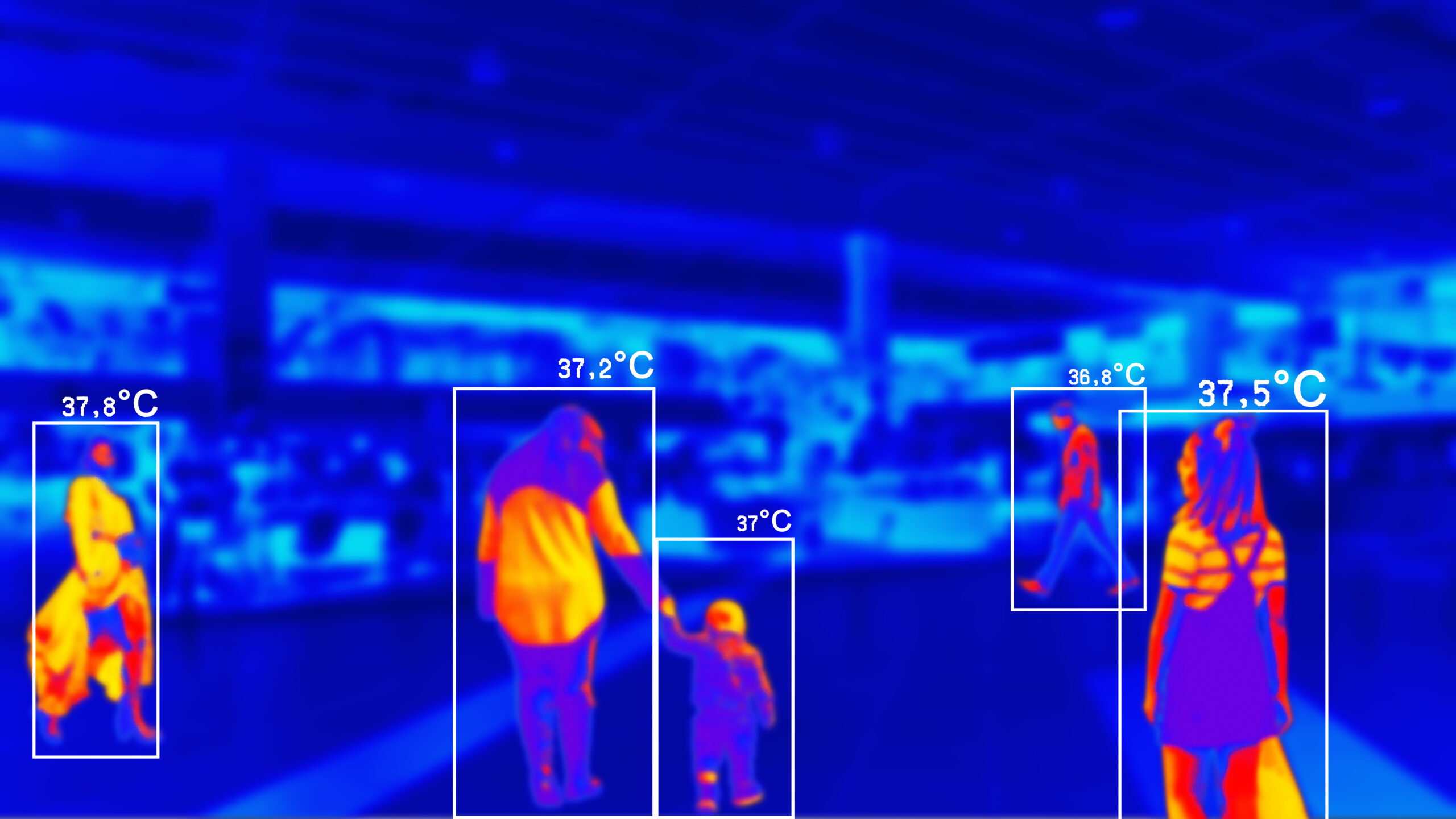

A thermal drone is only useful when its heat data is clear enough to guide a decision. A 640 by 512 sensor, a dependable visible camera, stable hovering and a controller you can read outdoors matter far more than a long list of flight modes. The wrong aircraft can leave you with a blurry heat source, limited mission time or a package that is difficult to deploy safely.
Our Best best thermal drone picks range from serious enterprise aircraft with thermal measurement and obstacle sensing to ordinary camera drones that belong here only as lower-cost alternatives for learning to fly. The Autel EVO II Dual 640T V3 is our top pick for most professional thermal work, while the list also covers the DJI Matrice 4TD, Autel's more advanced EVO MAX 4T V2, and compact non-thermal drones for buyers who are still deciding what they need.
Comparison table
| # | Product | Award | Thermal camera | Flight or transmission detail | Best for |
|---|---|---|---|---|---|
| 1 | Autel EVO II Dual 640T V3 | Best overall | 640 by 512 at 30 fps, 13mm lens | 38 minutes, 15km video transmission | Professional inspection and response work |
| 2 | Autel EVO Lite 640T Enterprise | Best lightweight thermal platform | 640 by 512 at 30 Hz, 9mm lens | Up to 12km transmission | Portable single-operator missions |
| 3 | Autel EVO Lite 640T Basic Combo | Best compact starter bundle | 640 by 512 at 30 Hz, 9mm lens | Up to 40 minutes, 12km transmission | Buyers who need the Lite aircraft and core kit |
| 4 | DJI Matrice 4TD | Best all-weather enterprise system | High-resolution thermal sensor | IP55, RC Plus 2 Enterprise controller | Fleet operations and difficult weather |
| 5 | Autel EVO MAX 4T V2 | Best autonomous inspection drone | 640 by 512 at 30 Hz, 9.1mm lens | 720-degree sensing, hot-swappable battery | Complex navigation and multi-sensor missions |
| 6 | Autel EVO II Dual 640T Enterprise V3 | Best equipped 640T package | 640 by 512 at 30 fps, 13mm lens | 42 minutes, 15km transmission | Search, rescue and public safety |
| 7 | DJI Mini 4K | Best non-thermal camera drone | No thermal camera listed | 62 minutes with two batteries, 10km transmission | Recreational aerial video |
| 8 | Loiley 2K Camera Drone | Best beginner toy drone | No thermal camera listed | Approximately 26 minutes with two batteries | Basic practice and casual flying |
| 9 | Potensic ATOM SE | Best lightweight non-thermal alternative | No thermal camera listed | 62 minutes with two batteries, 4km transmission | GPS flying and ordinary 4K footage |
1. Autel EVO II Dual 640T V3: Best Overall

Pros
- 640 by 512 thermal imaging at 30 fps
- 50MP visible camera with a 0.8-inch sensor
- Ten or more thermal measurement modes
- 38-minute stated flight time
- 15km SkyLink 2.0 transmission
Cons
- Larger and heavier than the EVO Lite 640T
- No RTK included in the bundle
- Thermal work requires more training than ordinary aerial photography
Best for: professional inspection, emergency response and evidence capture where thermal detail matters.
The EVO II Dual 640T V3 is the easiest aircraft on this list to recommend when thermal imaging is the actual reason for buying a drone. It feels like a work tool rather than a camera drone with a thermal feature attached. The package includes three batteries, a Smart Controller V3, a multi-charger, a car charger and protective cases, so it is set up for repeated field use rather than a single short flight.
Its thermal camera records at 640 by 512 and 30 fps, with a 13mm lens and 16x digital zoom. That combination gives the operator a useful balance between detail and reach. The camera can detect, recognize and identify subjects at progressively greater levels of specificity, while spot, central and regional temperature measurements help distinguish a warm component from its surroundings. The listed ten or more palettes and temperature tools are practical for comparing heat patterns, not just making a colorful image.
The visible camera is unusually important on a thermal drone. This model uses a 0.8-inch CMOS sensor with 50MP resolution, 4x lossless zoom and 16x digital zoom. The visible image can preserve the context around a hot spot, which makes later inspection notes much easier to understand. Its 19 groups of sensors support three-dimensional mapping and path planning, and the no-fly-zone function adds a useful layer of operational awareness.
Autel lists 38 minutes of flight time and up to 15km of SkyLink 2.0 video transmission. The transmission system uses 2.4GHz, 5.8GHz and 900MHz bands and can change frequency to resist interference. Those figures describe ideal conditions, so an operator should still plan conservative battery reserves. Compared with the lighter Autel EVO Lite 640T, the EVO II is less convenient to carry, but it offers a more substantial imaging and sensing package. The DJI Matrice 4TD is better suited to wet, freezing or fleet-managed work, while the EVO II is the more straightforward all-purpose professional aircraft.
The weakness is its size and the lack of RTK in this bundle. It is not the choice for someone who wants a pocketable drone or highly precise surveyed positioning without adding equipment. It also has more controls and measurements to learn than a normal 4K camera drone. For serious thermal inspection, though, this is the one we'd keep. Readers comparing the aircraft's sensor with a handheld unit may also want to consider how a dedicated thermal camera handles heat measurement before choosing a workflow.
2. Autel EVO Lite 640T Enterprise: Best Lightweight Thermal Platform

Pros
- 866g foldable aircraft
- 640 by 512 thermal sensor at 30 Hz
- Temperature measurement from -20°C to 550°C
- AI target recognition and positioning
- Includes two spare batteries and a protective case
Cons
- Less substantial than the EVO II platform
- The thermal lens is wider at 9mm
- The bundle's many enterprise features still require setup time
Best for: a single operator who needs serious thermal imaging in a smaller aircraft.
The EVO Lite 640T Enterprise makes the strongest case for carrying a thermal drone regularly. Autel lists an aircraft weight of 866g and a folded design measuring 210 by 123 by 95mm. That is a meaningful difference when the drone has to travel in a vehicle, go into a backpack or be deployed by one person at a remote site.
The thermal camera uses a 640 by 512 sensor at 30 Hz, a 9mm lens and 16x digital zoom. Its stated temperature measurement range runs from -20°C to 550°C, with accuracy of plus or minus 3°C. Those numbers make it better suited to finding heat anomalies and recording measurements than a general-purpose camera drone. The wider lens can also make it easier to survey a broad area, although it will not frame distant details in quite the same way as the EVO II Dual 640T V3's 13mm lens.
Autel pairs the thermal camera with a 48MP visible camera using a 1/2-inch CMOS sensor. AI target recognition can place recognized subjects on a digital map and supports more than 100 targets according to the listing. That matters during search and rescue or surveillance tasks, where locating a person or vehicle is only the first step. The 2026 Enterprise app is described as supporting single-person deployment and mission operation.
The aircraft uses SkyLink 2.0 and lists transmission up to 12km. The bundle includes one aircraft battery plus two spare batteries, a Remote Controller SE V2, extra propellers, a gimbal cover, power adapter, cables and a protective case. This is a more complete field kit than the Basic Combo below. It does not have the EVO MAX 4T V2's 720-degree sensing or the DJI Matrice 4TD's IP55 weather protection, but it is substantially easier to move and deploy.
The real limitation is that lightweight does not mean simple. Thermal interpretation, temperature ranges and AI target tools still take practice, and the 9mm lens may not be ideal for every long-distance inspection. Choose the EVO Lite 640T Enterprise when portability and single-person operation are more important than the maximum airframe capability.
3. Autel EVO Lite 640T Basic Combo: Best Compact Starter Bundle

Pros
- Same 866g foldable EVO Lite platform
- 640 by 512 thermal imaging at 30 Hz
- Up to 40 minutes of stated flight time
- 48MP visible camera
- AI target recognition
Cons
- Basic package has fewer spare batteries
- No visible-camera specification listed in the features for this combo
- No weatherproof rating listed
Best for: buyers who want the EVO Lite thermal aircraft with the essential controller and charging gear.
The EVO Lite 640T Basic Combo is not a different aircraft from the Enterprise Bundle above. It uses the same compact 866g design, 640 by 512 thermal sensor and 9mm lens. The difference is the equipment around it, so this version makes sense when the buyer wants the aircraft and core control system without the more generous spare-battery package of the other bundle.
Thermal video is recorded at 640 by 512 and 30 Hz, with 16x digital zoom. The listing also gives a temperature measurement range of -20°C to 550°C and accuracy of plus or minus 3°C. That is the sort of capability that can help identify warm electrical connections, roof anomalies or people in a search area. It is not just a low-resolution heat overlay intended for novelty use.
The visible system includes a 48MP camera with a 1/2-inch CMOS sensor, according to the product features shared for this model. AI target recognition can identify and project more than 100 objects onto a digital map. The drone also supports a 6K real-time video feed through SkyLink 2.0, with a listed transmission distance of up to 12km. Autel states a maximum flight time of 40 minutes, though any operator should allow room for wind, return flight and reserve power.
The included kit is more limited than the Enterprise Bundle. It has one battery, a Remote Controller SE V2, a power adapter, a USB-C to USB-A cable, a gimbal holder and documentation. There is no protective case or spare-battery set listed in this combo's contents. That distinction is important for field teams, because packing and charging logistics can matter as much as the aircraft.
Compared with the Enterprise Bundle, the Basic Combo is the sensible fit for a controlled operation where extra batteries and a hard case are already available. It is also a good way to get the Lite's smaller body without stepping down to a non-thermal drone such as the DJI Mini 4K. Skip it if you need a ready-to-travel kit on day one, or if your work demands all-weather protection and advanced obstacle sensing.
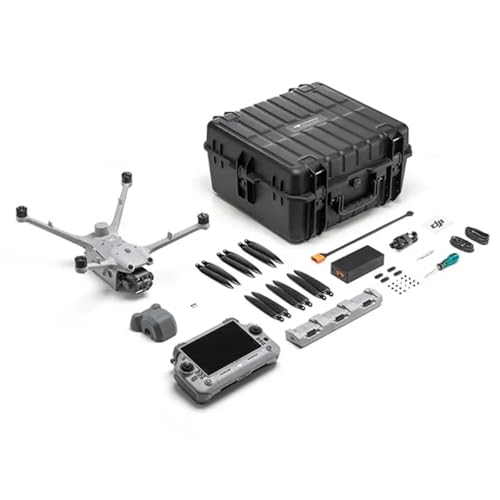
4. DJI Matrice 4TD: Best All-Weather Enterprise System
Pros
- Thermal, wide and telephoto imaging suite
- Built-in laser rangefinder
- IP55 weather protection
- Anti-ice propellers
- RC Plus 2 Enterprise controller included
Cons
- Heavy, with a listed 10-pound item weight
- Thermal resolution and flight time are not specified in the listing
- More platform than casual pilots need
Best for: organizations that need a rugged aircraft for repeatable, weather-exposed operations.
The Matrice 4TD is the most operationally focused drone in this group. Rather than emphasizing one thermal sensor figure, its listing centers on a complete visual and thermal suite, an RC Plus 2 Enterprise controller, laser ranging and weather protection. It is aimed at teams that need to locate, measure and document assets in changing conditions.
The imaging system combines a high-resolution thermal sensor with a triple-lens visual array and a powerful NIR light. The wide and tele lenses serve different jobs: one provides context across a scene, while the other is intended for more distant visual detail. The built-in laser rangefinder can acquire the location and distance of a target or asset, which is a substantial advantage when a thermal anomaly needs to be tied to a physical position.
Its IP55 rating is the clearest separator from the Autel EVO Lite and EVO II models. IP55 indicates protection against dust ingress that could interfere with operation and water jets from multiple directions, but it is not permission to treat the aircraft as submersible. Low-noise anti-ice propellers extend the operating brief into conditions where ordinary propellers could become less dependable. The listing does not provide a flight-time figure or a thermal sensor resolution, so those should not be assumed from the other DJI or Autel models.
The Matrice 4TD also supports DJI Dock 3 and FlightHub 2 integration. That makes it the natural choice for a fleet or a program involving automated, remote and scalable missions. A lone operator doing occasional roof checks may find this infrastructure excessive. A public-safety or industrial team that needs repeatability may see the integration as central rather than optional.
The weight is the main practical drawback. The product information lists a 10-pound item weight, and this is plainly not a lightweight travel drone. It also has more operational complexity than the EVO II Dual 640T V3. Choose the Matrice 4TD when weather tolerance, ranging and fleet integration matter more than easy ownership. For a broader look at the company's ordinary camera aircraft, the differences between its consumer and enterprise flight systems are useful context.
5. Autel EVO MAX 4T V2: Best Autonomous Inspection Drone

Pros
- Wide, zoom, thermal and laser rangefinder cameras
- 640 by 512 thermal imaging at 30 Hz
- 720-degree obstacle sensing
- Navigation in GPS-denied environments
- Hot-swappable ABX41-D battery
Cons
- Single battery listed in the bundle
- Complex feature set is aimed at professional operators
- No thermal measurement range stated
Best for: inspection teams working around obstacles, power infrastructure or difficult navigation environments.
The EVO MAX 4T V2 is the pick for buyers who want autonomy and sensing as much as thermal imaging. It combines a wide camera, zoom camera, laser rangefinder and thermal camera in one aircraft. That combination reduces the need to choose between a broad overview, a distant visual inspection and a heat signature during the same mission.
Its thermal camera records at 640 by 512 and 30 Hz through a 9.1mm focal length lens, with 16x digital zoom. The wide camera uses a 48MP 1/2-inch CMOS sensor and a low-light Moonlight Algorithm 2.0. The zoom camera is specified as a 48MP 8K system with 10x optical zoom and up to 160x maximum zoom. Those visible cameras help confirm what the thermal view is showing, especially when a small heat source sits near cables, rooftops or other structures.
The laser rangefinder measures from 16.4 to 3, 737 feet, with listed accuracy of plus or minus (1 meter plus D times 0.15 percent). In practical terms, it can turn a visual target into a measured location rather than an approximate direction. The aircraft's autonomy features include automatic path finding, object identification and tracking, and navigation in GPS-denied environments. Those are capabilities the EVO II Dual 640T V3 does not claim in the supplied listing.
Autel describes a dual fisheye vision and millimeter-wave radar system with 720-degree omnidirectional sensing and obstacle avoidance. It is designed for complex surroundings such as water surfaces and high-voltage power lines. The V2 also adds a redesigned appearance, improved fisheye and navigation-light placement, better heat dissipation and a battery-in-place detection alert. Its ABX41-D battery supports hot-swapping, which can reduce downtime between missions.
The package lists one battery, a Smart Controller V3, charger, three pairs of propellers and a rugged case. That is the model's most obvious weakness for long field days. It is also a complicated platform, and a buyer who only needs thermal images from open ground will get more aircraft than necessary. Pick the EVO MAX 4T V2 when autonomous navigation, four-camera coverage and obstacle awareness are the mission, not merely useful extras.
6. Autel EVO II Dual 640T Enterprise V3: Best Equipped 640T Package

Pros
- 640 by 512 thermal sensor at 30 fps
- 50MP visible camera with 0.8-inch RYYB CMOS sensor
- 42-minute stated flight time
- 7.9-inch high-brightness controller
- Spotlight, loudspeaker and beacon included
Cons
- RTK is not included
- Heavier and less portable than the EVO Lite
- Enterprise accessories add operational complexity
Best for: public safety, search and rescue and teams that need accessories in the initial kit.
The Enterprise V3 is closely related to the EVO II Dual 640T V3 above, but its package is organized around field missions. The aircraft includes a Smart Controller V3, three batteries, a multi-charger, car charger, loudspeaker, spotlight and beacon. Those accessories can turn the drone into a more useful response tool when the job involves locating people, communicating with them or making the aircraft visible.
The thermal system provides 640 by 512 resolution at 30 fps, a 13mm lens and 16x digital zoom. Spot, regional and central temperature measurements, temperature alarms, isotherms and image enhancement are all listed. The 13mm lens gives it a similar inspection-oriented perspective to the top EVO II model, while the thermal controls provide ways to isolate a hot area instead of relying on color alone.
The visible camera uses a 0.8-inch RYYB CMOS sensor and 50MP resolution. Autel says Moonlight Algorithm 2.0 suppresses noise in limited light, which can help with target location and classification when the visible image is not taken in daylight. SkyLink 2.0 supports transmission up to 15km, with a 2.7K image feed and tri-band communication across 2.4GHz, 5.8GHz and 900MHz.
The listed flight time is 42 minutes, two minutes longer than the standard EVO II Dual 640T V3 listing. The aircraft can operate from -10°C to 40°C, and Autel lists optional strobe, spotlight, loudspeaker and RTK accessories, with RTK specifically not contained in this bundle. The extended thermal vents are intended to improve heat dissipation and battery life during operation.
This model loses some simplicity because the accessories need to be stored, charged and managed. If you do not need the spotlight or loudspeaker, the first EVO II Dual 640T V3 is the cleaner recommendation. If a response team would otherwise have to add those tools separately, the Enterprise V3 is the more complete starting point. It is also worth comparing the drone's thermal data with what separates professional thermal imaging from ordinary infrared viewing before committing to a full inspection workflow.
7. DJI Mini 4K: Best Non-Thermal Camera Drone

Pros
- 4K video and three-axis gimbal
- Under 249g
- Two batteries with 62 minutes of stated combined flight time
- 10km video transmission
- GPS Return to Home and QuickShots
Cons
- No thermal camera listed
- No obstacle avoidance system listed
- Not suitable for professional heat inspection
Best for: beginners and recreational pilots who want ordinary aerial video instead of thermal data.
The DJI Mini 4K is the clearest reminder that not every drone with a camera is a thermal drone. It has no thermal camera listed, so it cannot perform the heat detection or temperature measurement work handled by the Autel and Matrice models. It belongs in this comparison only as an alternative for someone who searched broadly for a camera drone and has not yet decided whether thermal capability is necessary.
For ordinary video, the specification is much more familiar. The camera records 4K footage and uses a three-axis gimbal to keep the image level while the aircraft moves. The listing also claims resistance to Level 5 winds and takeoff at altitudes up to 4, 000 meters. Those figures should not be treated as a reason to fly in unsafe weather, but they suggest a more capable flight platform than basic toy drones.
The combo includes two batteries, with a stated combined flight time of 62 minutes. DJI lists 10km maximum HD video transmission, automatic Return to Home, one-tap takeoff and landing, stable hovering and QuickShots such as Helix, Dronie, Rocket, Circle and Boomerang. These controls make the Mini 4K much easier for a novice to approach than the enterprise aircraft above.
Its under-249g weight is another practical advantage for recreational flying, although local rules still matter and the product's registration guidance is specifically framed around recreational use. The DJI Fly app is not available through Google Play according to the listing, so Android users need to download it from DJI's official website. That extra setup step is easy to overlook.
Compared with the Potensic ATOM SE, the Mini 4K offers longer listed video transmission and a three-axis gimbal, while the Potensic offers GPS flight modes and a similarly compact body. Neither provides thermal imaging. Choose the Mini 4K only if your real task is documenting landscapes, trips or family events. For guidance on choosing ordinary aerial video equipment, the camera features that matter for footage from the air are more relevant than thermal sensor resolution.
8. Loiley 2K Camera Drone: Best Beginner Toy Drone

Pros
- 2K camera with a 90-degree adjustable angle
- Optical flow positioning and altitude hold
- One-touch takeoff and landing
- Two batteries with approximately 26 minutes of flight
- Folded size listed as 5 by 3 by 2 inches
Cons
- No thermal camera listed
- No GPS or long-range transmission system listed
- Image quality is below the dedicated camera drones
Best for: first-time pilots and younger users learning basic controls.
The Loiley 2K Camera Drone is a beginner aircraft, not an inspection tool. Its appeal is the uncomplicated control set: one-touch takeoff and landing, headless mode, altitude hold and optical flow positioning. Those features reduce the number of things a new pilot has to manage at once, although they cannot replace attention to wind, obstacles and the surrounding area.
The camera is listed as 2K HD with a 90-degree remotely adjustable angle. The drone connects to a smartphone for a real-time view and lets users share images and video. There is no thermal camera, temperature measurement or infrared capability in the supplied data, so it cannot substitute for even the entry-level professional models in this roundup.
The folded size is listed as 5 by 3 by 2 inches, and the feature description says the drone weighs under 250g. Two rechargeable batteries provide approximately 26 minutes of flight time in total. The package also includes a portable bag, propeller guards, spare fan blades and remote-control batteries. Those extras are useful for learning because minor contact with a wall or hedge is more likely while a new pilot is building muscle memory.
Its limits show up quickly outside calm, open spaces. No GPS, Return to Home or long-range video transmission system is listed, and optical flow positioning works best when the aircraft has a suitable surface to reference. The DJI Mini 4K is a much stronger choice for stabilized video, and the Potensic ATOM SE is better for GPS-assisted flying and longer stated battery endurance.
The Loiley makes sense as a practice machine or gift, not as a cheaper route into thermal inspection. Choose it when basic control lessons are the goal and the camera is secondary. Skip it if you need reliable positioning, measured heat data or footage that can support professional documentation.
9. Potensic ATOM SE: Best Lightweight Non-Thermal Alternative

Pros
- Under 249g foldable design
- 4K video at 30 fps with electronic image stabilization
- Two batteries with 62 minutes of stated combined flight
- GPS Return to Home
- Brushless motors and several flight modes
Cons
- No thermal camera listed
- 4km transmission is shorter than the DJI Mini 4K
- Camera uses a smaller 1/3-inch CMOS sensor
Best for: beginners who want GPS flight functions and ordinary 4K footage in a compact aircraft.
The Potensic ATOM SE is a sensible ordinary camera drone, but it is not a thermal option. Its place here is as a clear fallback for buyers whose search began with drones and cameras rather than a firm need to inspect heat. The foldable aircraft weighs under 249g, fits into a small travel kit and uses brushless motors intended to resist Level 5 wind.
Its camera uses a 1/3-inch Sony CMOS sensor, captures 12MP photos and records 4K video at 30 fps. Electronic image stabilization and a 118-degree field of view help keep footage usable while the drone is moving. The camera can tilt from positive 20 degrees to negative 90 degrees, giving the operator more control over the view than a fixed toy-drone camera.
The two intelligent 2, 500mAh batteries are listed at up to 31 minutes each, for a combined 62 minutes. PixSync 2.0 provides a stated transmission range of 4km and low-latency HD digital video. GPS Return to Home can bring the aircraft back after signal loss or low power, while Follow Me, Waypoint Flight and Circle Flight add useful options for learning aerial composition.
Potensic includes Beginner, Video, Normal and Sport modes. Sport mode reaches a stated maximum speed of 16m/s, while the other modes provide a more measured way to learn. Firmware supports over-the-air updates, although the listing says a microSD card is needed for camera-related firmware updates and is not included. The remote works with Micro, USB-C and Lightning adapter cables for connecting a phone.
The ATOM SE is more capable and more predictable than the Loiley, but the DJI Mini 4K has the longer listed transmission range and a three-axis gimbal. Neither can detect heat. Pick the Potensic when GPS Return to Home, waypoint functions and a compact 4K platform matter more than thermal work. If the job involves locating heat loss, people or electrical faults, move up to the Autel EVO Lite 640T rather than trying to use an ordinary camera sensor for the task.

How to choose best thermal drone
The right aircraft depends on whether you need heat measurement, visual confirmation, autonomous navigation or simply a camera for ordinary aerial footage. Start with the mission, then compare the thermal sensor, flight system, weather protection and included control equipment.
Thermal sensor resolution and lens
A 640 by 512 sensor gives substantially more information than a basic infrared image, especially when a small heat source occupies only part of the frame. A 30 fps or 30 Hz thermal feed makes movement easier to follow and helps the operator interpret changing scenes. Lens choice matters too. The 13mm lenses in the EVO II Dual models favor more distant detail, while the 9mm lenses in the EVO Lite and EVO MAX 4T V2 provide a broader view.
Temperature measurement features are separate from resolution. Look for stated measurement ranges, accuracy, spot and regional readings, alarms and isotherms when the drone will support maintenance or safety decisions. A colorful thermal overlay without measurement tools may be adequate for locating a heat source, but it is weaker for documenting how hot that source is.
Visible camera system
Thermal imagery often tells you where to look, while the visible camera explains what you are looking at. The Autel EVO II Dual 640T V3 and Enterprise V3 use 50MP visible cameras with 0.8-inch sensors. The EVO Lite uses a 48MP camera with a 1/2-inch sensor. Wide, telephoto and low-light cameras can be more useful than a single high-resolution camera when the mission covers large or visually complex sites.
Flight time and transmission
Stated flight time is a maximum, not a planning target. Wind, cold, distance from the launch point and the reserve needed for a safe return all reduce usable mission time. Multiple batteries and a multi-charger can matter more than a small difference in the aircraft's headline figure.
Transmission range also varies by environment. The EVO II and Enterprise V3 list up to 15km, the EVO Lite lists up to 12km and the Matrice 4TD's supplied listing does not provide a range. Treat these as technical limits under suitable conditions, not as distances to fly without maintaining a safe operating plan.
A thermal drone should make a decision clearer, not merely make the screen more colorful.
Obstacle sensing and autonomy
Basic obstacle sensing can protect an aircraft around trees and structures, while advanced systems help plan routes and maintain awareness in difficult spaces. The EVO MAX 4T V2 claims 720-degree sensing, millimeter-wave radar and navigation in GPS-denied environments. The EVO II Dual 640T V3 lists 19 groups of sensors and real-time three-dimensional mapping.
Do not pay attention to autonomy features only as marketing labels. Match them to the site. Open fields may not require the sensing package needed near power lines, water, tall structures or industrial equipment.
Weather protection and field equipment
An IP55 rating, such as the one listed for the DJI Matrice 4TD, gives an enterprise aircraft a different operating brief from a model with no weather rating listed. Anti-ice propellers can matter in freezing conditions, but weather protection does not remove the need to follow safe flight limits.
The controller, batteries, charger, case and accessories shape deployment time. The EVO II Enterprise V3 includes a spotlight, loudspeaker and beacon, while the EVO Lite Basic Combo has a much smaller core kit. Check what is actually in the package before assuming two drones with similar cameras are equally ready for field work.

Frequently asked questions
Can a regular camera drone detect heat?
No. A standard 4K or 2K camera records visible light and cannot measure infrared heat. The DJI Mini 4K, Loiley 2K Camera Drone and Potensic ATOM SE in this roundup do not list thermal cameras, so they cannot replace the Autel or DJI enterprise models for heat inspection.
Is 640 by 512 enough for professional thermal work?
It can be, depending on the distance, lens and mission. The 640 by 512 sensors in the EVO II Dual and EVO Lite models provide useful detail, while the 13mm and 9mm lenses change how much of the scene and target appear in the frame. Professional users should also consider temperature measurement tools, visible-camera quality and reporting needs.
Do thermal drones also take normal photographs?
The Autel thermal models listed here pair their infrared systems with visible cameras. The EVO II Dual 640T V3 and Enterprise V3 use 50MP visible cameras, while the EVO Lite Enterprise uses a 48MP visible camera. This lets the operator compare a heat anomaly with a conventional image of the same area.
Which thermal drone is easiest to carry?
The Autel EVO Lite 640T Enterprise and its Basic Combo are the most portable thermal options in this list. The aircraft is listed at 866g and uses a foldable design measuring 210 by 123 by 95mm. The smaller body does mean giving up some of the larger EVO II platform's equipment and sensing capability.
Does the DJI Mini 4K belong in a thermal drone kit?
Only as a separate ordinary camera drone. It has a 4K camera, three-axis gimbal and useful beginner controls, but no thermal camera is listed. It could record visual context around a site, but it cannot locate or measure heat.
What does a laser rangefinder add to a thermal drone?
A laser rangefinder can provide the distance and location of a target rather than leaving the operator to estimate it from the video feed. The DJI Matrice 4TD and Autel EVO MAX 4T V2 list laser rangefinders. This is particularly useful when a thermal anomaly has to be tied to a specific asset or position.
Do I need more than one battery?
Usually, yes, for a practical field session. Maximum flight figures do not account for wind, return reserves or time spent hovering while inspecting a target. The Autel EVO II packages include three batteries, the EVO Lite Enterprise Bundle includes spare batteries, and the Basic Combo lists one battery, so the bundles are not equally ready for extended work.
The bottom line
The Best best thermal drone for most professional inspection, public-safety and evidence-capture work is the Autel EVO II Dual 640T V3. Its 640 by 512 thermal sensor, 50MP visible camera, measurement modes, 38-minute listed flight time and 15km transmission give it the most balanced package in this group. Choose the Autel EVO Lite 640T Enterprise when a smaller 866g aircraft and single-operator portability matter more.
The DJI Matrice 4TD is the specialist choice for weather-exposed operations, laser ranging and fleet integration, while the Autel EVO MAX 4T V2 is the better fit for advanced autonomy, four-camera coverage and difficult navigation. The DJI Mini 4K and Potensic ATOM SE are capable ordinary camera drones, but neither provides thermal data.
If you are undecided, buy the Autel EVO II Dual 640T V3 for a balanced professional thermal platform, or choose the EVO Lite 640T Enterprise when carrying the aircraft easily is the deciding factor.
As an Amazon Associate we earn from qualifying purchases.