

A drone can look simple in a product photo, then become surprisingly complicated once you are choosing between a pocket-sized camera drone, a large professional aircraft, and an FPV model with goggles. The right choice depends on how much control you want, how much camera quality matters, and whether you plan to carry it every weekend.
Our Best DJI Drone picks cover all of those use cases. DJI Mini models keep weight and setup manageable, the Air and Mavic lines add larger sensors and longer flight times, while Neo and Avata models focus on hands-free or immersive flying.
The DJI Mini 5 Pro Fly More is our top pick, with the DJI Mini 4K Combo, DJI Air 3S, DJI Avata 360, and other capable options covering beginners, travelers, creators, and FPV pilots.
Quick comparison
| # | Product | Award | Camera | Flight or transmission | Best for |
|---|---|---|---|---|---|
| 1 | DJI Mini 5 Pro Fly More | Best overall | 1-inch CMOS, 4K/60 HDR | 36 minutes | Serious travel footage |
| 2 | DJI Air 3S | Best for low light | 1-inch CMOS, 4K/60 HDR | 45 minutes, 20 km | Landscapes and night scenes |
| 3 | DJI Mini 4K Combo | Best for beginners | 4K UHD, 3-axis gimbal | 62 minutes total, 10 km | First-time pilots |
| 4 | DJI Avata 360 | Best for 360 footage | 1-inch-equivalent, 8K/60 HDR | 20 km | Reframing creative shots |
| 5 | DJI Mini 4K | Best compact starter | 4K UHD, 3-axis gimbal | 31 minutes, 10 km | Simple aerial video |
| 6 | DJI Mavic 4 Pro | Best professional camera | 100MP Hasselblad, 6K/60 HDR | 51 minutes, 30 km | Commercial production |
| 7 | DJI Neo 2 Motion | Best immersive starter | 4K | 151 g, 3 batteries | Hands-free FPV flying |
| 8 | DJI Mini 5 Pro | Best lightweight camera | 1-inch CMOS, 4K/60 HDR | 36 minutes | Solo travelers |
| 9 | DJI Mini 3 Fly More | Best for vertical video | 4K HDR | 114 minutes total | Social video creators |
| 10 | DJI Neo 2 | Best for casual tracking | 4K | 151 g, 3 batteries | Selfies and follow shots |
1. DJI Mini 5 Pro Fly More: Best Overall

Pros
- 1-inch CMOS sensor with 4K/60 HDR video
- True vertical filming
- Omnidirectional sensing with forward LiDAR
- Three batteries and a screen remote
- 42GB of internal storage
Cons
- Weight is listed as approximately 249.9 g and may vary
- Night flying can require local permits
- DJI Fly must be downloaded outside Google Play
Best for: travelers and creators who want a small aircraft without giving up serious camera features.
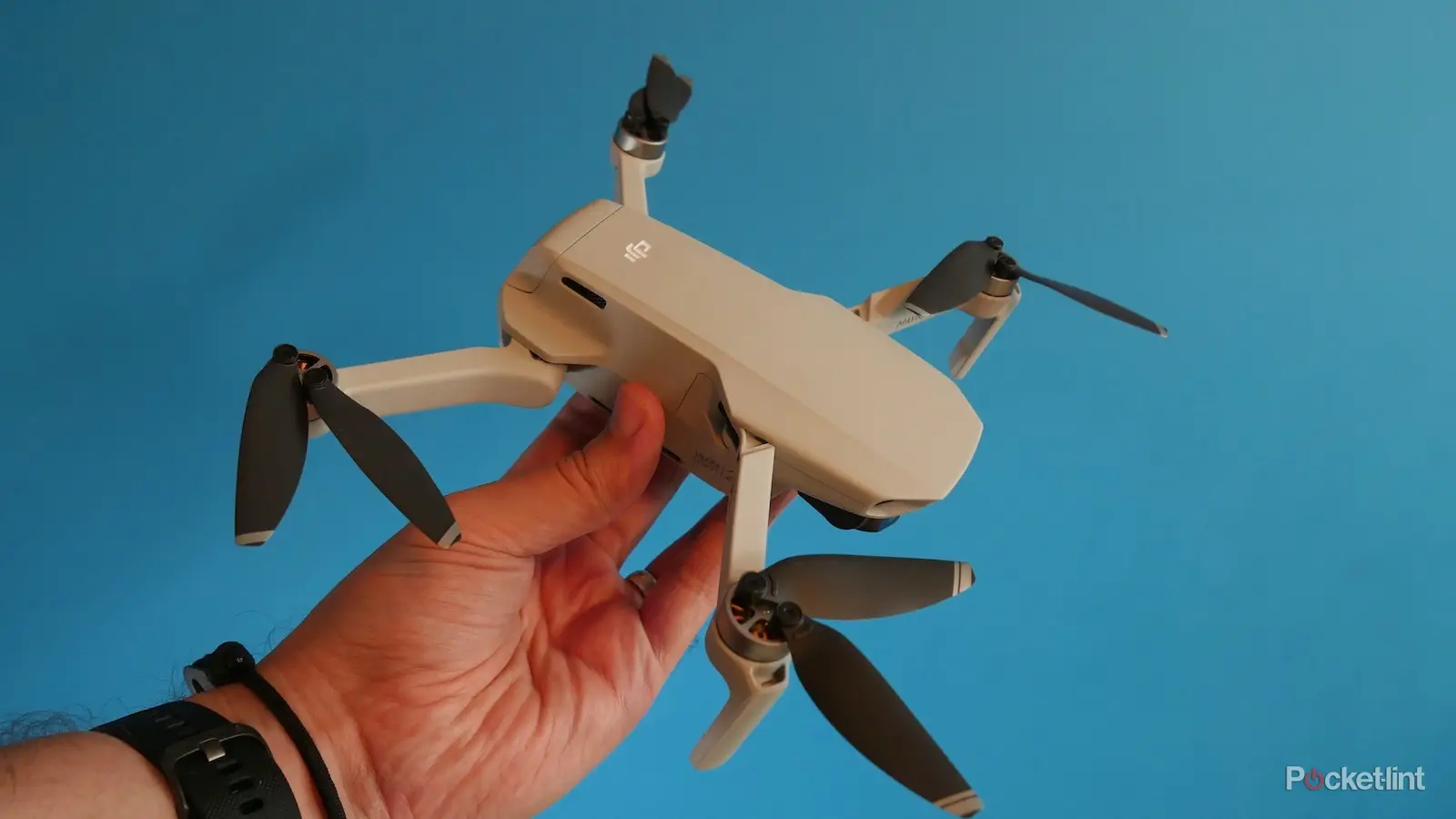
The Mini 5 Pro Fly More is the drone we would hand to most people who already know they want more than casual holiday clips. It folds down to a palm-sized shape, yet its 1-inch CMOS sensor gives it a much more serious imaging foundation than the smaller Mini 4K models. The Fly More package also includes DJI RC 2, three batteries, a charging hub, spare propellers, and ND filters, so the kit is ready for a full day of shooting.
Its 4K/60fps HDR video is useful because motion stays smooth while HDR preserves more detail in bright skies and darker ground. True vertical filming is a particularly practical feature for short-form video, since the camera can produce a portrait composition without relying on a crop. The gimbal rotates through 225 degrees, opening up angles that are difficult with a conventional forward-facing camera.
Safety features are unusually strong for a small drone. Forward-facing LiDAR and vision sensors support nightscape omnidirectional obstacle sensing, while ActiveTrack 360 keeps a moving subject in frame with customizable tracking modes. The aircraft has 42GB of internal storage, and its stated flight time is up to 36 minutes per Intelligent Flight Battery. Fast charging can recharge three batteries in about 115 minutes.
Compared with the DJI Mini 5 Pro, this Fly More version is easier to recommend for regular outings because the screen remote and extra batteries remove several pieces of friction. The DJI Air 3S flies longer and offers more reach, but it is less compact. The weakness here is the borderline weight listing of approximately 249.9 g, with a stated tolerance of 4 g, so buyers should check local rules rather than assume a particular regulatory treatment. This is the right pick for someone who wants a travel-friendly camera drone with room to grow.
2. DJI Air 3S: Best for Low Light

Pros
- 1-inch CMOS primary camera
- 4K/60 HDR with up to 14 stops of dynamic range
- 45-minute maximum flight time
- 20 km video transmission
- Bright DJI RC 2 screen remote
Cons
- Larger and heavier than the Mini models
- Charger is sold separately
- Less convenient for lightweight travel
Best for: pilots who prioritize landscape, sunset, and low-light footage over minimum carry weight.
The Air 3S feels like the sensible step up when the Mini 5 Pro is close but not quite enough. Its 1-inch CMOS primary camera is designed for difficult light, making it a stronger fit for sunsets, dusk landscapes, and nightscape work. The aircraft is still foldable, but its listed weight of about 1.6 pounds makes it a different kind of travel companion from the sub-250-gram Mini line.
The camera records 4K/60fps HDR and is specified for up to 14 stops of dynamic range. That matters when a shot contains bright cloud edges and deep shadows at the same time. Panorama modes add wide-angle and medium tele options, which can help produce broad scenic images without forcing every composition into a standard perspective.
Flight endurance is one of the Air 3S's clearest advantages. The stated maximum is 45 minutes, and video transmission reaches up to 20 km under the listed conditions. Its upgraded Return to Home algorithms can choose a route back to the Home Point, even when GPS signal is weak. Forward-facing LiDAR and additional sensors support omnidirectional obstacle sensing for nighttime flights.
The DJI Mini 5 Pro is easier to carry and offers true vertical filming in a smaller body. The Air 3S counters with longer flight time, stronger low-light positioning, and more room to scout before returning. Its real drawback is the size, plus the fact that the package notes the charger is sold separately. If your work centers on landscapes, changing light, and longer flights, the Air 3S is the more comfortable tool. For a broader look at camera-first choices, the features that matter for polished aerial footage are worth considering before you buy.
3. DJI Mini 4K Combo: Best for Beginners

Pros
- 4K camera with 3-axis gimbal
- Under 249 g
- Two batteries included
- One-tap takeoff and landing
- GPS Return to Home
Cons
- No obstacle sensing is listed
- RC-N1C requires a connected phone
- DJI Fly is not on Google Play
Best for: new pilots who want stable 4K footage and a forgiving learning curve.
The Mini 4K Combo is the uncomplicated recommendation in this group. It gives a first-time pilot the core experience that makes DJI drones approachable: a stabilized camera, GPS hovering, automated return, and controls that do not demand deep aviation knowledge on the first flight. The combo includes two batteries, an RC-N1C controller, a shoulder bag, spare propellers, and a propeller holder.
The camera records 4K UHD video through a 3-axis gimbal. That mechanical stabilization smooths out small movements and makes pans look more deliberate than footage from a fixed camera. QuickShots provide Helix, Dronie, Rocket, Circle, and Boomerang routines, giving beginners a way to create moving clips without manually coordinating every stick input.
The aircraft is listed under 249 g and supports one-tap takeoff and landing, stable hovering, and GPS Return to Home. Its stated maximum transmission distance is 10 km, and the aircraft is rated for 38 kph Level 5 wind resistance. The two-battery configuration is described as providing up to 62 minutes of maximum flight time in total, though real flights will vary with conditions and safety margins.
The DJI Mini 4K is the simpler single-battery alternative, while this Combo makes repeated practice much more practical. The tradeoff is that the package uses an RC-N1C rather than a built-in-screen controller, and obstacle sensing is not listed among its features. That means the pilot still needs to fly attentively around trees, buildings, and people. It is an excellent starting point for someone who wants guided modes without jumping straight into a more advanced aircraft.
4. DJI Avata 360: Best for 360 Footage

Pros
- 8K/60 HDR 360-degree video
- 1-inch-equivalent imaging
- Integrated propeller guard
- 20 km transmission
- Three batteries included
Cons
- Reframing requires post-production
- Heavier than Mini models
- Best features suit a specific creative style
Best for: creators who want to capture an entire scene and choose the camera angle later.
The Avata 360 is not simply another camera drone. Its defining idea is that one flight can capture a complete 360-degree view, letting you decide the framing later. That changes how you shoot. Instead of carefully aiming the camera before every movement, you can concentrate on the route and select the perspective during editing.
Its 1-inch-equivalent sensors record 8K/60fps HDR 360-degree video, giving reframed clips enough resolution for sharp results. It also switches to Single Lens mode for conventional 4K/60fps Avata-style footage. The two modes make it more versatile than a dedicated 360 camera, particularly for creators who want both immersive clips and traditional aerial sequences in one device.
The aircraft includes an integrated propeller guard and omnidirectional obstacle sensing. Its O4+ system provides 1080p/60fps transmission with a stated range of up to 20 km. The Fly More Combo includes DJI RC 2, a charging hub, a sling bag, and three batteries, which is the sensible configuration for a drone built around extended filming sessions.
The DJI Neo 2 Motion is more approachable for immersive flying because it includes motion hardware and goggles, but it does not offer the Avata 360's reframing concept. The weakness here is workflow. Eight-K video is most useful when you are willing to edit and reframe rather than simply download a finished forward-facing clip. For people who enjoy creative post-production, the Avata 360 is unusually capable. For quick family footage, it is more camera than necessary.
5. DJI Mini 4K: Best Compact Starter

Pros
- 4K UHD camera
- 3-axis gimbal stabilization
- Under 249 g
- GPS Return to Home
- QuickShots and one-tap controls
Cons
- Only one battery included
- No obstacle sensing is listed
- Phone-based remote viewing
Best for: beginners who want the smallest straightforward entry into stabilized aerial video.
The Mini 4K is the cleanest version of the basic DJI formula. It folds down for easy transport, weighs under 249 g according to the product information, and includes the aircraft, one battery, an RC-N1C controller, and the essentials for getting airborne. There is no need to sort through advanced camera modes before learning the fundamentals.
A 4K UHD camera on a 3-axis gimbal gives this small drone a stable starting point for landscape clips, property views, and travel footage. QuickShots automate Helix, Dronie, Rocket, Circle, and Boomerang movements. One-tap takeoff and landing, precise hovering, and GPS Return to Home provide useful safety nets while a new pilot builds confidence.
The stated maximum flight time is 31 minutes with the included battery configuration, and the transmission range is up to 10 km. DJI also lists 38 kph Level 5 wind resistance and brushless motors, with takeoff supported at altitudes up to 4, 000 meters. Those figures describe capability, not a promise that every flight will reach the same duration or range.
The Mini 4K Combo is the better package for regular flying because it includes two batteries, while this version is more appealing when portability and a simple starting setup matter most. Neither product lists obstacle sensing, so the pilot needs to leave generous space around obstacles. If you are still learning basic controls, the practical features that make a first drone less intimidating should guide the decision. This Mini is a sensible introduction without unnecessary complexity.
6. DJI Mavic 4 Pro: Best Professional Camera

Pros
- 100MP Hasselblad main camera
- 6K/60 HDR video
- Dual tele cameras
- 51-minute maximum flight time
- 30 km O4+ transmission
Cons
- Large and heavy
- More equipment than casual pilots need
- Professional features require a deliberate workflow
Best for: experienced creators who need multiple focal lengths and high-resolution aerial images.
The Mavic 4 Pro is the specialist in this lineup. It is built around a 100MP Hasselblad main camera, two tele cameras, and a 360-degree Infinity Gimbal. That combination gives a professional shooter more ways to frame a subject without moving the aircraft as often. It is also physically substantial, with a listed weight of about 9.3 pounds, so this is not a drone chosen for casual pocket carry.
The main camera records 6K/60fps HDR video, while the tele cameras are intended for crisp, detailed zoom images. A 100MP sensor gives still photographers more room to crop, though final results will still depend on light, movement, and the chosen focal length. The Infinity Gimbal supports dynamic camera movement that standard fixed-range gimbals cannot match.
Flight endurance reaches a stated 51 minutes, and O4+ transmission extends to 30 km with 10-bit HDR video transmission. The drone also includes 0.1-lux Nightscape omnidirectional obstacle sensing, which is a meaningful specification for low-light work. The package includes three batteries, a charging hub, and the RC Pro 2 controller with a 7-inch rotatable high-bright display.
The Air 3S is easier to live with and the Mini 5 Pro is much easier to carry, but neither offers this tri-camera flexibility. The Mavic 4 Pro's weakness is not a missing feature. It is the scale of the system. The aircraft, controller, and batteries demand more planning, storage, and transport care. It is the pick for professional aerial photography, where multiple perspectives and maximum imaging flexibility justify bringing a larger kit. For another perspective on sensor and focal-length choices, how different aerial camera setups shape a finished image is useful context.
7. DJI Neo 2 Motion: Best Immersive Starter

Pros
- 151 g aircraft
- Full-coverage propeller guards
- RC Motion 3 and Goggles N3 included
- Palm takeoff and landing
- ActiveTrack and gesture control
Cons
- Motion control is different from a standard remote
- Camera details are less extensive than the Mini line
- DJI Fly requires an external download on Android
Best for: people who want an easy route into FPV-style flying and hands-free control.
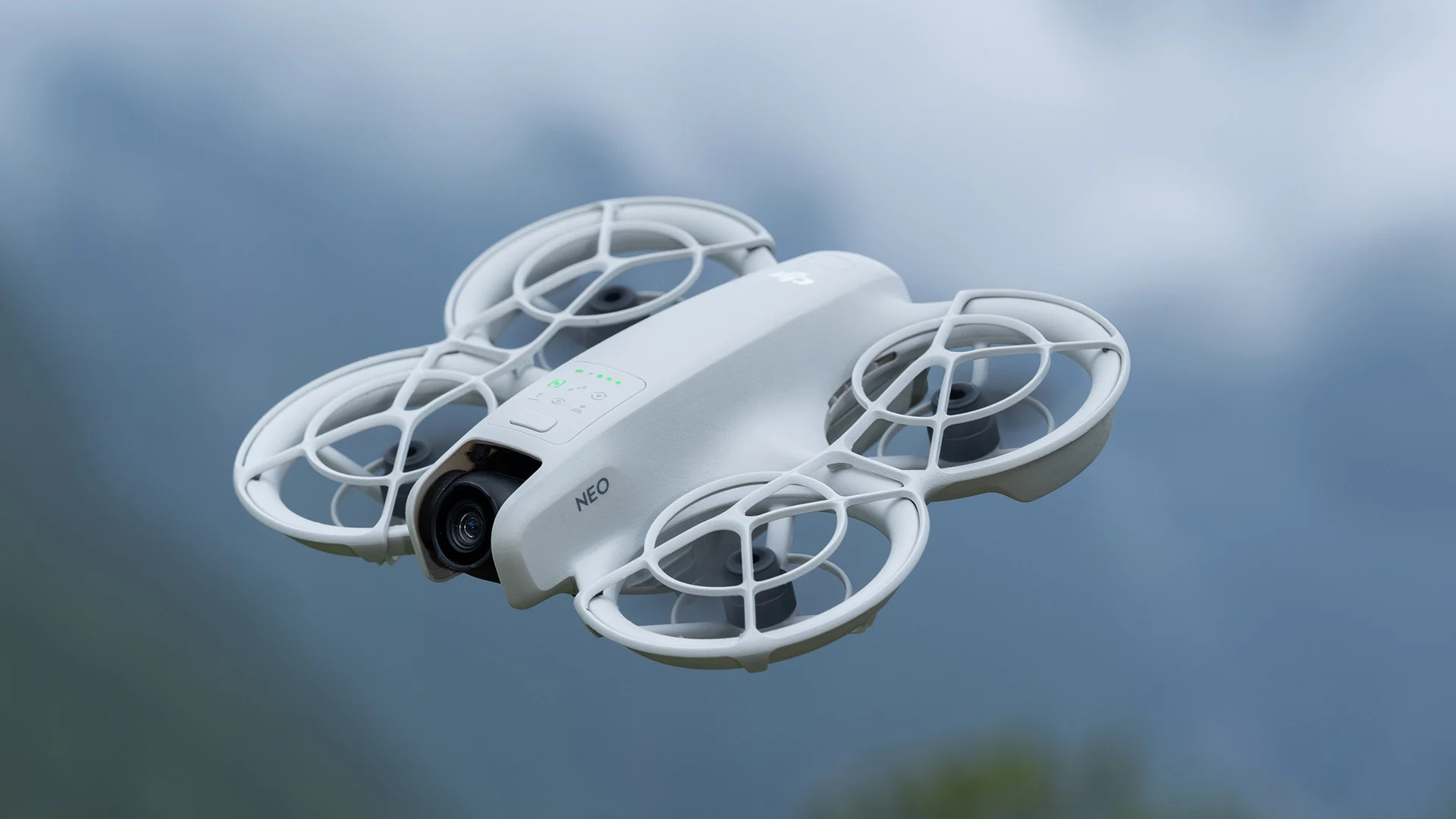
The Neo 2 Motion is the most immediately playful drone here. The aircraft weighs 151 g and has full-coverage propeller guards, while palm takeoff and landing reduce the ceremony around a quick flight. The package includes RC Motion 3, Goggles N3, a digital transceiver, three batteries, a charging hub, and the guards, so the immersive experience is built into the kit.
Its 4K camera is aimed at capturing moments rather than replacing a dedicated aerial camera. ActiveTrack can keep a subject in focus, and gesture control enables hands-free interaction. SelfieShot adds a quick way to capture personal clips, while Apple Watch support can show the live feed, flight status, and voice controls for tracking.
Omnidirectional obstacle sensing adds reassurance around a lightweight aircraft, and DJI describes the Neo 2 as supporting flexible flight modes. The 151 g weight helps with carrying it to a trail, park, or open area. Goggles make the flight more immersive, but they also change the experience from looking at a phone screen to occupying the aircraft's point of view.
The standard DJI Neo 2 uses the RC-N3 controller and is a better fit if you prefer conventional sticks and phone viewing. The Mini 4K is the stronger camera-first beginner choice because its 3-axis gimbal and 4K setup are more clearly aimed at traditional aerial footage. For pilots specifically drawn to goggles and responsive flight, the control differences that separate immersive FPV aircraft can help set expectations. The Neo 2 Motion is a friendly gateway, not a substitute for the Mavic line.
8. DJI Mini 5 Pro: Best Lightweight Camera

Pros
- 1-inch CMOS sensor
- 4K/60 HDR video
- 225-degree gimbal rotation
- ActiveTrack 360
- 42GB internal storage
Cons
- Only one battery included
- RC-N3 does not have the Fly More package's screen controller
- Weight may vary around the listed 249.9 g
Best for: solo travelers who want the Mini 5 Pro camera in the lightest listed package.
The Mini 5 Pro is the same camera-focused aircraft as our top pick, but the bundle changes the ownership experience. This version includes one battery, an RC-N3 remote, spare propellers, and the drone itself. That makes it the more focused option for a pilot who wants the aircraft and its imaging system without the larger Fly More kit.
The 1-inch CMOS sensor records 4K/60fps HDR video, and true vertical filming makes it easy to create portrait-oriented footage for social platforms. The 225-degree flexible gimbal can rotate farther than a basic stabilized camera, allowing unusual angles from above and behind. The 42GB internal storage also gives a useful buffer when a memory card is not immediately available.
Flight time is listed at up to 36 minutes with the Intelligent Flight Battery. Forward LiDAR and vision sensors provide nightscape omnidirectional obstacle sensing, while ActiveTrack 360 uses customizable tracking modes for moving subjects. Fast charging can recharge three batteries in about 115 minutes, though this package itself includes only one battery.
The DJI Mini 5 Pro Fly More is the better fit for day trips and repeated shooting because it includes DJI RC 2, three batteries, ND filters, and a charging hub. This standalone-style bundle is easier to understand for a solo traveler who wants to keep the kit narrow. The main caution is the aircraft's stated approximate weight of 249.9 g plus or minus 4 g, so local regulations remain important. Choose it when the camera matters more than the number of accessories in the bag.
9. DJI Mini 3 Fly More: Best for Vertical Video

Pros
- 4K HDR video
- True vertical shooting
- Three batteries in the Fly More kit
- 3-axis mechanical gimbal
- Built-in-screen DJI RC
Cons
- Plus battery changes its weight category
- Older platform than the Mini 5 Pro
- Obstacle sensing is not listed
Best for: creators who want portrait footage, long sessions, and a simple screen-based controller.
The Mini 3 remains compelling because it understands how many people actually share drone footage. True vertical shooting captures tall buildings, waterfalls, and people-friendly social clips without asking the editor to crop a horizontal frame. The Fly More kit adds two extra Intelligent Flight Batteries, a two-way charging hub, a shoulder bag, and DJI RC with a built-in 5.5-inch HD display.
Its 4K HDR video uses Dual Native ISO Fusion to preserve detail in highlights and shadows across changing light. A 3-axis gimbal keeps the footage steady, and the aircraft is listed as Level 5 wind resistant at 38 kph. QuickShots and Panorama add automated movement and wider compositions for pilots who want more than a fixed hover.
The package claims up to 114 minutes of total flight time with its three batteries. The aircraft supports up to 10 km HD video transmission, GPS Return to Home, precise hovering, and automatic takeoff and landing. QuickTransfer can move files over Wi-Fi at speeds of up to 25 Mb/s after pairing the drone close to a phone.
The Mini 5 Pro offers a newer 1-inch sensor, stronger sensing, and 4K/60 HDR, so it is the better choice for image quality and active tracking. The Mini 3 wins on the straightforward bundle and its proven vertical format. A Plus battery can extend one flight to 51 minutes, but the product information says the aircraft will then weigh more than 249 g. It suits social creators who want a screen remote and long sessions more than cutting-edge camera hardware.
10. DJI Neo 2: Best for Casual Tracking

Pros
- 151 g aircraft
- Full propeller guards
- Palm takeoff and landing
- ActiveTrack and gesture control
- Three batteries included
Cons
- RC-N3 requires a connected phone
- No goggles included
- Less camera-focused than Mini models
Best for: casual pilots who want tracking, selfies, and a conventional remote.
The Neo 2 is designed around convenience rather than cinematic control. At 151 g, it is easy to bring along, and its full-coverage propeller guards make it less intimidating than an exposed quadcopter. Palm takeoff and landing, gesture control, and SelfieShot all point toward quick personal clips rather than carefully staged landscape production.
The camera records in 4K, and ActiveTrack keeps a subject in focus during movement. The aircraft supports omnidirectional obstacle sensing and flexible flight modes, while Apple Watch support can display flight status, live feed, or voice controls for tracking. Those features make it a natural fit for walking, cycling, and informal outdoor activities.
This Fly More package includes RC-N3, a digital transceiver, three batteries, a charging hub, and propeller guards. Unlike the Neo 2 Motion version, it does not include RC Motion 3 or Goggles N3. That omission is useful if you prefer familiar controller sticks and a phone display, but it means the package is less immersive from the start.
The DJI Mini 4K remains the stronger pick for conventional aerial video because its 3-axis gimbal and QuickShots are more explicitly camera-oriented. The Neo 2 is better when the aircraft needs to follow a person, lift off from a hand, or capture a fast selfie with minimal setup. It is not the choice for detailed landscape work, but it is a capable companion for casual tracking and spontaneous footage.

How to choose best dji drone
The right DJI aircraft is determined less by the logo and more by the camera, control method, weight, and flight environment you expect to face.
Camera sensor and stabilization
A 1-inch CMOS sensor, as used by the Mini 5 Pro and Air 3S, can capture more detail in difficult light than the smaller camera systems listed here. The Mavic 4 Pro goes further with a 100MP Hasselblad main camera, dual tele cameras, and 6K/60 HDR video. For basic travel footage, 4K and a 3-axis gimbal are the more important baseline.
Weight and portability
The Mini 4K, Mini 3, and Mini 5 Pro lines prioritize compact folding designs. The Mini 4K and Mini 3 are listed under 249 g, while the Mini 5 Pro listings give an approximate 249.9 g weight with a stated tolerance. The Neo 2 is lighter at 151 g and adds propeller guards. Local rules can depend on how and where a drone is flown, so check them before taking off.
Flight time and batteries
Maximum flight figures are useful for comparing aircraft, but they are not a guarantee for every trip. Wind, temperature, speed, and return-to-home reserves affect actual use. A Fly More package with three batteries, such as the Air 3S, Mavic 4 Pro, Mini 3, and both Neo 2 kits, matters more to a full day of flying than a small difference in a single maximum-flight figure.
A longer flight is helpful, but reliable Return to Home and enough batteries to finish the shot matter more than chasing a headline number.
Obstacle sensing
Obstacle sensing is a major dividing line. Mini 5 Pro, Air 3S, Avata 360, Mavic 4 Pro, and Neo 2 models list omnidirectional sensing, while the Mini 4K and Mini 3 listings do not list it. Sensing is not permission to fly carelessly, but it can provide useful protection when tracking a subject or managing a complex return route.
Controller and viewing method
DJI RC 2 and DJI RC include built-in displays, reducing setup and leaving the phone free. RC-N1C and RC-N3 rely on a connected phone, while RC Motion 3 and Goggles N3 create a more immersive FPV-style experience. Choose a screen remote for conventional aerial framing, a phone controller for a simpler kit, or motion controls and goggles when the flight experience itself is the priority.
Frequently asked questions
Which DJI drone is best for most people?
The DJI Mini 5 Pro Fly More is the strongest all-round pick in this group. Its 1-inch CMOS sensor, 4K/60 HDR video, vertical filming, obstacle sensing, screen remote, and three-battery kit cover a wide range of travel and creative work.
Is the DJI Mini 4K suitable for a first drone?
Yes. The DJI Mini 4K has one-tap takeoff and landing, GPS Return to Home, stable hovering, QuickShots, and a 3-axis gimbal. The Mini 4K Combo is the more practical version for learning because it includes two batteries.
Which DJI drone is best for night footage?
The DJI Air 3S is the clearest fit because its 1-inch CMOS primary camera is designed for low-light scenes, and it lists nightscape omnidirectional obstacle sensing. The Mavic 4 Pro adds stronger professional camera hardware and low-light sensing, but its larger system is more demanding to carry.
Do all of these DJI drones use the same controller?
No. The Mini 5 Pro Fly More uses DJI RC 2, the Mini 5 Pro listing uses RC-N3, and the Mini 3 Fly More includes DJI RC. The Mini 4K versions use RC-N1C, while the Neo 2 versions separate into a conventional RC-N3 package and a motion-control package with RC Motion 3 and Goggles N3.
Which DJI drone is best for vertical video?
The DJI Mini 5 Pro and DJI Mini 3 both support true vertical filming. The Mini 5 Pro has the newer 1-inch CMOS camera and more advanced sensing, while the Mini 3 offers a straightforward vertical-video setup with a built-in-screen DJI RC.
Is the DJI Avata 360 different from a normal camera drone?
Yes. Its main feature is 8K/60 HDR 360-degree capture, which records the entire view and lets you reframe it later. It also supports Single Lens mode for conventional 4K/60 footage, but its 360 workflow is most useful to people comfortable with post-production.
Which DJI drone is best for FPV-style flying?
The DJI Neo 2 Motion is the most accessible FPV-style option in this lineup because it includes RC Motion 3 and Goggles N3. The Avata 360 also supports immersive creative flying, but its main appeal is its 360-degree imaging and reframing workflow.
The bottom line
The Best DJI Drone for most pilots is the DJI Mini 5 Pro Fly More. It combines a 1-inch CMOS sensor, 4K/60 HDR video, true vertical filming, ActiveTrack 360, obstacle sensing, a built-in-screen remote, and enough batteries for a serious outing without becoming a large travel system.
The DJI Air 3S is the better choice for low-light landscapes and longer flights, while the DJI Mini 4K Combo is the clearest starting point for beginners. Choose the DJI Mavic 4 Pro for professional multi-camera work and the DJI Neo 2 Motion when goggles and motion control are more important than traditional camera framing.
If you are undecided, choose the Mini 5 Pro for the broadest mix of camera quality, portability, and safety features.
As an Amazon Associate we earn from qualifying purchases.