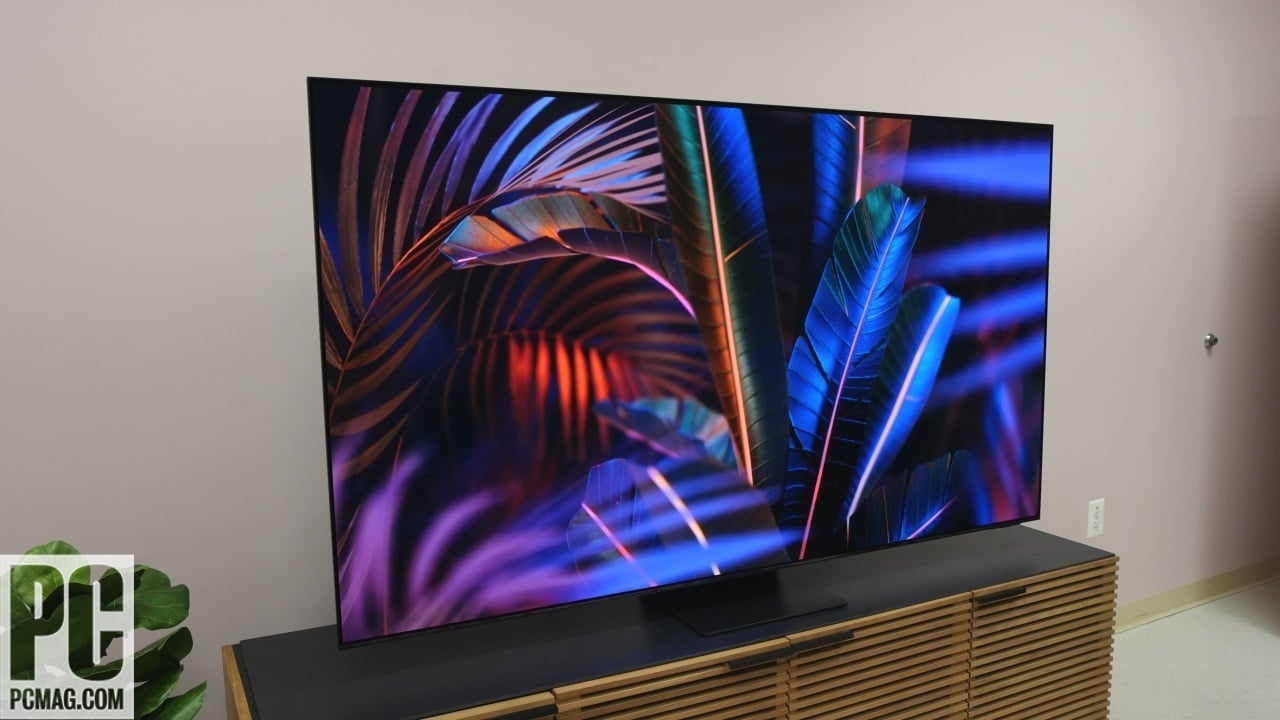

A 55-inch television can be the hardest screen size to get right. It is large enough to expose weak upscaling, distracting reflections, and thin built-in sound, yet compact enough that brightness and viewing angle still matter in a living room or bedroom. The panel technology matters too, since several products in this list are not OLED televisions at all.
Our Best 55 inch oled tv guide separates true OLED models from QLED and Crystal UHD alternatives, then looks at motion, HDR support, gaming features, smart platforms, and physical design. The LG C5 Brightness Booster is the single best pick, while the rest of the range covers bright-room viewing, competitive gaming, streaming simplicity, and lower-cost non-OLED options.
Comparison table
| # | Product | Award | Panel or picture feature | Gaming or motion | Best for |
|---|---|---|---|---|---|
| 1 | LG C5 Brightness Booster | Best overall | OLED evo, Dolby Vision, Brightness Booster | 0.1ms, up to 144Hz, VRR | Most viewers |
| 2 | Roku Select QLED | Best streaming simplicity | 4K QLED, HDR10 | Roku Smart Picture | Easy streaming |
| 3 | LG C5 AI Upscaling | Best C5 alternative | OLED evo, Dolby Vision | AI Super Upscaling | C5 shoppers |
| 4 | LG G5 One Wall | Best bright-room OLED | OLED evo, Brightness Booster Ultimate | 0.1ms, up to 165Hz, VRR | Wall mounting |
| 5 | LG C4 OLED | Best previous-generation OLED | OLED, Dolby Vision | 0.1ms, up to 144Hz, VRR | Movies and gaming |
| 6 | Samsung S90H OLED | Best Samsung OLED | OLED HDR+, Glare Free | 165Hz, G-SYNC, FreeSync Premium Pro | Bright gaming rooms |
| 7 | Samsung U8000H Crystal UHD | Best non-OLED Samsung | Crystal UHD, 4K upscaling | Up to 4K 60Hz | Basic TV viewing |
| 8 | LG C6 OLED | Best new LG platform | OLED evo, Dolby Vision | 0.1ms, 165Hz, VRR | Newer webOS features |
| 9 | Samsung S85D OLED | Best balanced Samsung OLED | OLED HDR, Pantone validated | 120Hz, Motion Xcelerator | General entertainment |
| 10 | Sony XR8B OLED | Best for cinematic processing | OLED, Dolby Vision, IMAX Enhanced | XR OLED Motion | Film fans |
1. LG C5 Brightness Booster: Best Overall

Pros
- Self-lit OLED pixels produce deep black
- Brightness Booster helps in brighter rooms
- 0.1ms response time and up to 144Hz refresh rate
- Four HDMI 2.1 inputs
- Dolby Vision, Dolby Atmos, and Filmmaker Mode
Cons
- Built-in audio cannot replace a proper surround system
- OLED still needs sensible care with static images
- The design is less wall-focused than the G5
Best for: viewers who want one OLED television that handles films, sports, games, and streaming well.
The LG C5 Brightness Booster is the easiest television here to recommend without a long list of conditions. Its picture has the immediate OLED strengths people notice first, with self-lit pixels creating deep black beside bright highlights. LG says the panel has over 8.3 million self-lit pixels, and the Brightness Booster is meant to make each pixel look more luminous rather than simply pushing the whole screen brighter.
The Alpha 9 AI Processor Gen8 gives this model a broad skill set. AI Super Upscaling is useful when a streaming service, older show, or broadcast feed is softer than native 4K, because the television works to refine edges and detail rather than showing every source flaw at full size. Dolby Vision handles compatible HDR movies, while Filmmaker Mode is the sensible setting for viewers who want a more restrained cinematic presentation. Dolby Atmos support is present for compatible audio equipment, though the television's built-in speakers remain a compromise.
Gaming is where the C5 pulls ahead of the simpler sets in this roundup. Its claimed 0.1ms response time, up to 144Hz refresh rate, variable refresh rate, NVIDIA G-Sync, and AMD FreeSync Premium give it the right foundation for fast console and PC play. Four HDMI 2.1 inputs also make it easier to connect several modern devices without constantly swapping cables. Compared with the LG C4 OLED, the C5 is the more current package, while the LG G5 One Wall offers more brightness and a more specialized wall-mounted design.
The weakness is not unique to this model. OLED owners should avoid leaving static images on screen for long periods, and no television this thin creates genuinely cinematic bass on its own. The C5 also lacks the G5's nearly flush One Wall presentation. Those caveats are reasonable for a general-purpose screen, and the C5 remains the pick we would keep for a mixed household that watches everything from films to games.
2. Roku Select QLED: Best Streaming Simplicity

Pros
- Straightforward Roku home screen
- 4K QLED picture with HDR10
- Voice remote with personal shortcuts
- AirPlay support and voice control options
- Bluetooth Headphone Mode
Cons
- It is QLED, not OLED
- The feature set is less focused on high-end gaming
- Built-in sound is aimed at clarity rather than room-filling impact
Best for: households that want a simple 4K streaming television without a complicated interface.
The Roku Select QLED is the deliberate outlier in this list. It does not use OLED, but it earns a place because many shoppers searching for a 55-inch screen care more about easy streaming and a clean interface than perfect black. The 4K QLED panel uses HDR10, and Roku Smart Picture is designed to optimize incoming signals and select a suitable picture mode.
Its strongest feature is the software experience. Roku's home screen is uncluttered, apps are arranged in a way that is easy to understand, and voice search avoids the slow process of typing with directional buttons. The enhanced voice remote adds personal shortcuts and a lost-remote finder. Apple AirPlay, Siri, Alexa, and Google Assistant support give it useful flexibility in a mixed-device home.
The television also pays attention to small daily annoyances. Fast Wi-Fi and quick app access make the set feel more like an appliance than a computer that needs managing. Bluetooth Headphone Mode is particularly useful in a bedroom or shared home, while the clear-speech focus of the speakers should help with dialogue. Roku also includes free live television, news, sports, movies, and shows through its platform.
Picture quality is where the LG C5 Brightness Booster and Sony XR8B OLED move well ahead. A QLED screen can show rich color and sharp 4K detail, but it does not provide OLED's pixel-level control over black areas. It also is not the pick for someone chasing the fastest refresh rates or the most advanced gaming connections. Choose the Roku when interface simplicity matters more than the deepest contrast, and skip it if OLED black levels are the reason you started shopping.
3. LG C5 AI Upscaling: Best C5 Alternative
Pros
- OLED evo panel with Brightness Booster
- Alpha 9 AI Processor Gen8
- Dolby Vision, Dolby Atmos, and Filmmaker Mode
- Strong upscaling for mixed-quality sources
- Same compact 55-inch C5 dimensions
Cons
- The listing does not provide the C5 gaming feature details found on the first entry
- Built-in speakers remain limited for serious home theater
- It duplicates much of the first C5's hardware description
Best for: shoppers comparing C5 listings who want the clearly described AI picture features.
The LG C5 AI Upscaling is a second C5 listing, not a different television family. That distinction matters because the product information overlaps heavily with the first entry. It uses the OLED evo approach, Brightness Booster, and self-lit pixels, so the essential picture character should be familiar to anyone considering the LG C5 Brightness Booster.
The listed Alpha 9 AI Processor Gen8 is the center of this version's feature set. AI Super Upscaling is intended to improve sports, movies, and ordinary television feeds that do not arrive as pristine 4K. That is a useful capability for anyone with a large mix of streaming, broadcast, and older content. Dolby Vision adds support for compatible HDR material, and Filmmaker Mode provides a picture option aimed at preserving a film's intended appearance.
Dolby Atmos support gives the television a route to more spacious sound through compatible equipment, but it should not be mistaken for a substitute for a soundbar or receiver. The physical dimensions are also specific enough to help with furniture planning: the set is listed at 48.1 inches wide, 29.8 inches high, and 9.1 inches deep, with a listed weight of 35.3 pounds.
The main issue is clarity rather than picture quality. The first LG C5 Brightness Booster entry spells out 0.1ms response time, up to 144Hz, VRR, G-Sync, FreeSync Premium, and four HDMI 2.1 inputs, while this listing's supplied features do not repeat those details. That makes the first listing the safer recommendation for a serious gamer. This one makes sense for a buyer focused on the C5's picture processing and movie features, but readers should confirm the listing details carefully before choosing between the two.
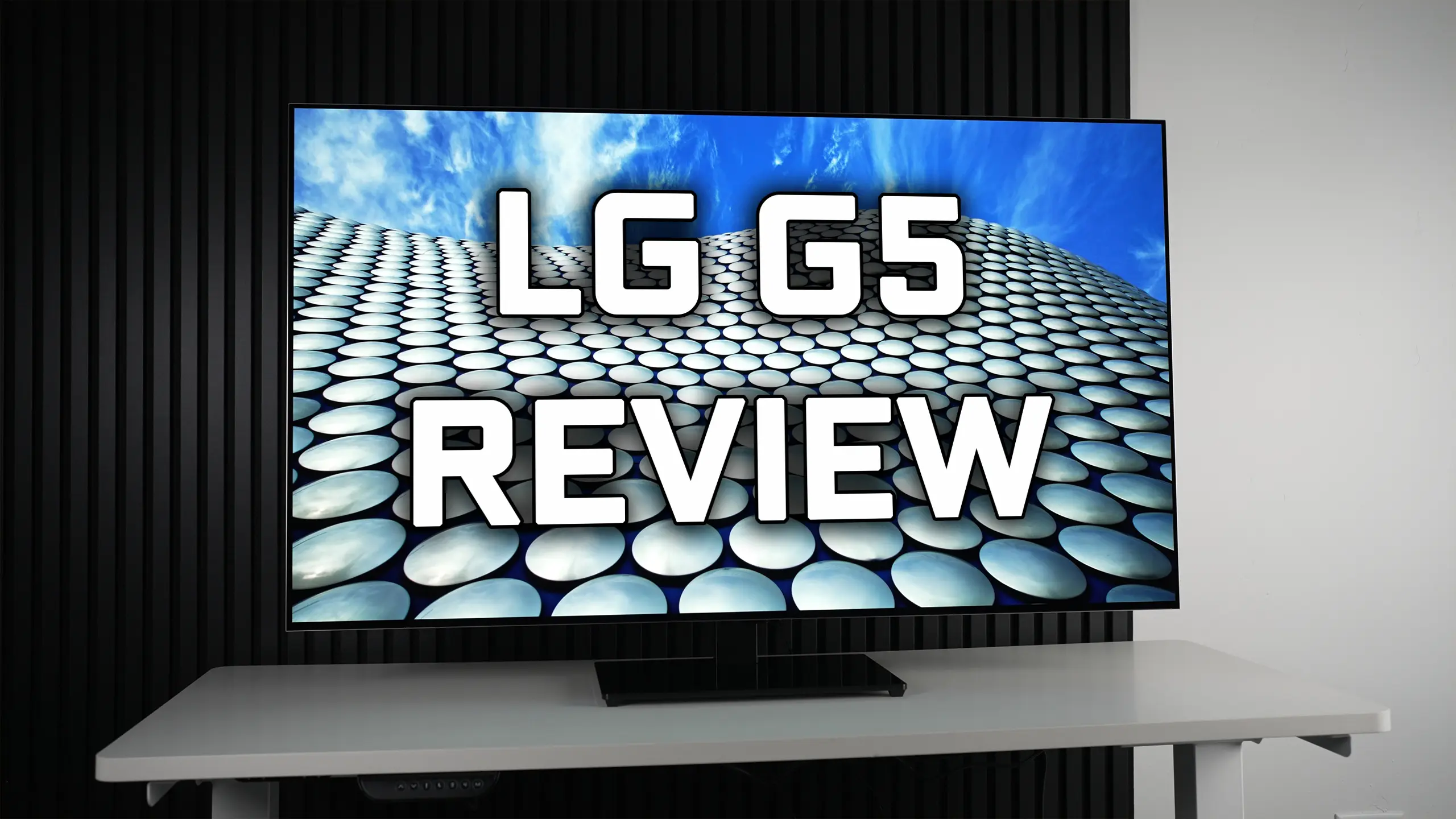
4. LG G5 One Wall: Best Bright-Room OLED

Pros
- Brightness Booster Ultimate
- Alpha 11 AI Processor Gen2
- Up to 165Hz refresh rate
- Four HDMI 2.1 inputs
- One Wall design for near-flush mounting
Cons
- Wall-focused design is less flexible on furniture
- It is heavier than the C5
- OLED care still matters with static content
Best for: viewers building a wall-mounted setup in a bright room who also want high-end gaming features.
The LG G5 One Wall is the specialist choice in this group. It is built around LG's brightest OLED evo approach, with Brightness Booster Ultimate designed to magnify individual pixels. That makes it a stronger candidate for a room with daylight or overhead lighting than a less bright OLED, while the self-lit panel retains OLED's black-level advantage.
The Alpha 11 AI Processor Gen2 handles picture and sound processing, including AI Picture Pro and AI Super Upscaling. The listed AI Director Processing is aimed at a more deliberate film presentation, and Dolby Vision plus Filmmaker Mode give movie fans the formats and setting they are likely to use most. Dolby Atmos support can also feed a compatible audio system with immersive sound formats.
This is the most gaming-ready LG in the roundup on paper. The 0.1ms response time and up to 165Hz refresh rate suit fast PC play, while VRR, NVIDIA G-Sync, and AMD FreeSync Premium are designed to reduce tearing and uneven motion. Four HDMI 2.1 inputs are a practical advantage for a setup with multiple consoles and a gaming PC. The LG C5 Brightness Booster is close in purpose, but the G5 adds more brightness potential and a higher listed refresh rate.
The design changes how you install it. LG describes the One Wall design as leaving virtually no gap when hung, and the listed depth is only 1.1 inches. That is excellent for a planned wall installation, but less useful if you want to move the television between furniture and a mount. At 37 pounds, it is also heavier than the C5. For more context on how panel performance changes with room lighting, the amount of brightness a screen really needs in a bright room is a useful question to settle before buying.
5. LG C4 OLED: Best Previous-Generation OLED

Pros
- Over 8 million self-lit OLED pixels
- Dolby Vision, Dolby Atmos, and Filmmaker Mode
- 144Hz refresh rate and 0.1ms response time
- Four HDMI 2.1 inputs
- Multi View with two screens
Cons
- Older processor generation than the C5
- Not as bright or fast on paper as the G5
- No television speaker can match a dedicated audio system
Best for: movie and game fans who want a highly capable LG OLED from the prior generation.
The LG C4 OLED remains a well-rounded screen because its core hardware is still ambitious. LG lists more than 8 million self-lit pixels, 100% Color Volume, and 100% Color Fidelity. Those claims point to the things OLED does well in practice: controlled dark scenes, bright highlights beside black, and color that does not wash out simply because the content contains both extremes.
Its Alpha 9 AI Processor Gen7 provides AI Super Upscaling for lower-quality sources and supports Multi View with two screens. The split-screen feature is useful for keeping an eye on a game and another source at the same time, though its usefulness depends on how you actually watch. Dolby Vision, Filmmaker Mode, and Dolby Atmos support cover the main movie and audio features found across the stronger LG models.
Gaming performance is still a major reason to consider it. The listed 0.1ms response time, up to 144Hz refresh rate, VRR, NVIDIA G-Sync, AMD FreeSync Premium, and four HDMI 2.1 inputs give it a serious specification set. The LG C5 Brightness Booster is the newer all-round recommendation, but the C4 remains more compelling for someone who does not need the newest processor generation. The Samsung S85D OLED is a reasonable alternative if you prefer Samsung's Tizen platform and its Object Tracking Sound Lite feature.
The drawbacks are mostly about position in the lineup. It does not have the G5's Brightness Booster Ultimate or 165Hz capability, and the C5 has the newer Alpha 9 AI Processor Gen8. It is also not the right choice if your priority is a wall-hugging installation. If you are choosing a screen around a full set of streaming devices, how one 55-inch television handles everyday smart features can help you decide whether the panel or the interface should lead the purchase.
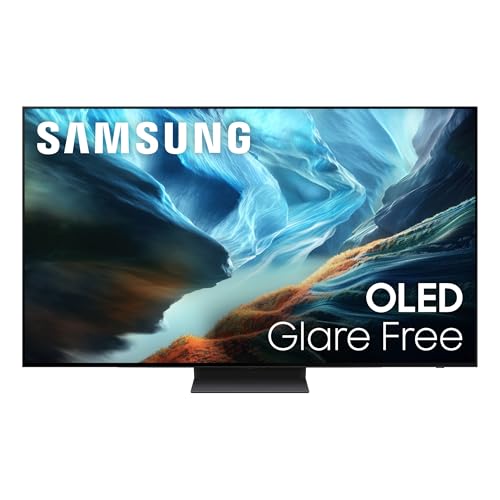
6. Samsung S90H OLED: Best Samsung OLED
Pros
- OLED HDR+ with Glare Free technology
- NQ4 AI Gen3 Processor
- Up to 165Hz gaming
- G-SYNC and AMD FreeSync Premium Pro
- AI Motion Enhancer Pro
Cons
- The listing does not identify Dolby Vision
- Samsung's smart interface may not suit Roku or Google TV fans
- Advanced gaming features matter less for ordinary television viewing
Best for: gamers and sports viewers who want a bright, low-reflection Samsung OLED.
The Samsung S90H OLED takes a different route from LG's C-series televisions. Its OLED HDR+ system is paired with Glare Free technology, a combination aimed at maintaining contrast when lamps or windows would otherwise show up as reflections. That makes it an interesting option for bright rooms, especially for viewers who dislike seeing their own room reflected in dark scenes.
The NQ4 AI Gen3 Processor is listed with 128 neural networks and supports 4K AI Upscaling Pro. Samsung also includes Auto HDR Remastering, which is designed to give non-HDR content a more HDR-like presentation. AI Motion Enhancer Pro targets fast-moving balls and text, so sports and news tickers should benefit more than they would from a basic motion mode.
Gaming is the S90H's clearest advantage. Motion Xcelerator 165Hz, NVIDIA G-SYNC, and AMD FreeSync Premium Pro provide a strong platform for compatible PC hardware, while the low-latency design is intended to keep controls responsive. It is more overtly performance-focused than the Samsung S85D OLED, which tops out at a listed 120Hz. The LG G5 One Wall matches the S90H's 165Hz figure and adds four HDMI 2.1 inputs in its supplied features.
The omission that film fans should consider is Dolby Vision. The S90H listing highlights HDR+, but it does not list Dolby Vision, so viewers with a large Dolby Vision library may prefer the LG C5 Brightness Booster or Sony XR8B OLED. Glare Free is not a universal advantage either, since some viewers prefer maximum perceived punch over a screen treatment. Pick the S90H for bright-room gaming and motion, not simply because it carries an OLED label.
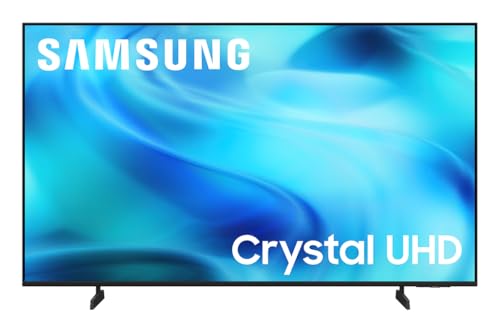
7. Samsung U8000H Crystal UHD: Best Non-OLED Samsung
Pros
- 4K Crystal UHD picture
- 4K upscaling for lower-resolution sources
- Samsung TV Plus with free channels and content
- Motion Xcelerator for games and sports
- Lightweight 22.5-pound design
Cons
- Crystal UHD is not OLED
- Motion performance is limited to up to 4K 60Hz
- It cannot produce OLED-level black control
Best for: ordinary television viewing, streaming, and sports when OLED contrast is not essential.
The Samsung U8000H Crystal UHD is the clearest reminder that screen size and panel type are separate decisions. It is a 55-inch 4K television, but Crystal UHD uses a conventional display approach rather than OLED's self-lit pixels. That means it can still show a sharp, colorful image, but dark scenes will not have the same pixel-level control as the LG C4 OLED or Samsung S90H OLED.
Samsung's Crystal Processor handles color enhancement and 4K upscaling. That matters when the source is HD, compressed streaming, or older footage, because a good upscale can keep the image from looking unnecessarily soft on a large screen. Color Booster is intended to intensify colors, while Motion Xcelerator estimates and adjusts frame transitions for games and sports.
The software side is more generous. Samsung TV Plus provides over 2, 700 free streaming options, including more than 750 subscription-free channels according to the supplied listing. That could make the U8000H a useful secondary-room set for viewers who want plenty to watch without adding another device. The television is also listed at 48.2 inches wide, 29.9 inches high, and 22.5 pounds, which makes handling easier than with many OLED alternatives.
Its limits are easy to define. Up to 4K 60Hz is adequate for ordinary viewing but not aimed at high-refresh gaming, and the panel cannot match OLED black levels or HDR impact. The Roku Select QLED offers a simpler streaming experience, while the Samsung U8000H makes more sense for someone already comfortable with Samsung's interface. It belongs in this roundup as a practical non-OLED alternative, not as a picture-quality rival to the OLED models.
8. LG C6 OLED: Best New LG Platform

Pros
- OLED evo panel with over 8.3 million self-lit pixels
- Alpha 11 AI Processor Gen3
- Dolby Vision, Dolby Atmos, and Filmmaker Mode
- 165Hz refresh rate with G-Sync and FreeSync Premium
- OLED Care and newer webOS features
Cons
- The supplied information does not detail HDMI inputs
- New smart features may matter less if you use an external streamer
- Built-in audio remains a thin-screen compromise
Best for: buyers who want LG's newer webOS platform and high-refresh OLED gaming.
The LG C6 OLED is the newest LG entry in this selection and puts its platform features near the front. Its OLED evo panel uses over 8.3 million self-lit pixels, while Brightness Booster is intended to make the image more vivid. As with the other OLEDs here, the point is not just resolution. The panel can turn individual pixels off for dark areas while keeping nearby highlights bright.
The Alpha 11 AI Processor Gen3 is described as LG's most powerful Dual AI Engine, and it supports AI picture and speed improvements. Dolby Vision handles compatible HDR movies, Dolby Atmos supports immersive audio formats, and Filmmaker Mode is available for a less processed film presentation. LG also lists Ambient Light Technology as part of its film-focused experience.
The C6 is particularly appealing to gamers. It has a listed 165Hz refresh rate, 0.1ms response time, NVIDIA G-Sync, and AMD FreeSync Premium. OLED Care is also included, giving the television a set of features intended to help owners look after the panel over time. Those features make it a closer rival to the LG G5 One Wall than to the older LG C4 OLED, although the G5 remains the more installation-focused design.
webOS 2026 adds an AI Hub powered by Google Gemini and Microsoft Copilot, and LG lists over 400 free channels through LG Channels, along with more than 10, 000 movies and shows on demand. That is useful if you want the television itself to handle discovery and streaming. The limitation is that the supplied information does not spell out the HDMI input count, so buyers with several gaming devices should check the listing. For people who want a current LG interface as much as a strong panel, the C6 is the more forward-looking choice.
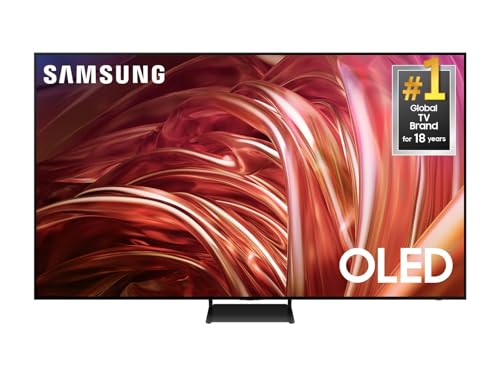
9. Samsung S85D OLED: Best Balanced Samsung OLED
Pros
- OLED panel with deep contrast
- 120Hz Motion Xcelerator
- Dolby Atmos and Object Tracking Sound Lite
- 4K AI Upscaling
- Pantone-validated color
Cons
- Lower refresh rate than the S90H
- No Dolby Vision listed
- Older model than several entries here
Best for: viewers who want Samsung OLED picture quality for films, shows, sports, and console gaming.
The Samsung S85D OLED is a calmer alternative to the more aggressively specified S90H. Its OLED panel is designed to produce pure blacks and bright whites, and Samsung says the colors are Pantone validated. That combination should suit general viewing, where accurate skin tones and strong contrast matter more than chasing the highest possible gaming refresh rate.
The NQ4 AI Gen2 Processor uses 20 specialized networks for upscaling and smart functions. 4K AI Upscaling is intended to improve HD movies, live sports, and home videos, which gives the S85D a useful role in households with mixed sources. Real Depth Enhancer increases foreground contrast to create more apparent depth, though it is a processing feature that viewers may want to adjust depending on the content.
Motion Xcelerator runs at a listed 120Hz, enough for smooth sports and console gaming but below the 165Hz claims of the Samsung S90H OLED and LG G5 One Wall. The S85D also includes Dolby Atmos and Object Tracking Sound Lite, which attempts to make sound follow movement on screen through virtual top-channel audio. It will not replace separate speakers, but it is more purposeful than basic stereo television audio.
The main trade-off is that the S85D is not the newest or fastest Samsung OLED in this group. The S90H offers Glare Free technology and more advanced PC gaming support, while the Sony XR8B OLED has Dolby Vision, IMAX Enhanced, and DTS:X listed for cinematic use. The S85D is the better fit for someone who wants balanced everyday performance and already prefers Samsung's Tizen interface.
10. Sony XR8B OLED: Best for Cinematic Processing

Pros
- Pure black OLED contrast
- XR Processor and XR Clear Image upscaling
- Dolby Vision, Atmos, IMAX Enhanced, and DTS:X
- Google TV with Google Assistant
- PlayStation 5 picture features
Cons
- Gaming features are less fully specified than on the LG G5
- No listed refresh-rate figure
- Built-in sound still benefits from external equipment
Best for: film fans who prioritize processing, creator-focused picture modes, and Google TV.
The Sony XR8B OLED is the movie specialist. Its OLED panel uses more than 8 million self-lit pixels, and Sony's XR Processor is designed to improve color, contrast, and clarity scene by scene. Sony also lists studio-calibrated picture modes for Netflix and Prime Video, which should appeal to viewers who want a restrained presentation rather than a permanently vivid one.
XR Clear Image upscales HD and digital content, while XR OLED Motion targets blur in sports and action films. The listing does not provide a refresh-rate number, so the XR8B is harder to compare directly with the LG C5 Brightness Booster or Samsung S90H OLED for high-refresh gaming. Its strength is processing judgment, particularly when the source quality varies.
The format support is broad. Dolby Vision and Dolby Atmos are listed alongside IMAX Enhanced and DTS:X, giving compatible films and audio equipment several ways to provide a more cinematic presentation. Google TV brings streaming apps into one interface, while Google Assistant, Apple AirPlay 2, and Google Cast make it easy to search or send content from another device.
PlayStation 5 owners get Auto HDR Tone Mapping and Auto Genre Picture Mode, features designed to optimize the picture for gaming and streaming. That makes the Sony a stronger gaming option than its missing refresh-rate specification might suggest, although the LG G5 One Wall and LG C6 OLED provide clearer high-refresh numbers and adaptive-sync details. The XR8B is the pick for a viewer who cares most about films, studio-oriented modes, and a Google-based smart experience.
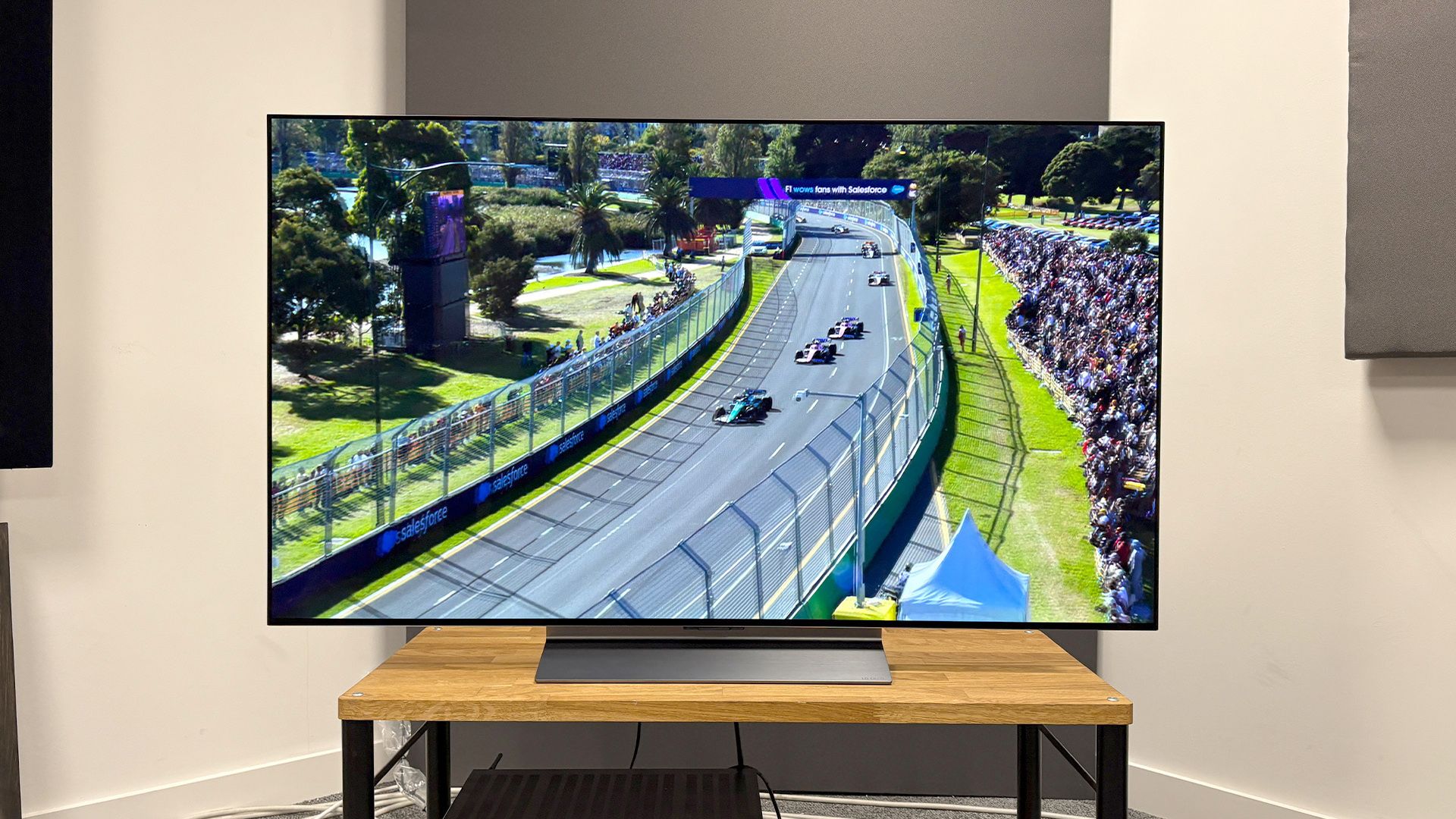
How to choose best 55 inch oled tv
The right screen depends less on a long feature list than on how your room, sources, and viewing habits interact with the panel.
OLED contrast and room brightness
OLED televisions use self-lit pixels, so dark pixels can turn off instead of relying on a backlight. That creates the deep black and strong contrast seen on the LG C5 Brightness Booster, LG C4 OLED, Samsung S90H OLED, and Sony XR8B OLED.
Brightness still matters. The LG G5 One Wall and Samsung S90H OLED are the strongest bright-room specialists in this list because their features specifically address brightness or reflections. A darker room makes OLED contrast easier to appreciate, while a sunlit room puts more pressure on peak brightness and screen reflections.
Buy the brightest OLED that suits your room, but do not trade away the black-level advantage that made you choose OLED.
HDR format support
HDR can make highlights brighter and colors more expressive, but the television must support the formats used by your films and streaming services. Dolby Vision appears on the LG C5 models, LG G5 One Wall, LG C4 OLED, LG C6 OLED, and Sony XR8B OLED. The Samsung models here highlight HDR or HDR+ instead, and the supplied details do not list Dolby Vision.
Look for Filmmaker Mode or studio-calibrated modes if you watch many films. These settings are designed to reduce unnecessary processing. For more help comparing format support, the differences between HDR formats and OLED picture quality are more important than a generic claim of “HDR.”
Gaming refresh rate and response
A higher refresh rate can make camera movement and input feel smoother, but the game, console, or PC must support it. The LG C5 Brightness Booster and LG C4 OLED list up to 144Hz, while the LG G5 One Wall, LG C6 OLED, and Samsung S90H OLED list up to 165Hz.
Response time is also important for a clean, responsive image. LG lists 0.1ms on several of its OLED models, and adaptive features such as VRR, G-Sync, and FreeSync can reduce tearing. The Samsung U8000H is limited to up to 4K 60Hz, which is fine for general viewing but not aimed at high-refresh gaming.
Upscaling and motion processing
Most television content is not a perfect native 4K signal. AI Super Upscaling on LG models, 4K AI Upscaling on Samsung televisions, XR Clear Image on the Sony, and Roku Smart Picture all approach the problem differently.
Sports viewers should also inspect motion features. Samsung's AI Motion Enhancer Pro, Motion Xcelerator, and Sony XR OLED Motion are designed to reduce blur, while LG emphasizes fast response and adaptive gaming. Processing can improve a weak source, but aggressive settings may make films look artificial, so useful controls matter as much as the processor name.
Smart TV platform
The interface determines how often you reach for a separate streaming device. Roku is the simplest option for straightforward app access and voice search. LG's webOS adds LG Channels and, on the C6, a newer AI Hub. Samsung uses Tizen and Samsung TV Plus, while Sony's Google TV works well for Google Assistant, Google Cast, and a broad app library.
Choose the platform that matches the devices already in your home. A technically strong panel can become frustrating if the interface makes it difficult to find the services you use every day.
Frequently asked questions
Is every television in this roundup OLED?
No. The Roku Select QLED and Samsung U8000H Crystal UHD are not OLED televisions. They are included as alternatives for readers who want a 55-inch 4K smart TV but do not require OLED's self-lit pixel structure.
Which 55-inch OLED is best for gaming?
The LG G5 One Wall and LG C6 OLED list up to 165Hz, 0.1ms response time, VRR, and adaptive-sync support. The Samsung S90H OLED also lists 165Hz with G-SYNC and AMD FreeSync Premium Pro. The LG C5 Brightness Booster is a strong all-around gaming choice with up to 144Hz and four HDMI 2.1 inputs.
Which model is best for a bright room?
The LG G5 One Wall is the clearest bright-room OLED choice because it lists Brightness Booster Ultimate and a nearly flush wall design. The Samsung S90H OLED is another strong option because its Glare Free feature is intended to reduce distracting reflections.
Do these televisions support Dolby Vision?
The LG C5 models, LG G5 One Wall, LG C4 OLED, LG C6 OLED, and Sony XR8B OLED list Dolby Vision. The Samsung S90H OLED and Samsung S85D OLED listings highlight HDR or HDR+ but do not list Dolby Vision. The Roku Select QLED lists HDR10.
Do I need a soundbar with a 55-inch OLED?
Not necessarily, but a soundbar or receiver can provide more bass, volume, and separation than the built-in speakers. Dolby Atmos support appears on several models, including the LG and Sony OLED televisions, but the format works best with compatible audio equipment.
Which television has the simplest smart interface?
The Roku Select QLED is the simplest choice for a straightforward home screen, voice search, and quick access to streaming apps. Samsung, LG, and Sony offer broader ecosystems, but their interfaces may take more adjustment if you want a minimal setup.
The bottom line
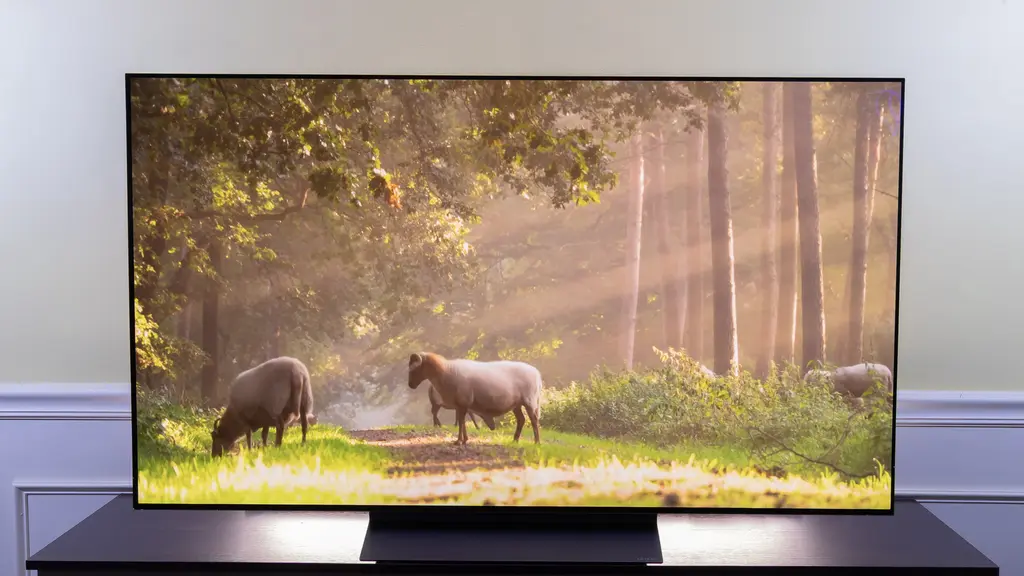
The LG C5 Brightness Booster is the Best 55 inch oled tv for most people because it balances OLED contrast, Brightness Booster technology, Dolby Vision, strong upscaling, four HDMI 2.1 inputs, and high-refresh gaming. The LG G5 One Wall is the better specialist pick for a bright room or a carefully planned wall installation.
The Sony XR8B OLED deserves a close look from film fans who prioritize studio-focused modes and broad cinematic format support. If OLED is not essential, the Roku Select QLED is the easiest streaming television to live with, while the Samsung U8000H is a straightforward non-OLED option.
If you are undecided, choose the LG C5 for the broadest mix of picture quality, gaming, and everyday flexibility.
As an Amazon Associate we earn from qualifying purchases.