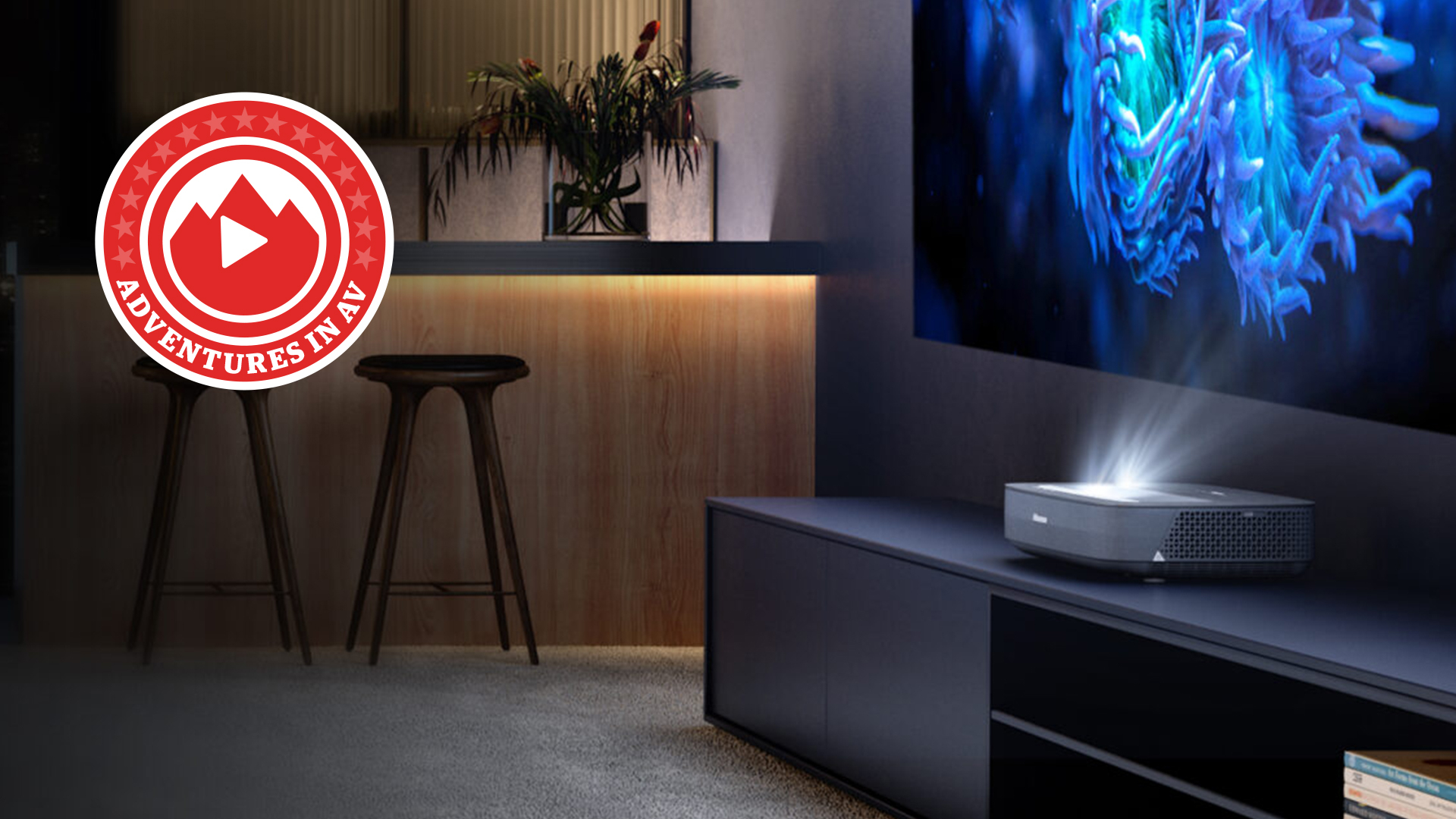

A conventional projector can turn a small room into a geometry problem. Move it too far forward and someone walks through the beam. Put it behind the sofa and the image becomes difficult to align. The Best Ultra Short Throw Projector solves that by sitting close to the wall while producing a large image.
The nine models here cover very different priorities. Some are compact 1080p projectors for flexible rooms, while others are full-scale 4K laser cinema systems with Dolby Vision, integrated sound, or gaming features. We also include smaller smart projectors that trade image authority for easier carrying and setup.
Hisense PX3-PRO is our top pick for serious home theater and gaming, while the list also includes the Epson Lifestudio Grand Plus, AWOL LTV-3000 Pro, and several compact smart alternatives.
Comparison
| # | Product | Award | Resolution | Brightness or light source | Best for |
|---|---|---|---|---|---|
| 1 | Hisense PX3-PRO | Best overall | 4K UHD | 3, 000 lumens, triple laser | Home theater and Xbox gaming |
| 2 | Epson Lifestudio Grand Plus | Best for bright rooms | 4K display technology | 4, 000 lumens color and white brightness | Large, bright living-room viewing |
| 3 | AWOL LTV-3000 Pro | Best for immersive cinema | 4K UHD | Triple laser, Dolby Vision | Movies and 3D |
| 4 | Hisense PL2 | Best balanced laser TV | 4K UHD | 2, 700 lumens | Everyday home theater |
| 5 | Optoma GT2000HDR | Best compact laser model | Full HD | 3, 500 lumens | Bright rooms and small setups |
| 6 | Optoma ML1080UST | Best portable UST | Full HD | Triple laser RGB | Flexible rooms and travel |
| 7 | TOPTRO A2 | Best smart features | Native 1080p, 4K decoding | 650 ISO ANSI | Streaming and casting |
| 8 | iSinbox Short Throw 4K | Best portable smart projector | Native 1080p, 4K support | 1, 500 ANSI | Movie nights on the move |
| 9 | KOGATA GC355 | Best lightweight option | Native 1080p, 4K support | 2, 000 ANSI claimed | Bedrooms and occasional outdoor use |
1. Hisense PX3-PRO: Best Overall

Pros
- Triple laser light source
- 4K UHD projection with AI upscaling
- Dolby Vision, Dolby Atmos, and IMAX Enhanced support
- Designed for Xbox gaming
- Supports images from 80 to 150 inches
Cons
- Large and heavy for a projector
- Needs careful placement for the best image
- More equipment than casual viewers need
Best for: buyers building a serious movie and gaming room around a large fixed screen.
The Hisense PX3-PRO is the one we would keep for a dedicated living-room cinema. It creates the kind of large, saturated picture that makes a projector feel like a genuine alternative to a television, yet it sits near the wall rather than requiring a ceiling mount. Its 80 to 150 inch projection range gives you room to choose a screen size that suits the space instead of forcing the biggest possible image.
The triple laser light source is the central reason to choose it. Hisense specifies a wide BT.2020 color gamut reaching 110 percent, along with color accuracy listed at approximately Delta E 0.9. Those figures matter because a wide gamut alone can produce cartoonish color if it is poorly controlled. The PX3-PRO is aimed at a more natural presentation, with the laser system and image processing working together for rich color and cleaner gradients. Its 4K UHD output and AI upscaling also give high-quality source material the detail expected on a screen up to 150 inches.
This is a particularly strong option for mixed movie and console use. The product is designed for Xbox and includes a 240 Hz high refresh rate feature, while Dolby Vision, Dolby Atmos, and IMAX Enhanced support address the cinematic side. Compared with the Hisense PL2, the PX3-PRO has a more advanced triple laser system, higher listed brightness, and a stronger focus on gaming. The Epson Lifestudio Grand Plus is brighter on paper, but the PX3-PRO is more obviously aimed at enthusiasts who care about color gamut and gaming compatibility.
The drawback is physical rather than conceptual. At 19.8 pounds and roughly 21.7 inches long, this is not a casual portable projector. Ultra short throw models also expose every uneven wall and screen surface, so precise placement matters more than it does with a small bedroom projector. Skip it if you plan to move the projector frequently or watch mostly in a bright, untreated room without a suitable screen.
For a fixed installation, the PX3-PRO is the most complete product here. It is the Best Ultra Short Throw Projector for viewers who want 4K, vivid laser color, premium format support, and serious console gaming in one chassis.
2. Epson Lifestudio Grand Plus: Best for Bright Rooms

Pros
- 4, 000 lumens of color brightness
- 4, 000 lumens of white brightness
- 4K display technology with HDR10
- Bose audio technology
- Three HDMI ports and ALLM
Cons
- Very large and heavy
- Not as focused on advanced laser color as the Hisense PX3-PRO
- Requires a permanent place in most rooms
Best for: families who want a very large image that remains convincing in a bright living room.
The Epson Lifestudio Grand Plus is built more like a complete living-room entertainment system than a portable projector. It is long, broad, and heavy at 27.6 pounds, so moving it between rooms is not part of its appeal. Set near a wall or screen, though, it is designed to produce a theater-like image up to 150 inches without filling the ceiling with hardware.
Brightness is its clearest advantage. Epson lists 4, 000 lumens for both color and white brightness, which is a useful distinction for a projector because an image can appear bright in white scenes while losing authority in colorful ones. The three-chip 3LCD design is intended to keep color brightness strong as well. That makes the Grand Plus a better fit than many compact models for daytime sports, family television, and rooms where blackout curtains are not always closed.
Its 4K display technology produces a full 8.29 million pixels on screen, with HDR10 color support. The three HDMI ports are helpful in a room with a console, streaming device, and sound system, while ALLM and high-frame-rate support give the projector a credible gaming role. Bose audio technology adds room-filling sound and deep bass, so a buyer can start with a simpler setup before adding separate equipment. Readers comparing large-screen alternatives may also want to consider how a television handles bright-room viewing before choosing a projector.
The Grand Plus loses ground to the Hisense PX3-PRO for enthusiast gaming and wide-gamut laser color. It is also awkward to treat as furniture. A 27.6-pound unit needs a sturdy cabinet with enough depth and a clear path to the screen, and ultra short throw alignment is not forgiving when the cabinet is slightly off. Buyers who want a small projector for occasional movies should skip this one.
Choose the Epson when brightness and integrated audio matter more than portability. It is the Best Ultra Short Throw Projector for a family room that cannot always be darkened and where a very large picture must remain usable throughout the day.
3. AWOL LTV-3000 Pro: Best for Immersive Cinema

Pros
- 4K UHD triple laser imaging
- Dolby Vision, HDR10+, and 3D support
- Built-in center-channel speaker mapping
- Dolby Atmos support
- Wide color coverage
Cons
- Works best in a darker room
- Screen and placement have a major effect
- Heavy home theater design
Best for: film enthusiasts who want premium HDR and 3D features from an ultra short throw system.
The AWOL LTV-3000 Pro is the most cinema-minded projector in the group. Its built-in center-channel speaker mapping is unusual, placing dialogue closer to the middle of the screen instead of leaving voices stranded below it. That does not replace a full surround system, but it addresses one of the most common weaknesses in projector audio: the sound comes from somewhere near the picture rather than from the picture itself.
The image hardware is equally ambitious. This is a 4K UHD triple laser projector with Dolby Vision, HDR10+, and 3D support. AWOL says it covers 107 percent of BT.2020 and 147 percent of DCI-P3, figures that point toward particularly vivid color in compatible movies and games. The fixed 0.25:1 throw ratio places the unit approximately 8.54 inches from a 100 inch screen or about 12.84 inches from a 150 inch screen, so it is genuinely suited to a cabinet close to the wall.
The LTV-3000 Pro has more format support than the Optoma GT2000HDR and more dedicated cinema features than the Epson. Its 3D mode is a meaningful differentiator for buyers with a 3D Blu-ray player and active shutter glasses. Dolby Atmos support also gives it a clearer path to a surround setup. For a broader look at matching projectors to speakers and room layout, the distance between screen size and room acoustics is an important part of the decision.
The weakness is room dependence. The product information says it works best in darker rooms, and bright spaces may call for an ambient-light-rejecting screen. That is not a flaw unique to AWOL, but it matters here because the projector's cinematic potential makes a poor wall or uncontrolled daylight more frustrating. Skip it if you need a projector that can live on a coffee table and move outdoors.
For a dedicated movie room, the LTV-3000 Pro is an absorbing choice. It gives the buyer advanced HDR, 3D, broad color, and a smarter approach to dialogue placement in one system.
4. Hisense PL2: Best Balanced Laser TV

Pros
- 4K UHD output and AI upscaling
- Dolby Vision and Dolby Atmos
- Google TV built in
- 80 to 150 inch image range
- 25, 000-plus hours of laser entertainment listed
Cons
- Less bright than the PX3-PRO and Epson
- Large cabinet
- Best results depend on careful screen placement
Best for: viewers who want a familiar smart-TV experience with a large laser projection image.
The Hisense PL2 is the most straightforward laser TV proposition here. It places Google TV, Dolby formats, 4K imaging, and a large 80 to 150 inch picture in a single home theater unit. That combination makes it easier to recommend to a household that wants to replace a large television without assembling every part of the system separately.
Its X-Fusion laser light source is listed with more than 25, 000 hours of entertainment. The projector also uses a DLP system with 2.07 million micromirrors and a 4K AI upscaler, which means lower-resolution content can receive processing before it reaches the screen. The distinction matters on a very large image, where soft broadcast or older streaming material can look more obviously limited than it does on a conventional television.
Brightness is rated at 2, 700 lumens, with Dolby Vision and multiple HDR standards supported. That places the PL2 below the Epson Lifestudio Grand Plus and Hisense PX3-PRO on the listed brightness figures, but it remains a better-equipped cinema product than the compact Optoma models. Dolby Atmos, Google TV, 3D, and the 3000:1 contrast specification give it a balanced feature set for movies, television, and occasional gaming.
The PL2 is not the choice for someone chasing the widest color range or the fastest gaming features. The PX3-PRO has the stronger enthusiast specification, while the AWOL LTV-3000 Pro is more specialized for 3D and premium theater integration. The PL2's 18.7-pound body also needs a stable cabinet, and a 150 inch image will make wall texture and ambient light hard to ignore.
Choose it when the priority is an uncomplicated smart home theater rather than a statement installation. The PL2 is a sensible middle ground for viewers who want the habits of a smart television with the scale of projection.
5. Optoma GT2000HDR: Best Compact Laser Model

Pros
- Full HD laser projection
- 3, 500 lumens
- Compact short-throw design
- Eco-friendly design
- Suitable for bright rooms
Cons
- Not a 4K projector
- External power supply adds clutter
- Heavier than its compact footprint suggests
Best for: buyers who want bright Full HD projection without stepping up to a full laser TV system.
The Optoma GT2000HDR is a practical alternative to the larger 4K laser TVs above. It is an ultra-compact short-throw model rather than a full cabinet designed to anchor a 150 inch screen. That makes it easier to fit into a smaller entertainment area, although its 9.6-pound weight and 10.79-inch width mean compact does not mean pocketable.
The headline specification is 3, 500 lumens with Full HD resolution. That brightness gives the GT2000HDR an advantage over the Optoma ML1080UST when the room has some daylight, while 1080p remains perfectly serviceable for sports, television, and games at moderate screen sizes. It will not resolve fine 4K texture like the Hisense PX3-PRO or AWOL LTV-3000 Pro, but it avoids asking a buyer to install a large, heavy home theater system.
Its eco-friendly design is another part of the product's identity, though the external power supply should be considered during setup. The supply adds a separate piece to hide behind a cabinet or alongside a media console. The projector's dimensions are unusual too, measuring about 8.5 inches high, 4.49 inches long, and 10.79 inches wide, so checking shelf clearance before buying is sensible.
The GT2000HDR is less smart and less cinematic than the Hisense PL2, and it does not have the ML1080UST's especially portable form. Its strength is simpler: bright Full HD laser projection in a relatively compact body. Skip it if native 4K detail, built-in streaming, or a built-in premium audio system is central to the plan.
For a bright room that does not need a 150 inch image, this Optoma is easier to live with than the larger models. It is an efficient choice for buyers who prefer a clean, straightforward projector over a complete laser TV platform.
6. Optoma ML1080UST: Best Portable UST

Pros
- Small 6.85-pound body
- Triple laser RGB technology
- Integrated Dolby Audio
- Google TV smart features
- Ten inch ultra short throw distance
Cons
- Full HD rather than 4K
- Lower brightness information than the GT2000HDR
- Not as suited to a permanent large-screen installation
Best for: users who want a genuinely portable short-throw projector with smart features.
The Optoma ML1080UST is the most interesting small projector in the lineup because it combines portability with an unusually short setup distance. Its body weighs 6.85 pounds and measures approximately 9.92 inches long, 6.18 inches high, and 2.56 inches wide. That is still substantial compared with a pocket projector, but it is manageable for moving between a bedroom, living room, and occasional travel setup.
Optoma lists a ten inch ultra short throw distance, along with triple laser RGB technology. The laser system should help the projector maintain lively color without relying on a color wheel, while the Full HD resolution keeps processing and content requirements modest. Google TV gives it a more complete streaming identity than a basic portable projector, and integrated Dolby Audio means casual viewing does not require an immediate soundbar.
This is not the compact version of the Hisense PX3-PRO. It is a different kind of product. The Hisense is a fixed 4K cinema system, while the ML1080UST is useful because it can leave the cabinet. The Optoma GT2000HDR is brighter on its listed specification, but the ML1080UST is smaller, lighter, and more convenient when the projector must sit close to a wall in different rooms.
The limitations are clear. Full HD will not match the fine detail of the 4K models on a huge screen, and the available information does not give it a brightness figure comparable to the GT2000HDR or Epson. It is also not the right choice for someone who wants the strongest image in a sunlit room. For portable projector advice, how to keep a temporary projection setup aligned offers useful perspective on placement, even if your intended use is entertainment.
Choose the ML1080UST when convenience matters as much as picture scale. It is the Best Ultra Short Throw Projector for a buyer who wants triple laser color, Google TV, and Dolby Audio without committing to a heavy furniture-like installation.
7. TOPTRO A2: Best Smart Features

Pros
- VIDAA smart TV operating system
- Built-in streaming and live TV channels
- Auto focus, keystone, alignment, and obstacle avoidance
- WiFi 6 and official AirPlay 2
- 36W Dolby Audio
Cons
- Native resolution is 1080p
- Listed brightness is below the larger laser models
- The chassis is portable but not especially small
Best for: households that want simple built-in streaming, casting, and automatic setup.
The TOPTRO A2 is built around reducing friction. Its VIDAA operating system supplies access to Netflix, YouTube, Prime Video, Disney+, Hulu, and live TV channels, while voice control and user profiles make it feel closer to a smart television than a traditional projector. For viewers who dislike connecting a streaming stick every time, that built-in approach is the A2's main appeal.
The image is native 1080p with 4K decoding and HDR10 support. TOPTRO lists 650 ISO ANSI brightness and a 100 percent DCI-P3 color gamut, so the A2 is best understood as a living-room or bedroom projector for controlled light rather than a rival to the Epson's 4, 000-lumen output. Its 1.0:1 throw ratio can produce a 100 inch image from about 2.2 meters, which is useful in a room where a standard projector would need more depth.
Automatic setup is unusually comprehensive for this group. The A2 supports auto focus, auto keystone, auto screen alignment, and obstacle avoidance, and it can adjust the screen from 100 percent down to 50 percent through zoom. A 200 degree rotating stand doubles as a carrying handle, and official AirPlay 2, Miracast, WiFi 6, HDMI, USB, and 3.5mm audio make it flexible for phones, laptops, consoles, and external audio. Readers using a portable computer as the source should also consider which connections make laptop projection less frustrating.
The native 1080p limitation is important. The A2 can decode 4K content, but it does not display the same level of detail as the Hisense PX3-PRO or AWOL LTV-3000 Pro. Its 36W Dolby Audio system is useful for casual viewing, though a separate sound system remains the better route for a large room. Skip it if the goal is reference-level cinema or a very bright daytime image.
The A2 is the pick for a less technical household. It prioritizes automatic corrections, smart apps, casting, and easy audio over the most advanced picture hardware, and that is exactly why it can be more pleasant to use than a more expensive projector.
8. iSinbox Short Throw 4K: Best Portable Smart Projector

Pros
- Built-in Netflix and other streaming apps
- 1, 500 ANSI brightness
- Auto focus, 6D keystone, and obstacle avoidance
- 40W Dolby audio
- Handle, stand, and tripod compatibility
Cons
- Native resolution is 1080p
- The throw distance is longer than true UST models
- Remote does not include batteries
Best for: renters, RV owners, and families who move a projector between indoor and outdoor spaces.
The iSinbox Short Throw 4K is a portable entertainment device first and an ultra short throw product only in the broadest sense. Its 1.1:1 throw ratio can create a 100 inch image from 95 inches, or 7.9 feet, which is shorter than a conventional projector but not as close to the wall as the Hisense, AWOL, or Optoma UST designs. That distinction matters if the room is genuinely tight.
It has a native 1080p image with 4K HDR10+ support and a listed 1, 500 ANSI brightness. The projector also claims 98 percent NTSC color coverage. Those details make it suitable for movie nights, gaming, and outdoor use after dark, but the 4K label should not be mistaken for native 4K resolution. On a 100 inch image, the picture can still look sharp, but the premium models will show more fine texture in high-quality source material.
The iSinbox puts a lot of effort into convenience. Its auto focus, 6D keystone, auto obstacle avoidance, and 50 to 100 percent digital zoom help when the projector is placed on a temporary table rather than a carefully measured cabinet. The integrated 360 degree stand and handle support wall, ceiling, tripod, and outdoor use. Built-in Netflix, Prime Video, Disney+, YouTube, and other apps reduce the need for extra hardware, while 40W Dolby audio, eARC, Bluetooth 5.4, and WiFi 6 give it more sound and connection flexibility than its size suggests.
The weakness is that portability brings compromises. The throw distance is not ultra short in the strict home theater sense, native resolution is 1080p, and the remote requires separate AAA batteries. The Hisense PL2 is much stronger for a fixed cinema installation, while the TOPTRO A2 offers a more television-like smart system and official AirPlay 2.
Pick the iSinbox when the projector will travel. It is a capable choice for a bedroom one night, a patio the next, and an RV or campsite after that, provided expectations stay grounded around Full HD output.
9. KOGATA GC355: Best Lightweight Option
Pros
- Approximately 2.2-pound body
- Auto focus and automatic keystone correction
- 100 inch image from about 90 inches
- Built-in streaming apps
- Dolby Audio with dual 10W drivers
Cons
- Native resolution is 1080p
- Less suitable for bright rooms
- Short-throw distance is not true ultra short throw
Best for: students, bedrooms, and occasional movie nights where low weight matters.
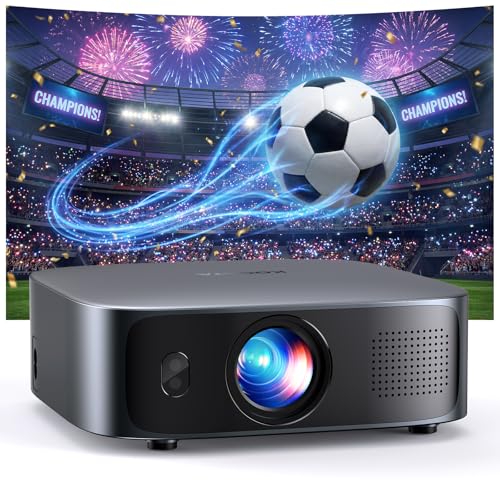
The KOGATA GC355 is the easiest projector here to carry. Its listed weight is approximately 2.2 pounds, and its compact body measures about 8.27 inches by 8.27 inches by 3.07 inches. That makes it more realistic to move between a bedroom, office, and campsite than the 18.7-pound Hisense PL2 or 19.8-pound Hisense PX3-PRO.
The projector uses native 1080p resolution with 4K support for streaming and HDR support. KOGATA also describes a 98 percent NTSC color gamut and AI image processing, though the native resolution remains the more useful figure when judging detail. The stated short-throw performance is a 100 inch image from about 90 inches, so it saves room compared with a standard long-throw projector but does not sit only a few inches from the wall.
Automatic adjustment is the GC355's strongest practical feature. Time-of-Flight autofocus, automatic keystone correction, obstacle avoidance, and position monitoring are designed to keep the image usable after the projector is moved or bumped. Built-in Prime Video and YouTube, support for Disney+ and Apple TV, a web browser, and phone mirroring add convenience. Dual 10W full-range drivers with Dolby Audio can fill a small room, and Bluetooth can connect external speakers.
Compared with the iSinbox Short Throw 4K, the KOGATA is lighter and easier to carry, but the iSinbox offers higher listed brightness, a more capable audio output, and Netflix support in its feature set. The KOGATA is also less suitable for daylight viewing than the Optoma GT2000HDR. Skip it if you need a large image with strong contrast in an open living room.
The GC355 makes sense for occasional use rather than a permanent theater. It is a lightweight, automatic projector for buyers who value quick setup and easy transport more than native 4K detail or serious room-filling brightness.
How to choose best ultra short throw projector
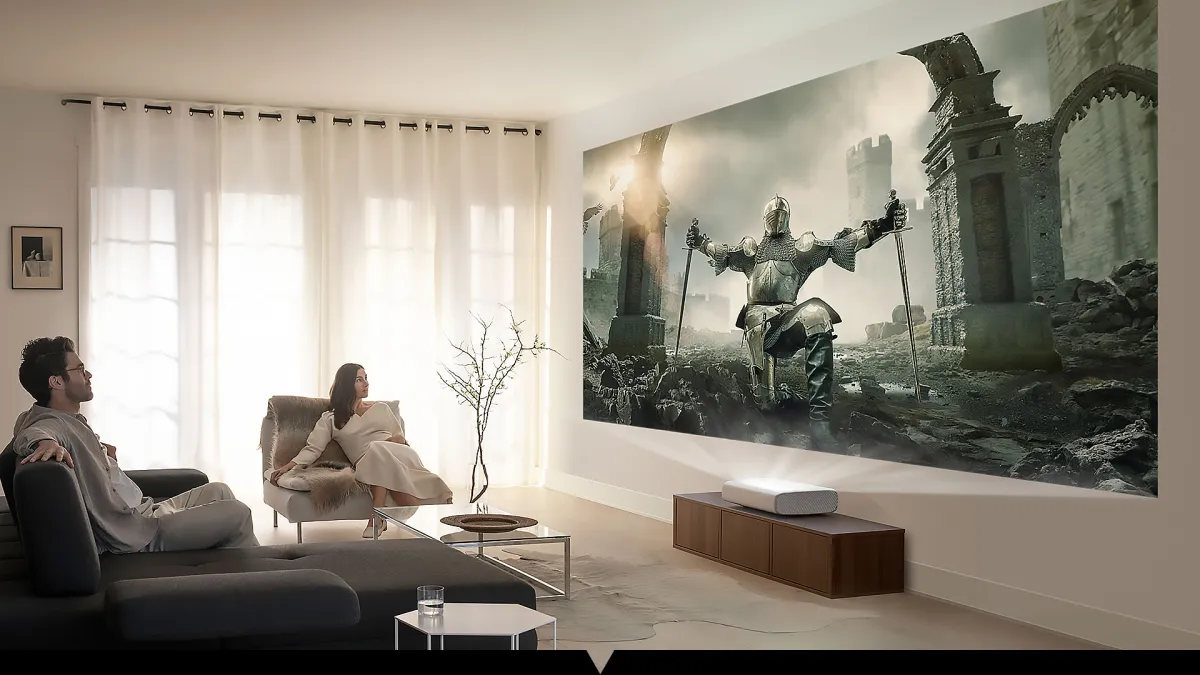
The right projector depends less on the biggest headline resolution than on the room, screen, light, and content you plan to use.
Throw distance and screen size
Ultra short throw models sit close to the wall and can produce an 80 to 150 inch image from a cabinet position. Check the specified distance for your intended screen size, not just the phrase “short throw” in the title. The AWOL LTV-3000 Pro, Hisense PL2, and Hisense PX3-PRO are designed for true near-wall placement, while the iSinbox and KOGATA need substantially more room.
Native resolution
Native resolution tells you how many pixels the projector physically displays. A native 1080p model can accept or decode 4K content, but it will not show the same fine detail as a native 4K projector. On a smaller bedroom image, 1080p can be perfectly satisfying. On a 120 or 150 inch screen, the difference is much easier to see.
Brightness and room light
Brightness determines how well the picture survives daylight and lamps. The Epson lists 4, 000 lumens for both color and white brightness, while the Optoma GT2000HDR lists 3, 500 lumens. The Hisense PX3-PRO lists 3, 000 lumens, and the PL2 lists 2, 700 lumens. Compact models such as the TOPTRO A2 are better in a darker room, even when their marketing mentions 4K decoding.
A large image does not compensate for a washed-out image. Control the room light before chasing a bigger screen.
Laser and color performance
Laser light sources generally support long operating life and stable brightness, while triple laser designs can provide especially broad color. The PX3-PRO, AWOL LTV-3000 Pro, and Optoma ML1080UST use triple laser systems. The Epson uses three-chip 3LCD technology, which is particularly relevant to color brightness. Compare these systems by the kind of content you watch, not by the word “laser” alone.
Smart platform and connections
Built-in apps can remove the need for a streaming stick, but platforms differ. Google TV appears on the Hisense models and Optoma ML1080UST. The TOPTRO A2 uses VIDAA, while iSinbox lists built-in Netflix and other services. Check HDMI, eARC or ARC, USB, Bluetooth, casting, and console compatibility if the projector will serve as the main entertainment hub.
Audio and gaming features
Integrated audio is useful for casual viewing, but large rooms benefit from a soundbar or receiver. The AWOL LTV-3000 Pro maps a center channel for dialogue, the Epson uses Bose audio technology, and TOPTRO specifies 36W Dolby Audio. Gamers should look for ALLM, high-frame-rate support, and platform compatibility. The Hisense PX3-PRO is the clear gaming specialist in this group.
Frequently asked questions
What is an ultra short throw projector?
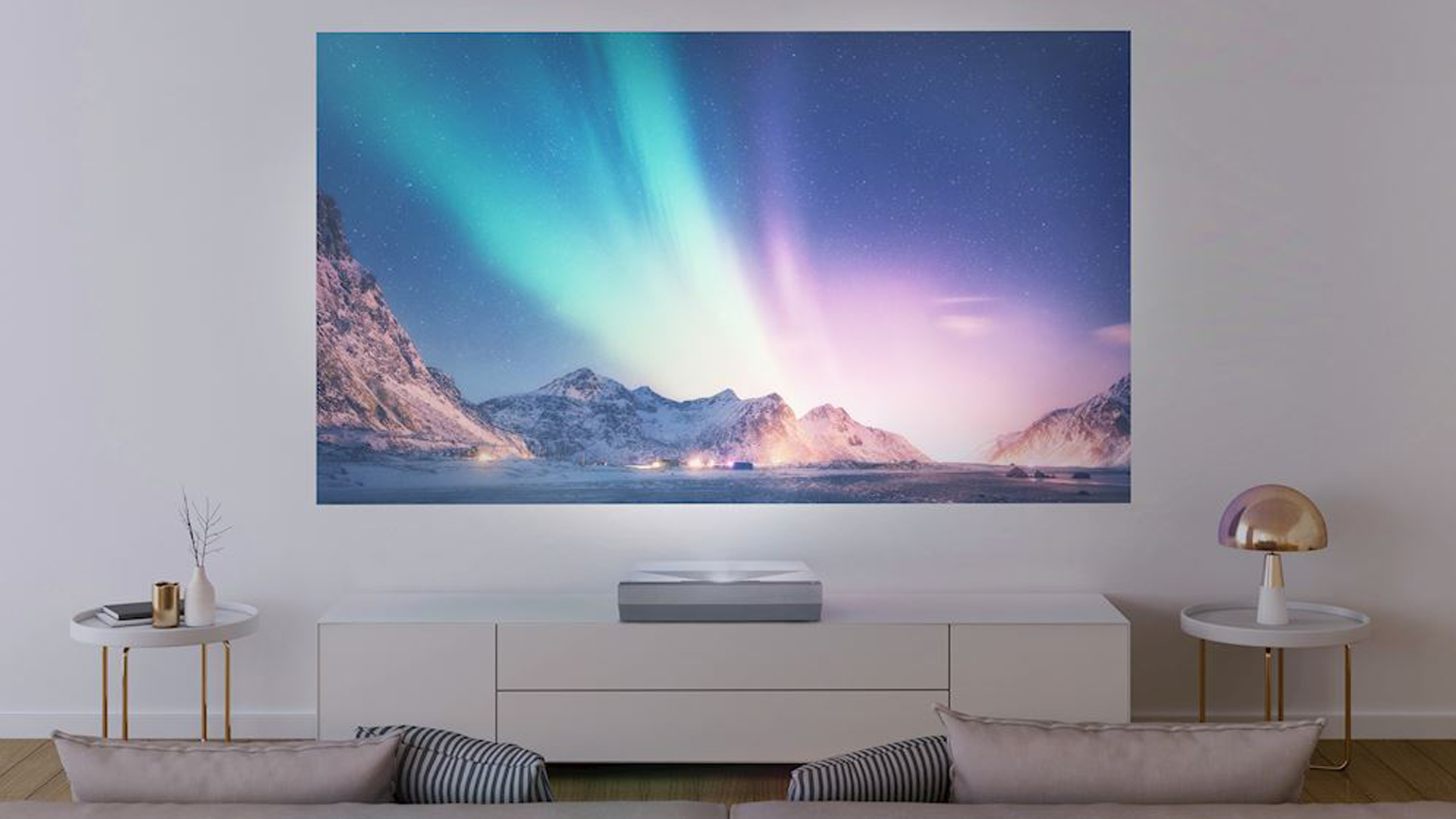
An ultra short throw projector creates a large image while sitting very close to the wall or screen. That placement reduces shadows, keeps walkways clear, and works well on a media cabinet. Exact throw distance varies, so check the model's screen-size specifications before installing it.
Is 4K important for an ultra short throw projector?
Native 4K is useful when the image is very large or you sit relatively close to the screen. Several compact models accept or decode 4K but display a native 1080p image. The Hisense PX3-PRO, Hisense PL2, and AWOL LTV-3000 Pro are better choices when native 4K detail is a priority.
Do these projectors need a special screen?
They can project onto a suitable wall, but an ultra short throw projector makes surface flaws more visible because the light reaches the wall at a shallow angle. A flat, well-finished wall is the minimum. An ambient-light-rejecting screen can help in a bright room, especially with a large fixed installation.
Can an ultra short throw projector replace a television?
It can replace a television for viewers who prioritize a very large image and do not mind managing room light. Models with Google TV or VIDAA provide a more television-like experience, while integrated Dolby or Bose audio reduces the need for extra equipment. A television remains easier for bright daytime viewing and instant placement.
Which model is best for gaming?
The Hisense PX3-PRO is the strongest gaming choice in this group because it is designed for Xbox and lists a 240 Hz high refresh rate feature. The Epson Lifestudio Grand Plus also includes ALLM and high-frame-rate support. Check the console's output settings and the projector's supported modes before assuming every game will run at the highest rate.
Are portable short-throw projectors truly ultra short throw?
Not always. The iSinbox and KOGATA models are short throw, but their listed distances for a 100 inch image are roughly 7.9 feet and 90 inches. The AWOL, Hisense, and Optoma UST models are designed to sit much closer to the wall. If cabinet depth is limited, use the actual throw ratio rather than the product title.
The bottom line
The Best Ultra Short Throw Projector in this group is the Hisense PX3-PRO. Its triple laser system, native 4K UHD output, Dolby Vision, IMAX Enhanced support, and Xbox-focused gaming features make it the most complete choice for a serious home theater. The Epson Lifestudio Grand Plus is the better alternative when the room stays bright and strong color and white brightness matter more than a smaller chassis.
For cinema-focused buyers, the AWOL LTV-3000 Pro adds 3D, broad color coverage, Dolby formats, and center-channel speaker mapping. Buyers who need portability should look instead at the Optoma ML1080UST, while the TOPTRO A2 is the easier smart projector for automatic setup and built-in streaming.
If you are undecided, choose the Hisense PX3-PRO for a permanent theater and the Optoma ML1080UST for a projector that must move.
As an Amazon Associate we earn from qualifying purchases.