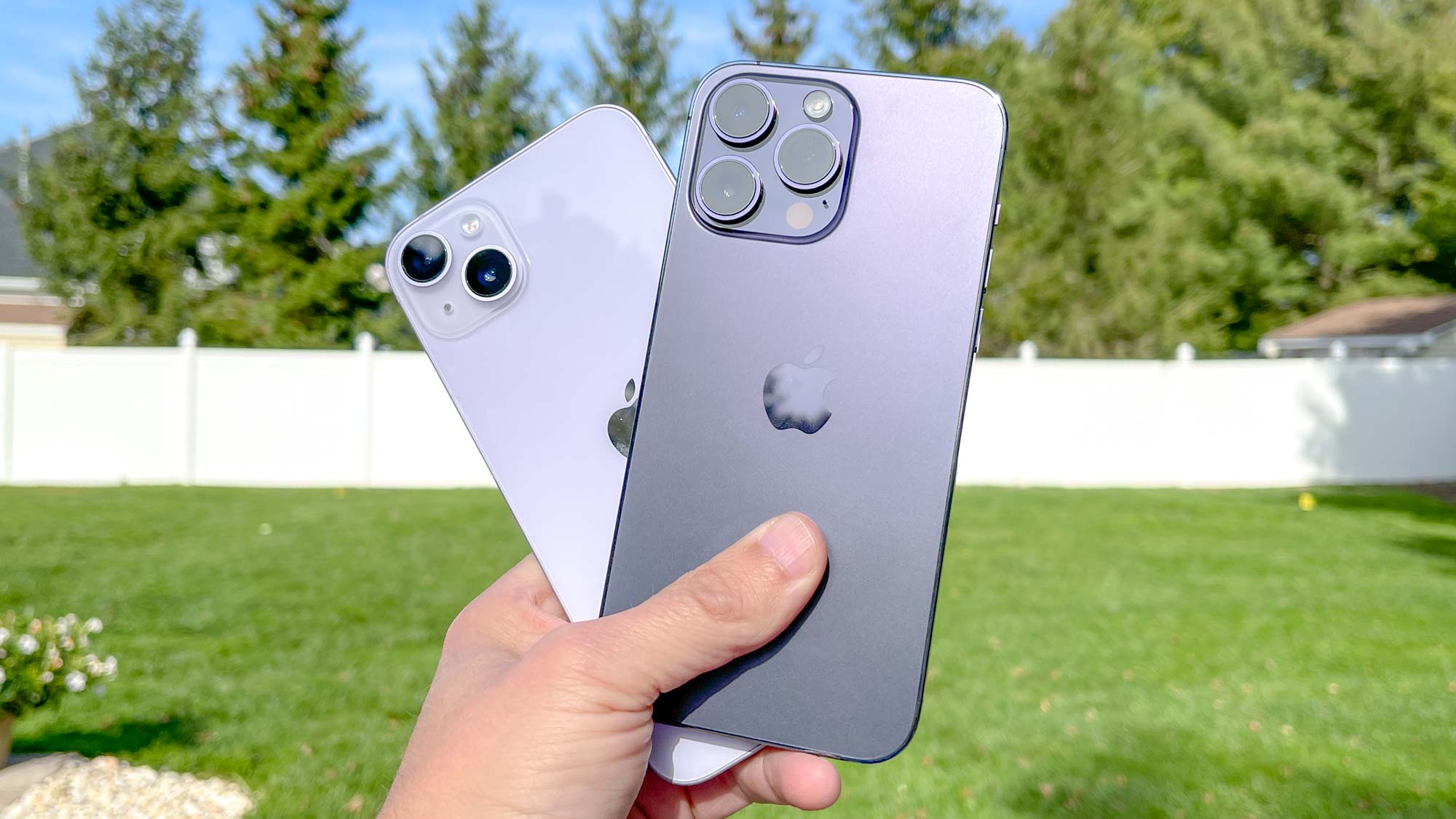

The iPhone 14 Pro Max is Apple's largest flagship phone from 2022, built around a 6.7-inch Super Retina XDR display with ProMotion, the A16 Bionic chip, a 48-megapixel main camera system, and a battery rated for the longest iPhone life of its generation. Here is a complete breakdown of its hardware specifications, what each spec actually does for you, and where the trade-offs land two years later.
The Core Specs at a Glance
The iPhone 14 Pro Max measures 160.7 by 77.6 by 7.85 mm and weighs 240 grams. It uses a stainless steel frame with a textured matte glass back, available in Space Black, Silver, Gold, and Deep Purple. The front is a Ceramic Shield cover glass.
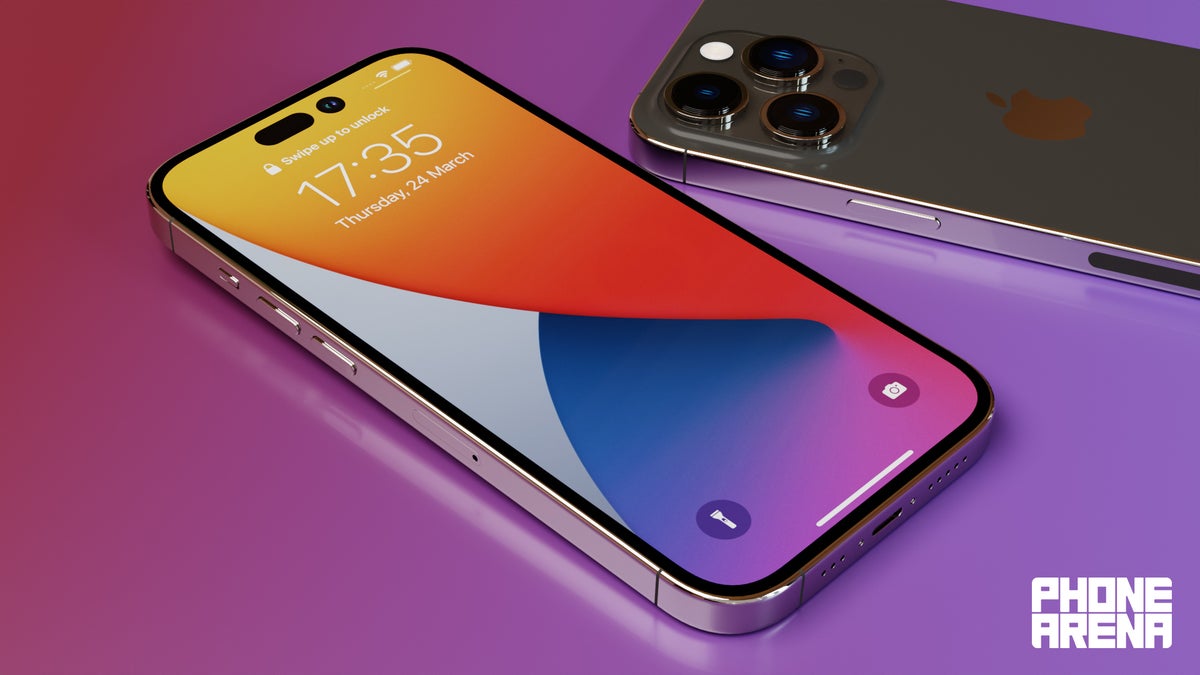
The display is a 6.7-inch LTPO Super Retina XDR OLED panel with a resolution of 2796 by 1290 pixels at 460 PPI. It supports HDR (up to 1600 nits peak brightness in HDR, 2000 nits peak outdoors), a 1, 000, 000-to-1 contrast ratio, and the ProMotion adaptive refresh rate from 1 Hz to 120 Hz. The Always-On display is enabled by the 1 Hz floor.
Inside is the A16 Bionic chip, a 4-nanometer processor with a 6-core CPU (2 high-performance + 4 efficiency), a 5-core GPU, and a 16-core Neural Engine. It also includes the dedicated Display Engine for the Always-On display and Dynamic Island animations.
Storage options: 128 GB, 256 GB, 512 GB, and 1 TB.
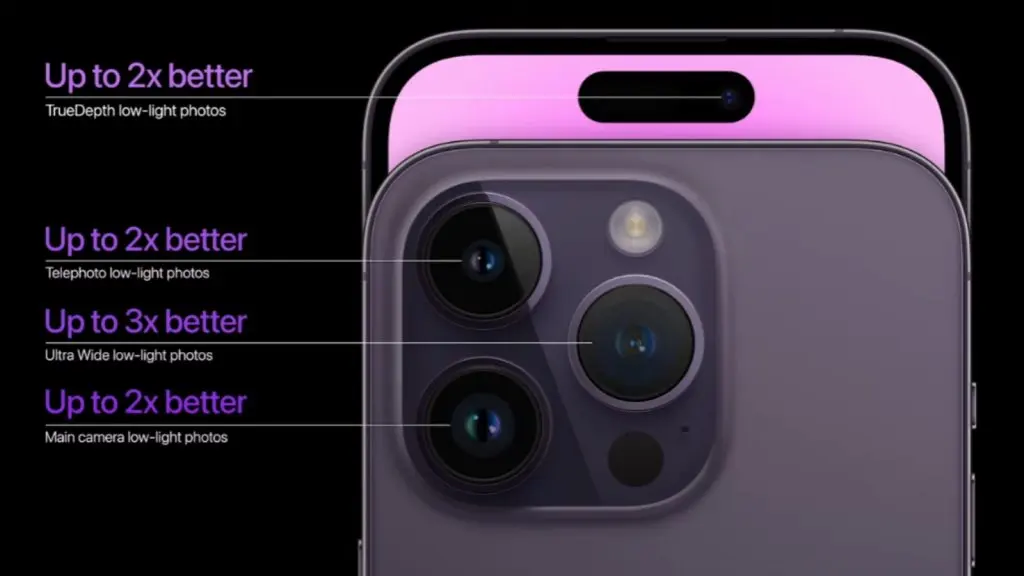
The rear camera array has three lenses: a 48 MP main sensor (f/1.78, 24 mm equivalent, sensor-shift OIS, 100% Focus Pixels), a 12 MP ultrawide (f/2.2, 13 mm, 120-degree field of view), and a 12 MP telephoto (f/2.8, 77 mm, 3x optical zoom, OIS). The LiDAR scanner is present for depth sensing and low-light autofocus. The front camera is 12 MP (f/1.9) with autofocus and a wider field of view.
Video recording: 4K HDR Dolby Vision up to 60 fps, 1080p slow-motion up to 240 fps, Action Mode stabilization at 2.8K.
Battery: 4323 mAh, rated for up to 29 hours of video playback. Charging supports MagSafe (up to 15 W), Qi wireless (7.5 W), and wired Lightning (up to 27 W with a 30 W or higher adapter). The phone ships with a Lightning-to-USB-C cable but no power adapter.
Connectivity: 5G (sub-6 GHz and mmWave in the US), Wi-Fi 6 (802.11ax), Bluetooth 5.3, Ultra Wideband (U1 chip), NFC, and dual eSIM with no physical SIM tray in the US.
What the Numbers Actually Mean
Specs on a page only tell part of the story. Here is how the iPhone 14 Pro Max hardware translates to daily use.
The Display
The 6.7-inch ProMotion display is among the best on any phone. The 120 Hz refresh rate makes scrolling and animations feel fluid, while the 1 Hz floor lets the Always-On display work without draining the battery. The 2000-nit peak outdoor brightness makes the screen readable in direct sunlight, which is a real improvement over the previous generation. The Dynamic Island, a pill-shaped cutout that houses the front camera and Face ID sensors, replaces the notch and serves as a system notification area. It works well but is not a game-changer for most tasks.
The A16 Bionic Chip
The A16 Bionic is still very fast by 2026 standards. The two performance cores handle demanding apps and games, while the four efficiency cores manage background tasks. The 5-core GPU is capable of console-level gaming, and the 16-core Neural Engine accelerates machine learning tasks like photo editing, live text recognition, and voice processing. For reference, the A16 is roughly 10 to 15 percent faster in CPU and GPU benchmarks than the A15 in the iPhone 13 Pro Max, but the real-world difference is subtle outside of heavy gaming or video export.
The Camera System
The 48-megapixel main sensor is the biggest change on the 14 Pro Max. By default, it uses pixel binning (combining four pixels into one) to produce a 12-megapixel image with better low-light performance and dynamic range. You can also shoot in full 48-megapixel ProRAW for maximum detail, though those files are large (around 75 MB each). The 3x optical zoom telephoto is a real convenience for portraits and distant subjects, and the ultrawide handles group shots and close-ups well. The LiDAR scanner improves autofocus in low light and enables AR experiences. The front camera now has autofocus, which helps with selfie sharpness at different distances.
Battery Life
The 4323 mAh battery gives the iPhone 14 Pro Max excellent endurance. Apple's 29-hour video playback rating is conservative; in mixed use, most people will get through a full day with 30 to 40 percent remaining. The phone supports fast charging via Lightning, but you need to supply your own adapter. Charging to 50 percent takes about 30 minutes with a 30 W adapter. Wireless charging is capped at 15 W with MagSafe and 7.5 W with standard Qi.
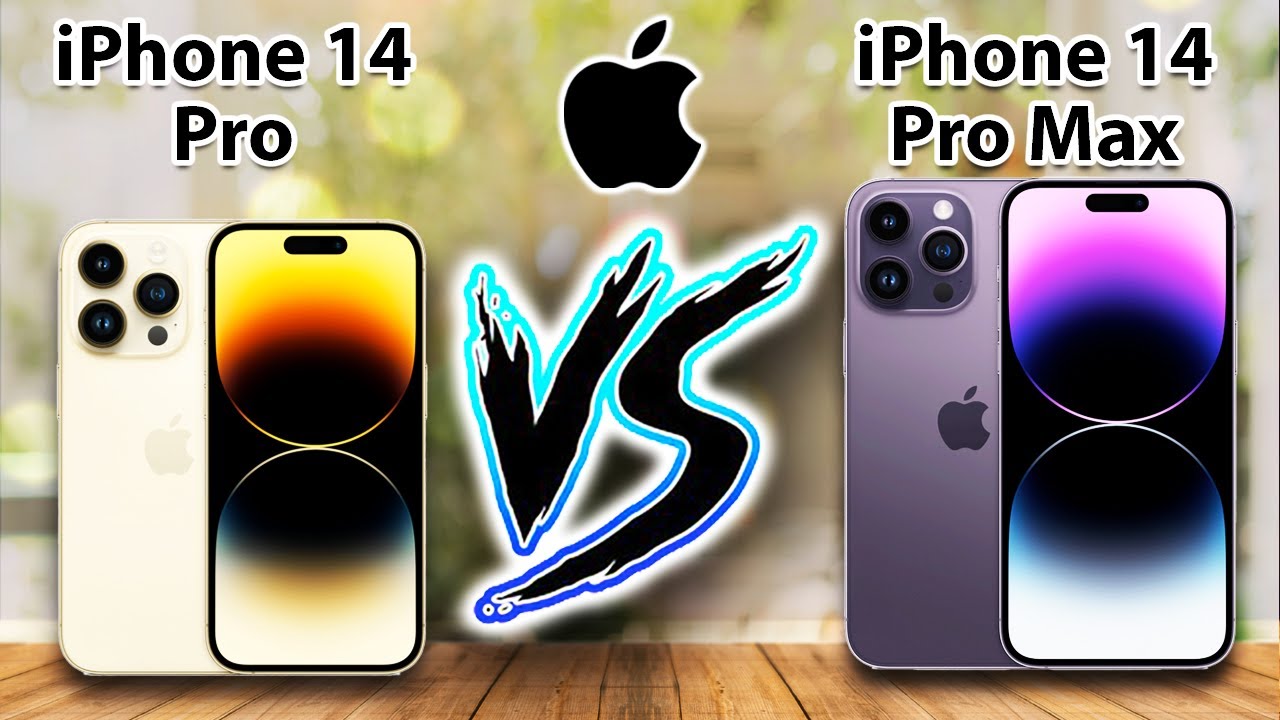
What You Give Up Compared to Newer Models
The iPhone 14 Pro Max is now two generations old. If you are considering it, here is what you lose versus the newer models.
iPhone 15 Pro Max: The 15 Pro Max uses a 3-nanometer A17 Pro chip, which is roughly 20 percent faster in CPU and GPU tasks. It also gains a 5x optical zoom telephoto lens (120 mm equivalent), a USB-C port with USB 3 speeds (10 Gbps), and a titanium frame that is lighter (221 grams vs 240 grams). The 15 Pro Max also supports Wi-Fi 6E and has a slightly brighter display. For a detailed comparison, see how the newer model compares.
iPhone 17 Pro Max: The 17 Pro Max, expected in 2025, brings further improvements to the A19 chip, camera system, and possibly a larger display. If you want the absolute latest, what the latest generation offers is worth reading.
Real-world difference: The 14 Pro Max is still a very capable phone. The A16 is fast enough for all current apps and games, the 48 MP camera produces excellent photos, and the battery life is still competitive. The main reasons to upgrade to a newer model are the 5x zoom, lighter weight, USB-C, and slightly better performance. For most people, the 14 Pro Max remains a good buy as a used or refurbished option.
How to Check Your Own iPhone 14 Pro Max Specs
If you already own the phone and want to verify its specs, open Settings > General > About. Here you can see the model name, software version, storage capacity, and serial number. The model number (e.g., A2651 for the US version) identifies the exact variant. For display details, there is no built-in diagnostic, but you can check the resolution and refresh rate on a site like DisplayMate under controlled conditions.
FAQ
Does the iPhone 14 Pro Max have a 120 Hz display?
Yes. It uses ProMotion with an adaptive refresh rate from 1 Hz to 120 Hz. The display automatically adjusts to match the content, keeping scrolling smooth and static screens power-efficient.
What is the camera megapixel count on the iPhone 14 Pro Max?
The main camera is 48 megapixels, but it shoots 12-megapixel photos by default using pixel binning. You can choose to capture full 48-megapixel ProRAW images, but those files are very large.
Is the iPhone 14 Pro Max waterproof?
It has an IP68 rating, meaning it can survive up to 6 meters of water for 30 minutes. This is the same as the iPhone 13 Pro Max and 15 Pro Max. Damage from liquids is not covered by warranty.
What is the battery capacity of the iPhone 14 Pro Max?
The battery is 4323 mAh, which Apple rates for up to 29 hours of video playback. Real-world mixed use typically lasts a full day with ease.
Does the iPhone 14 Pro Max support MagSafe?
Yes. It has a built-in MagSafe magnet array for wireless charging up to 15 W and attachment of MagSafe accessories like cases, wallets, and mounts.
Final Thoughts
The iPhone 14 Pro Max is a well-rounded flagship with a superb display, strong camera system, and excellent battery life. Its specs remain competitive in 2026, especially for photography and video. The main trade-offs are the lack of a 5x zoom, heavier weight, and the older Lightning port. If you are deciding between models, it helps to understand which iPhone best fits your needs and what you give up with each generation.