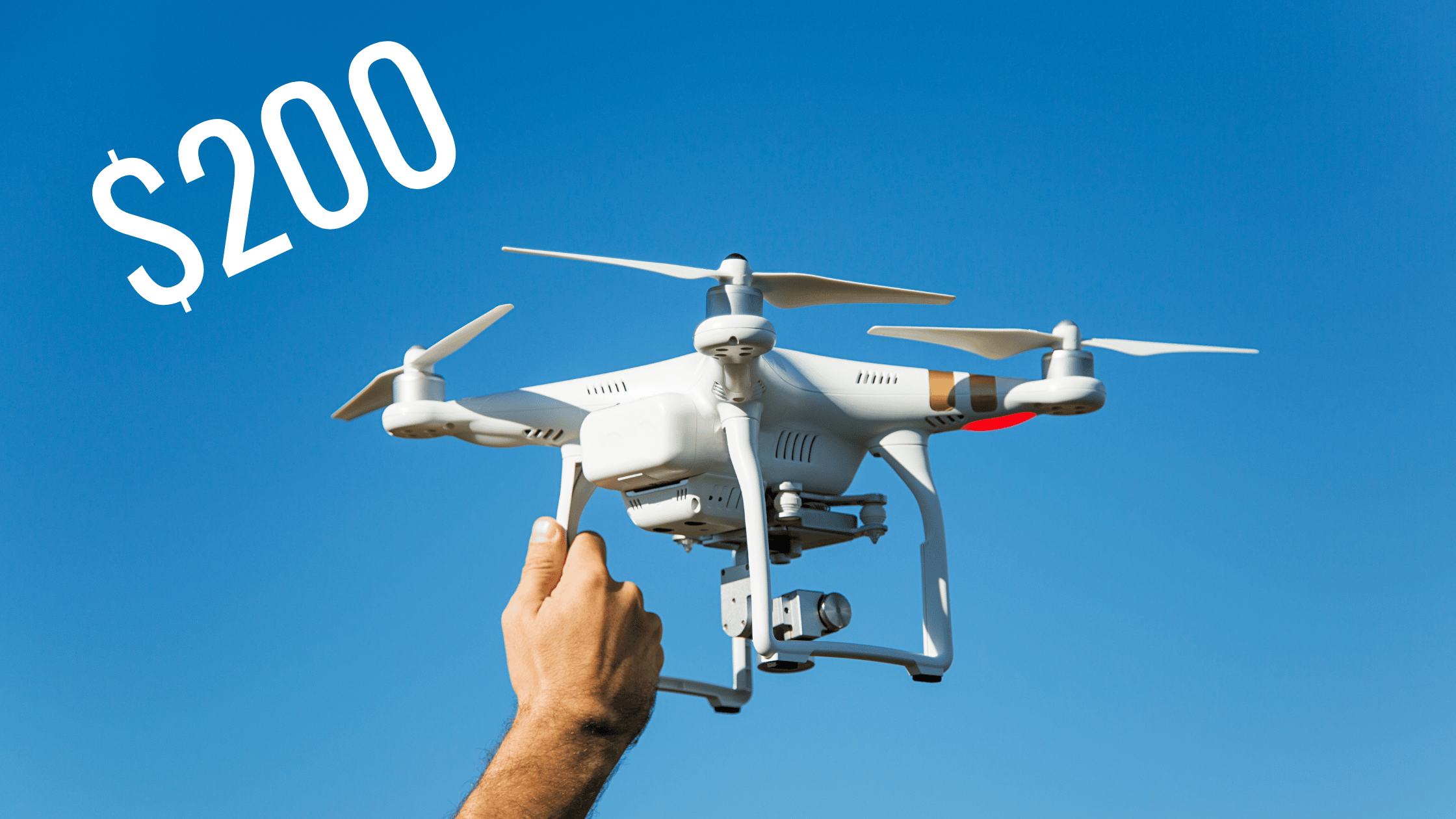

Finding a drone that is easy to control, safe to recover, and capable of producing watchable video is harder than reading a camera resolution number. Some small models are really flying toys, while others bring GPS, brushless motors, stabilized cameras, and useful return-to-home protection.
Our Best best drones under 200$ guide covers ten distinct options, from the polished DJI Mini 4K to simple FPV models with screens built into their remotes. The DJI Mini 4K is the single best pick here, while the rest cover longer flight time, phone-free control, beginner flying, and lower-cost family fun.
Comparison of the 10 best drones under 200$
| # | Product | Award | Camera | Flight time | Navigation and control | Best for |
|---|---|---|---|---|---|---|
| 1 | DJI Mini 4K | Best overall | 4K, 3-axis gimbal | Up to 31 minutes | GPS, RTH, QuickShots | First serious camera drone |
| 2 | Potensic ATOM SE | Best DJI alternative | 4K, EIS, Sony sensor | Up to 62 minutes | GPS, RTH, Follow Me | Longer flights |
| 3 | F417PRO FPV | Best for phone-free FPV | 1080P, adjustable lens | Not stated | Altitude hold, headless mode | Kids and beginners |
| 4 | DJI Mini 4K Combo | Best DJI bundle | 4K, 3-axis gimbal | Up to 62 minutes | GPS, RTH, QuickShots | Extended shooting sessions |
| 5 | Karuisrc GPS 4.5-inch | Best tracking features | EIS camera | Not stated | GPS, Follow Me, Orbit | Outdoor activity videos |
| 6 | Trinton Tech GPS | Best built-in display | EIS camera | Not stated | GPS, Follow Me, gesture control | Phone-free GPS flying |
| 7 | Holy Stone HS175D | Best beginner GPS controls | 4K, adjustable lens | Up to 46 minutes | GPS, RTH, Waypoint Fly | Learning outdoor flight |
| 8 | Punieayi GPS 5-inch | Best screen and battery mix | 4K, adjustable lens | Up to 60 minutes | GPS, RTH, Follow Me | Simple long sessions |
| 9 | PLEGBLE PL511 | Best starter kit | 4K, wide-angle lens | Up to 45 minutes | Optical flow, altitude hold | First recreational drone |
| 10 | Potensic ATOM 2 | Best advanced camera | 4K HDR, 3-axis gimbal | Up to 96 minutes | GNSS, AI Track, RTH | Ambitious creators |
1. DJI Mini 4K: Best Overall

Pros
- 4K video with 3-axis gimbal stabilization
- GPS return to home and stable hovering
- Compact body under 249 g
- QuickShots simplify cinematic movements
Cons
- The included set has one battery
- DJI Fly must be downloaded outside Google Play
- No obstacle avoidance feature is listed
Best for: beginners who want dependable flight and genuinely smooth 4K footage.
The DJI Mini 4K is the drone we would hand to a beginner who wants to learn once and keep using the result. It feels like a camera tool rather than a toy because the GPS positioning, one-tap takeoff and landing, and return-to-home functions remove much of the early anxiety. The foldable design also makes it practical to carry, and the listed weight is under 249 g.
Its camera is the main reason it leads this list. The 4K UHD camera sits on a 3-axis gimbal, so the footage should stay far steadier during small movements and turns than the electronically stabilized cameras on the Potensic ATOM SE or Holy Stone HS175D. The difference matters when a clip is meant for a vacation film or social post rather than just a live FPV view. QuickShots add Helix, Dronie, Rocket, Circle, and Boomerang routines for pilots who are still learning smooth manual movement.
The standard configuration includes one battery with a stated flight time of up to 31 minutes. DJI also lists two and three battery sets separately, but this particular item includes one battery, an RC-N1C remote, and the equipment needed to start flying. The drone is rated for Level 5 wind resistance at 38 kph, with brushless motors and takeoff support at altitudes up to 4, 000 meters. Those claims do not make it a storm flyer, but they give it a stronger outdoor foundation than the small FPV models below.
The weakness is not hidden. DJI Fly has been removed from Google Play because of a platform compatibility issue, so Android users need to download the current app from DJI's official website. The listing also does not identify obstacle avoidance, which means the pilot still has to watch the aircraft carefully. For a broader look at the safety features beginners should prioritize before flying, it is worth thinking beyond camera resolution.
Choose the DJI Mini 4K if you care most about stable footage, predictable GPS behavior, and a clear path from first flight to more ambitious aerial work. It is the most balanced pick here, even with the extra app setup and single-battery configuration.
2. Potensic ATOM SE: Best DJI Alternative

Pros
- 4K video at 30 frames per second
- Sony sensor and electronic stabilization
- Two batteries provide up to 62 minutes
- Brushless motor and Sport mode
- Follow Me, Waypoint, and Circle Flight modes
Cons
- Transmission distance is listed as 4 km
- EIS is less mechanically effective than a gimbal
- A microSD card is not included
Best for: pilots who want long sessions and GPS flight modes without choosing a DJI model.
The Potensic ATOM SE is the strongest alternative to the DJI Mini 4K when battery rotation matters. Its two intelligent 2, 500 mAh batteries are rated for up to 31 minutes each, giving a combined 62 minutes of listed flight time. That changes the rhythm of a flying day. You can spend more time practicing a route or waiting for the right light instead of landing after a short session.
The camera uses a 1/3-inch Sony CMOS sensor and electronic image stabilization. It records 12MP photos and 4K video at 30 frames per second, with a 118-degree field of view and a camera angle that moves from positive 20 degrees to negative 90 degrees. EIS can smooth smaller shakes, but it does not provide the same physical correction as the DJI Mini 4K's 3-axis gimbal. The ATOM SE is better suited to casual aerial clips than demanding cinematic work.
Potensic gives the ATOM SE a useful spread of flight modes. Beginner, Video, Normal, and Sport modes let a new pilot start gently and increase responsiveness later. Sport mode reaches a stated 16 m/s, while the brushless motor is designed to resist Level 5 wind. PixSync 2.0 provides up to 4 km of transmission, and GPS return can trigger after signal loss or low battery. Follow Me, Waypoint Flight, and Circle Flight add variety without requiring advanced stick work.
The compromise is the camera stabilization and the smaller transmission figure compared with the DJI Mini 4K Combo and Potensic ATOM 2. Firmware updates also require a microSD card for camera-related updates, and none is included. Still, the ATOM SE gives the DJI Mini 4K a serious challenge on flight endurance. Readers comparing how much flight time a second battery adds in real use should focus on the complete battery configuration, not the airframe alone.
This is the sensible choice for an outdoor pilot who wants long flying sessions, speed modes, and GPS automation. Pick the DJI for smoother camera movement. Pick the ATOM SE when airtime and flexible flight modes carry more weight.
3. F417PRO FPV: Best for Phone-Free FPV

Pros
- LCD screen built into the controller
- No phone needed for live flying
- Adjustable 90-degree camera
- Brushless motor and three speeds
- 3D flips and headless mode
Cons
- Video resolution is 1080P
- The listing does not state flight time
- It lacks GPS return to home
Best for: children, families, and first-time pilots who want simple FPV practice.
The F417PRO FPV takes a different approach from the camera drones above. Its controller includes an LCD screen, so a pilot can see the live view without pairing a phone or dealing with an app. That is a meaningful advantage for a child or a family sharing one drone. The controls are ready for backyard practice, and the body weighs under 249 g according to the listing.
Its camera is a 1080P unit with a 90-degree adjustable lens. That is enough for live framing and casual clips, but it is plainly behind the 4K cameras on the DJI and Potensic models. The listing also describes night vision capability, though it does not give a sensor size or a detailed low-light specification. Treat it as an FPV learning camera, not as a replacement for a stabilized aerial camera.
The brushless motor is rated at 10, 000 RPM, and three speed settings let the pilot keep the first flights manageable. Altitude hold should make hovering less demanding, while headless mode reduces the need to understand the drone's orientation immediately. The 3D flip function gives experienced children a fun trick to practice, and Type-C charging keeps the charging connection familiar.
The missing GPS is the important limitation. There is no listed return-to-home system, so the pilot needs to keep the drone within sight and stay aware of its direction and battery. Flight time is not stated either. Compared with the PLEGBLE PL511, the F417PRO offers the more convenient controller, but the PLEGBLE offers more listed flight time and a higher-resolution camera.
This is the right entry point for someone who wants to fly rather than film. If your priority is choosing a small aircraft that is easier to learn indoors, the F417PRO's screen, altitude hold, and speed settings make more sense than a GPS camera drone.
4. DJI Mini 4K Combo: Best DJI Bundle

Pros
- 4K camera with 3-axis gimbal
- Two batteries and carrying accessories
- Up to 62 minutes of listed flight time
- 10 km HD video transmission
- QuickShots and GPS return to home
Cons
- DJI Fly is not available through Google Play
- No obstacle avoidance is listed
- Larger bundle is less minimal than the single-battery set
Best for: travelers and creators who want the DJI Mini 4K platform with longer sessions.
The DJI Mini 4K Combo is fundamentally the same kind of aircraft as the top pick, but the included kit makes it more useful for a full day outdoors. Two batteries provide a listed maximum of 62 minutes, and the package includes a shoulder bag, propeller holder, spare propellers, and the DJI RC-N1C controller. Those extras are not glamorous, yet they make transport and battery planning easier.
The 4K UHD camera and 3-axis gimbal remain the draw. Mechanical stabilization keeps the horizon and camera movement calmer than the EIS systems in the Potensic ATOM SE and the GPS models with built-in screens. QuickShots provide Helix, Dronie, Rocket, Circle, and Boomerang routines, giving beginners a way to produce repeatable movements while they learn manual flight.
This version also lists up to 10 km of HD video transmission, with anti-interference support. That specification is substantially more generous than the ATOM SE's 4 km figure, although actual range depends on the environment and local flight rules. GPS hovering, one-touch takeoff and landing, and return to home make the Combo a reassuring option for a new owner who does not want to assemble a kit piece by piece.
The main catch is that it is not a different aircraft from the single-battery DJI Mini 4K. The extra batteries and accessories improve the experience, but they do not add obstacle sensing. Android users also face the same DJI Fly download issue. For a wider view of the camera features that matter for landscape footage, stabilization and reliable flight control deserve more attention than the headline resolution alone.
Choose this bundle over the standard DJI Mini 4K when you already know you will want to fly for longer stretches. It is the better travel kit, while the standard model is the cleaner choice for someone who wants the aircraft and essentials without the larger bundle.
5. Karuisrc GPS 4.5-inch: Best Tracking Features

Pros
- 4.5-inch HD screen built into the remote
- Follow Me, Waypoint, and Orbit modes
- GPS positioning and automatic return
- Brushless motor
- Up to 400 m control distance listed
Cons
- Camera resolution is not specified
- Transmission range is not equivalent to the longest-range models
- Flight time is not stated
Best for: hikers, cyclists, and vloggers who want automated tracking modes.
The Karuisrc GPS 4.5-inch stands out because its controller has a 4.5-inch HD display. It gives the pilot a live view and flight information without relying on a phone. That is especially useful outside, where phone pairing, notifications, and a dim screen can get in the way. The drone weighs under 249 g and uses GPS positioning for outdoor flights.
The feature list is built around automated composition. Follow Me is intended to keep the aircraft with a moving subject, while Waypoint Navigation and Orbit Mode create repeatable paths around a person or point of interest. These are the controls to look at if you want footage of a hike, ride, or walk without constantly managing the sticks. The listing describes the camera as EIS stabilized, but does not specify its video resolution or sensor.
Karuisrc lists a 250 m mapping capability and a 400 m control distance. Those figures suggest a drone designed for nearby outdoor work rather than distant landscape exploration. GPS return provides a recovery layer if the signal drops or the aircraft needs to come home. The brushless motor should also be more durable and capable than the brushed motors often found in basic toy-grade drones, though the listing does not provide a wind-resistance level.
The missing camera detail makes this a less certain pick for anyone choosing primarily by image quality. The Trinton Tech GPS has a similar 4.5-inch controller screen and adds a 32GB card support claim, while the Holy Stone HS175D gives clearer camera specifications and a stated 46-minute total flight time. Karuisrc's advantage is its direct emphasis on Orbit, Follow Me, and Waypoint use.
Buy this model for the control interface and tracking features, not for a documented camera specification. It fits an outdoor hobbyist who wants automated shots and prefers a dedicated screen over phone-based FPV viewing.
6. Trinton Tech GPS: Best Built-In Display

Pros
- 4.5-inch HD LCD screen on the remote
- GPS return to home
- Follow Me with a stated 3 to 50 m distance
- Gesture control and automated modes
- Carrying case included
Cons
- Camera resolution is not stated
- The listing says SD card storage is supported, not clearly included
- Flight time and transmission distance are not stated
Best for: beginners who want GPS assistance without using a phone screen.
The Trinton Tech GPS is close in concept to the Karuisrc model, but it makes the phone-free experience especially prominent. Its controller has a 4.5-inch HD LCD screen with a live feed and flight data overlay. For a new pilot, having the image and controls in one device can be less distracting than mounting a phone and switching between apps.
GPS return to home is the safety feature to prioritize here. The drone is described as returning automatically after signal loss, low battery, or a manual command. Follow Me is specified for a distance of 3 to 50 m, giving the pilot a clearer sense of the intended tracking range. Gesture control adds a hands-off way to trigger some interactions, while the listing also mentions orbit and AI tracking modes.
The camera is described as a dual-camera system with a wide-angle stabilized lens, but the supplied details do not identify the recording resolution. That makes it difficult to compare directly with the 4K claims of the Holy Stone HS175D or PLEGBLE PL511. The package includes a carrying case, and the drone supports a 32GB SD card. The wording says storage is not included, so buyers should not assume a card is in the box.
There are several unreported essentials: flight time, control distance, and a detailed stabilization method are not stated. The Karuisrc GPS 4.5-inch is the closer rival, with its own 4.5-inch display and explicit 400 m control distance. Trinton Tech is more appealing if the stated Follow Me range and gesture control are the features you actually plan to use.
This is a reasonable screen-first beginner drone, but not the one to choose for documented video performance. It makes sense for casual outdoor flying where GPS recovery and a built-in display matter more than editing high-resolution footage.
7. Holy Stone HS175D: Best Beginner GPS Controls

Pros
- 4K camera with 90-degree adjustment
- GPS-assisted return to home
- Up to 46 minutes with two batteries
- Optical flow and altitude hold
- Follow Me, Waypoint, and Point of Interest modes
Cons
- Camera stabilization is not a 3-axis gimbal
- FPV transmission is listed as 5 GHz without a distance
- Wind performance is less specific than DJI's claim
Best for: beginners who want a forgiving GPS aircraft with clear camera controls.
The Holy Stone HS175D is a straightforward learning drone with more structure than a basic FPV toy. Altitude Hold, Optical Flow, Headless Mode, one-key takeoff and landing, and adjustable speed settings all reduce the number of things a first-time pilot must manage at once. It folds for transport and includes a carrying case, which makes it easier to take beyond the backyard.
Its camera records 4K footage and uses a 110-degree wide-angle lens. The camera angle adjusts through 90 degrees, so you can shift from a broad landscape view toward a more downward-looking composition without turning the aircraft. That is useful for beginners who are still learning how the drone's position affects framing. The system does not list a 3-axis gimbal, so the DJI models remain the safer choice for smooth cinematic movement.
Two batteries provide a stated maximum of 46 minutes, depending on conditions. GPS-assisted return to home can activate after signal loss, going out of range, or low battery. The 5 GHz FPV connection is intended to give a smoother live view, and the flight modes include Follow Me, Waypoint Flight, Point of Interest, and gesture control. Those modes give this older design more creative flexibility than its basic appearance suggests.
The limitations are mostly about refinement. The listing does not provide a transmission distance, and its wind guidance is less precise than the DJI Mini 4K's stated Level 5 resistance. The Potensic ATOM SE offers longer listed flight time and a Sony sensor, while the HS175D is easier to recommend to a new pilot who values a broad set of simple controls.
Choose it for a first GPS drone that teaches hovering, camera positioning, and automated flight without jumping straight to a more advanced camera platform. It is a good middle ground between toy-grade FPV drones and the DJI models.
8. Punieayi GPS 5-inch: Best Screen and Battery Mix

Pros
- 5-inch screen built into the controller
- Up to 60 minutes from two batteries
- 4K camera with 90-degree adjustment
- GPS return to home and Follow Me
- Foldable 238 g design
Cons
- Screen is non-touch
- The camera has no listed gimbal
- Maximum altitude and range claims need careful interpretation
Best for: beginners who want a large controller display and longer sessions.
The Punieayi GPS 5-inch is built around convenience. Its remote has a non-touch 5-inch HD screen, eliminating phone downloads and pairing. The display is larger than the 4.5-inch screens on the Karuisrc and Trinton Tech models, which should make framing and reading flight information more comfortable. The foldable aircraft weighs a listed 238 g.
Two 7.4 V, 2, 700 mAh batteries provide up to 60 minutes of total flight time. That is a strong figure for this group, though it is a combined maximum rather than a single uninterrupted flight. The brushless motor is described as low-noise and suitable for Level 4 wind conditions. GPS supports return to home for low battery or a manual command, and the drone can also use Circle Fly and Follow Me modes.
The camera has a 90-degree adjustable lens and is described as capturing 4K photos and high-resolution video. The supplied information does not identify a sensor or gimbal, so the headline resolution should not be confused with the stabilized image from the DJI Mini 4K Combo. Punieayi does include an 8GB SD card and a protective case, which makes the package more immediately usable.
There are caveats around the advertised range and altitude. The listing refers to an FPV distance of up to 5, 000 feet and an altitude of up to 800 feet, but real conditions, visibility, and local rules matter more than the headline figures. The screen is also non-touch, so controls remain on the remote. Compared with the Trinton Tech GPS, the Punieayi offers a larger display and clearer battery information, while Trinton Tech has more explicit tracking-distance details.
This is the option for a pilot who dislikes using a phone and wants plenty of battery rotation. It is less convincing as a serious camera platform, but its large screen, GPS features, and foldable 238 g body make it approachable.
9. PLEGBLE PL511: Best Starter Kit

Pros
- Three batteries provide up to 45 minutes
- 4K camera with 120-degree lens
- Brushless motors and optical flow
- USB-C and PD charging support
- One-key controls and 360-degree flips
Cons
- No GPS navigation is listed
- The camera has no gimbal specification
- Range alarm begins around 328 to 393 feet
Best for: casual beginners who want multiple batteries and playful flight modes.
The PLEGBLE PL511 is aimed at the person who wants a complete recreational kit without a steep learning curve. It includes three modular batteries, with a stated combined flight time of up to 45 minutes. USB-C and PD charging support is a useful modern touch, particularly for travelers who already carry compatible charging equipment.
The camera is listed as 4K UHD with a 120-degree wide-angle lens and a 90-degree adjustable lens. PLEGBLE says it captures 3840 by 2160 photos and 4K video, while the live FPV feed is described as smooth. There is no gimbal specification, so pilots should expect less controlled footage than the DJI Mini 4K provides. The broad lens can fit more scenery into a frame, but it may also make composition less precise.
Brushless motors, Optical Flow positioning, and altitude hold give the PL511 a steadier foundation than a simple brushed indoor toy. One-key takeoff and landing, headless mode, three speed modes, an emergency stop, and 360-degree flips cover both learning and play. A beyond-range alarm is designed to warn the pilot around 328 to 393 feet, which is useful because this model does not list GPS return to home.
That missing GPS is the central weakness. The Holy Stone HS175D is a better fit if automatic recovery is important, while the F417PRO FPV is more convenient for phone-free viewing because its controller has a built-in screen. PLEGBLE's advantage is the combination of three batteries, brushless propulsion, and a wide-angle camera in a simple beginner package.
Pick this model for family flying, practice, and casual aerial clips. Skip it if you expect GPS-assisted recovery or polished stabilized footage. For people exploring the difference between toy-style and camera-focused flying, the PL511 sits closer to the fun and accessible end.
10. Potensic ATOM 2: Best Advanced Camera

Pros
- 1/2-inch Sony CMOS sensor
- 48MP photos and 4K HDR video
- 3-axis gimbal and F1.8 aperture
- Up to 96 minutes with three batteries
- AI Track, vertical shooting, and night modes
Cons
- More advanced than a first-time toy buyer needs
- The feature set requires learning
- It is not the simplest phone-free option
Best for: creators who want the most capable camera and automated shooting features here.
The Potensic ATOM 2 is the most ambitious aircraft in this group, even though it is still built around an under-249 g body. Its 1/2-inch Sony CMOS sensor, 48MP still photos, and 4K video at 30 frames per second give it a much stronger imaging foundation than the unnamed cameras on the Karuisrc and Trinton Tech models. The F1.8 aperture and four-in-one pixel design are intended to improve detail and low-light performance.
A 3-axis gimbal is the other major distinction. It physically steadies the camera, making pans, turns, and changing wind conditions easier to turn into usable footage. The camera also supports 2.7K vertical shooting, 4x digital zoom, panoramas, Dolly Zoom, Slow Motion, CineRoll, and QuickShots. AI Night Shot and AI Track add a level of automated subject work that none of the simpler drones here matches.
The Fly More Combo includes three batteries with a stated total flight time of up to 96 minutes. A charging hub can fully charge all three in 1.3 hours, according to the listing. The new remote uses PixSync 4.0 and supports a listed 10 km transmission range with a 1080P, 30 frames per second live view. GNSS positioning, a customizable Home Point, Cruise Control, auto takeoff and landing, and Smart Return-to-Home make the aircraft manageable once the pilot understands the controls.
The trade-off is complexity. Someone who only wants to practice basic hovering may be better served by the Holy Stone HS175D or F417PRO FPV. The ATOM 2 also is not the choice for a pilot who insists on a remote with its own display. But for image quality and creative automation, it is ahead of the DJI Mini 4K in sensor and shooting features, while DJI remains the simpler recommendation for a first serious flight.
Choose the ATOM 2 if aerial photography is the point of buying a drone, not merely an excuse to fly one. It is the most capable creator's platform in this set and the clearest pick for advanced camera work.
How to choose best drones under 200$
The right drone depends on what you want to do after takeoff. Prioritize the camera and gimbal for footage, GPS and return-to-home for outdoor confidence, and the controller design if you do not want to use a phone.
Camera stabilization
Resolution tells only part of the story. A 3-axis gimbal, as found on the DJI Mini 4K and Potensic ATOM 2, physically steadies the camera and usually produces calmer movement than EIS. Electronic stabilization can still help, but it is less reassuring for pans, turns, and windy conditions.
GPS and return to home
GPS helps the aircraft hold position outdoors and return toward its launch point after a signal problem, low battery, or manual command. The DJI, Potensic, Holy Stone, Karuisrc, Trinton Tech, Punieayi, and ATOM 2 models list GPS or GNSS features. The F417PRO and PLEGBLE models focus more on basic flight and do not list GPS return to home.
A sharp camera cannot rescue a drone that is difficult to recover.
Battery configuration
Look for how many batteries are included and whether the stated flight time is per battery or combined. The ATOM SE lists up to 62 minutes from two batteries, the DJI Mini 4K Combo lists up to 62 minutes from two, and the ATOM 2 lists up to 96 minutes from three. The number is a maximum, so wind, speed, temperature, and return-to-home reserves affect actual flying.
Controller display
A built-in display removes phone pairing and keeps live video separate from notifications. The F417PRO has an LCD controller, while the Karuisrc and Trinton Tech models use 4.5-inch screens and the Punieayi model uses a 5-inch screen. The DJI and Potensic camera platforms use a phone-connected control setup, which can provide a more familiar app experience but requires another device.
Flight assistance
Altitude hold, optical flow, headless mode, adjustable speed, and one-key takeoff can make the first few flights less intimidating. Follow Me, Orbit, Waypoint, QuickShots, and AI Track are more useful once the pilot can already keep the aircraft oriented. Choose assistance that matches your experience instead of selecting a long feature list that you may never use.
Frequently asked questions
Do these drones weigh less than 249 g?
Most of the listings describe their aircraft as under 249 g, and the Punieayi model gives a listed weight of 238 g. The F417PRO and PLEGBLE models also describe themselves as under the relevant threshold. Weight and registration rules depend on how and where you fly, so check current FAA guidance before operating.
Which drone has the smoothest video?
The DJI Mini 4K, DJI Mini 4K Combo, and Potensic ATOM 2 list 3-axis gimbals. That physical stabilization generally gives them an advantage over EIS-only models and cameras without a listed gimbal. The ATOM 2 has the strongest listed sensor, while the DJI models offer a simpler camera workflow.
Which model is easiest for a beginner?
The DJI Mini 4K is the best beginner choice for someone who wants a serious camera drone. The Holy Stone HS175D is also approachable because it combines GPS, altitude hold, optical flow, speed adjustment, and one-key controls. For a child or casual indoor pilot, the F417PRO is simpler and includes a controller screen.
Can I fly without a smartphone?
Yes. The F417PRO has an LCD screen on its remote, and the Karuisrc, Trinton Tech, and Punieayi models list built-in controller displays. The DJI and Potensic camera drones use a phone-connected control arrangement, so they are less suitable if you want a completely self-contained controller.
Which drones support automated tracking?
The Potensic ATOM 2 supports AI Track modes including Spotlight, Follow, and Parallel. The ATOM SE, Karuisrc, Trinton Tech, Holy Stone HS175D, and Punieayi models also list Follow Me or related automated modes. Tracking performance depends on the subject, distance, lighting, and surroundings.
Do all of these drones have return to home?
No. GPS return to home is listed for the DJI, Potensic, Holy Stone, Karuisrc, Trinton Tech, Punieayi, and ATOM 2 models. The F417PRO and PLEGBLE listings emphasize basic flight features and alarms instead, so the pilot must take more responsibility for orientation, range, and battery management.
The bottom line
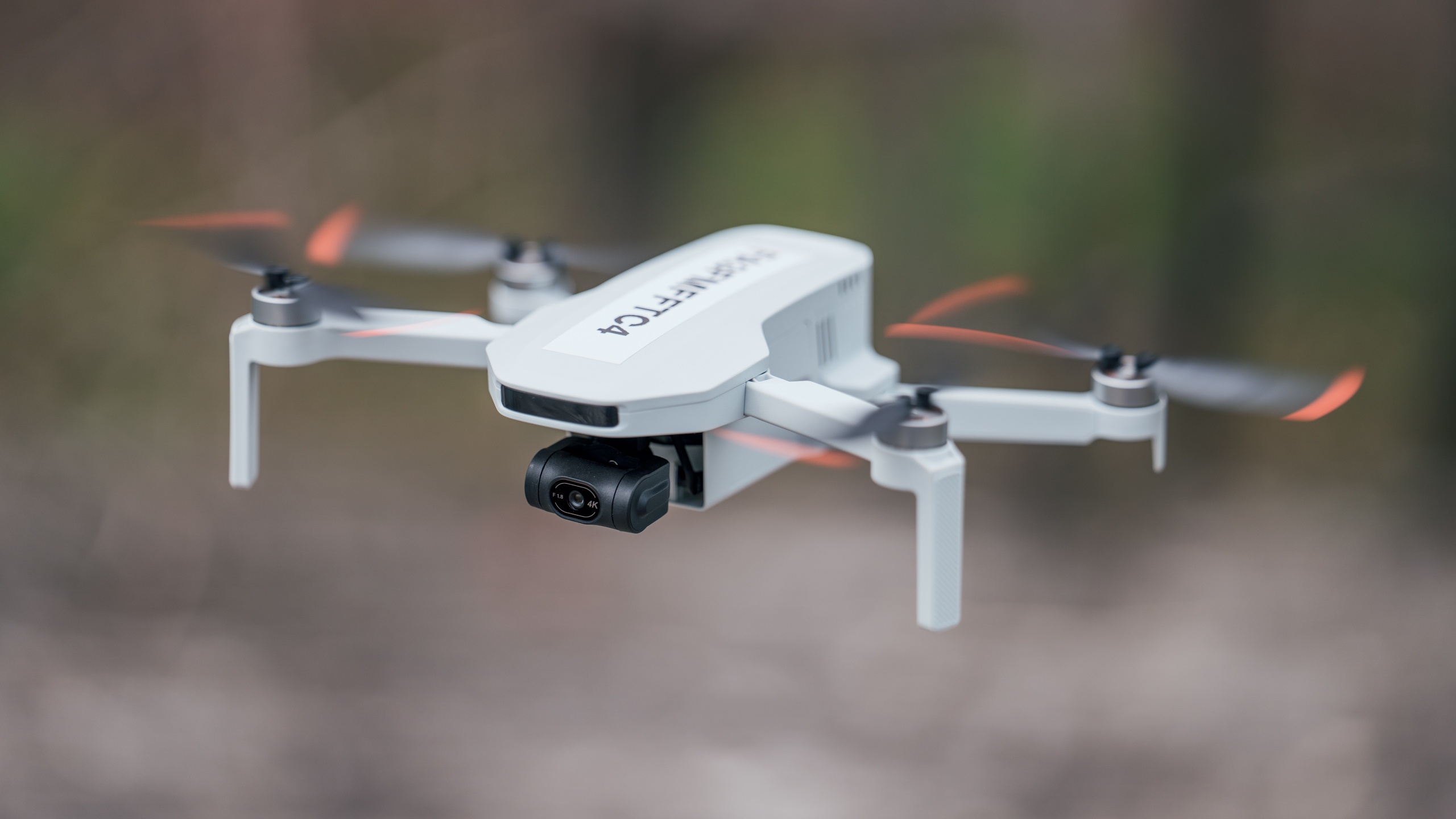
The Best best drones under 200$ pick is the DJI Mini 4K because its 4K camera, 3-axis gimbal, GPS return to home, and beginner controls form the most dependable package. Choose the DJI Mini 4K Combo instead when two batteries and travel accessories matter more than keeping the kit minimal.
For longer sessions, the Potensic ATOM SE is the strongest alternative, while the Potensic ATOM 2 is the clear camera upgrade for creators who want a larger sensor, 4K HDR, AI tracking, and a 3-axis gimbal. The F417PRO FPV and PLEGBLE PL511 are better suited to casual learning and family flying.
If you are undecided, choose the DJI Mini 4K for the best balance of control, footage, and flight confidence.
As an Amazon Associate we earn from qualifying purchases.